


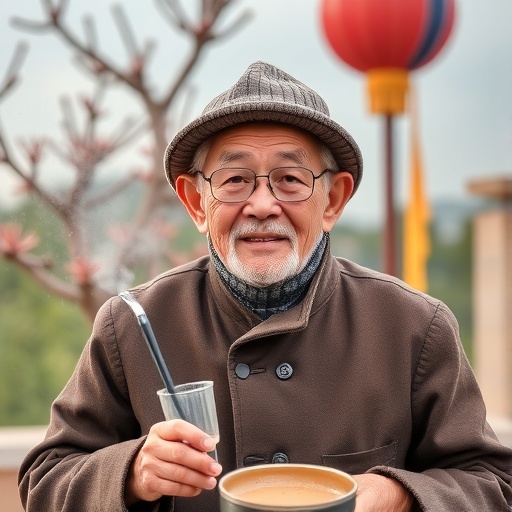
In a groundbreaking study published by researchers Zhu, Lian, and Sun, the intricate relationship between lifestyle habits, subjective well-being, and all-cause mortality among older adults in China has been meticulously explored. This pivotal research comes at a critical time, as the world grapples with the increasingly aging demographic, particularly in countries like China, where the percentage of older adults is rapidly rising. The study not only sheds light on the complexities associated with aging but also offers essential insights that could influence public health strategies and contribute to enhanced quality of life among seniors.
One of the central themes of this investigation revolves around the combined effects of various lifestyle factors. The researchers comprehensively analyzed a myriad of lifestyle habits, including physical activity, dietary choices, and social engagement, to determine their collective impact on health outcomes. Their findings reveal a compelling correlation between positive lifestyle choices and lower mortality rates among the older population, underlining the undeniable influence that consistent, healthful living can have on longevity.
Subjective well-being emerged as another focal point of the study. The researchers acknowledged that how individuals perceive their overall happiness and life satisfaction can significantly shape their health outcomes. Interestingly, the study found that seniors who reported higher levels of subjective well-being tend to have lower rates of all-cause mortality. This suggests that psychological factors play a crucial role in health, affirming the old adage that a positive mindset can lead to a healthier life.
The implications of these findings are multifaceted. By promoting an understanding of the interdependencies between lifestyle choices and mental health, health officials, families, and communities might work together to develop programs that foster better living conditions for the elderly. For instance, increased access to recreational facilities could encourage more physical activity among older adults, while social programs could enhance community engagement. Both strategies could contribute to improved subjective well-being, thereby positively influencing mortality rates.
Nutrition also plays a critical role in this equation. The study indicated that seniors who maintain a balanced diet rich in fruits, vegetables, and whole grains exhibited better health outcomes compared to those with poor dietary habits. This highlights the urgent need for nutritional guidance tailored specifically for older adults, as better eating habits can lead to an increase in life quality and longevity. Additionally, healthcare professionals should consider the dietary preferences and restrictions of the older population when designing community health programs.
Moreover, the researchers pointed to the significance of social networks among older adults. The investigation found that individuals who actively engage with family, friends, and community demonstrate enhanced mental health and a more positive outlook on life. This emphasizes the importance of social connectivity and suggests that fostering relationships is a key component of maintaining well-being in older age. Consequently, policies aimed at reducing loneliness and enhancing social infrastructure may prove to be incredibly beneficial.
Health policy implications derived from this research extend well beyond individual practices. At a systemic level, this awareness calls for holistic approaches towards elder care, integrating physical, mental, and social health into a cohesive strategy. By doing so, public health initiatives can align more closely with the actual needs of older adults, ensuring they not only survive but thrive in their later years.
As the world continues to confront health challenges posed by aging populations, the findings of this study can act as a pivotal reference point for future research. Investigators may wish to explore specific socio-economic factors that influence lifestyle choices and, subsequently, health outcomes. Understanding disparities in access to resources such as healthcare, nutrition, and social engagement may add depth to the conversation surrounding aging and mortality.
In addition, the researchers recognize that culture plays a critical role in shaping lifestyle habits, perceptions of well-being, and ultimately, health outcomes. The concept of filial piety, prevalent in Chinese culture, underscores the importance of familial relationships and can profoundly influence the attitudes and emotional states of older adults. This cultural context may be integral for future studies aiming to replicate these findings in diverse global settings, where varying cultural factors come into play.
Ultimately, the drive for further research and practical application is critical. As healthcare practitioners and policymakers digest the implications of this study, the dual focus on enhancing lifestyle habits and subjective well-being can chart a new path forward in elder care. The aim is not merely to extend life but also to enrich the quality of those additional years. This could result in a paradigm shift that redefines aging, considering it a vibrant and fulfilling phase of life rather than merely a period of decline.
As we move forward, it is clear that we must foster environments that support healthy aging. Communities can significantly contribute by integrating resources geared towards older adults, offering educational workshops on nutrition and wellness, and providing spaces where social interactions can flourish. Creating supportive networks will become increasingly vital, ensuring that older adults are not just seen as a demographic to cater to but as active participants with valuable contributions to society.
In conclusion, the pioneering research conducted by Zhu and colleagues presents a crucial framework for understanding the intersection of lifestyle, mental health, and longevity among older adults in China. As we consider their findings and the broader implications for public health, it becomes evident that addressing the holistic health needs of the aging population is of paramount importance. By investing in combined lifestyle interventions and fostering subjective well-being, we can strive to significantly enhance the quality of life for older adults worldwide.
This landscape, defined by the interplay between lifestyle choices and subjective well-being, is one that deserves our attention and action. By shifting our perspectives from mere survival to promoting a vibrant and fulfilling old age, we embark on a journey that not only benefits individuals but enriches our entire society. Let us harness these insights to create a future in which aging is celebrated and supported, ensuring that every moment counts in the lives of older adults.
Zhu, C., Lian, Z., Sun, J. et al. Combined lifestyle habits, subjective well-being, and all-cause mortality among older adults in China.
BMC Geriatr 25, 675 (2025). https://doi.org/10.1186/s12877-025-06345-2
Cite Scienmag News
Beatrice Stafford. (August 30, 2025). Healthy Habits Boost Well-Being and Longevity in China. Scienmag. https://scienmag.com/healthy-habits-boost-well-being-and-longevity-in-china/
Beatrice Stafford. "Healthy Habits Boost Well-Being and Longevity in China." Scienmag, 30 August 2025, https://scienmag.com/healthy-habits-boost-well-being-and-longevity-in-china/. Accessed 4 September 2026.
Beatrice Stafford. "Healthy Habits Boost Well-Being and Longevity in China." Scienmag. August 30, 2025. https://scienmag.com/healthy-habits-boost-well-being-and-longevity-in-china/


