


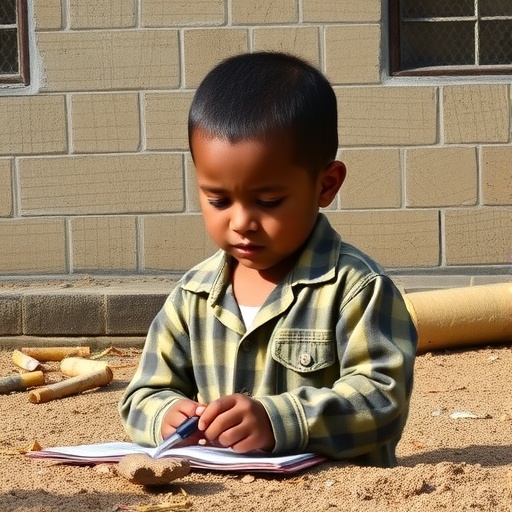
In the latest issue of the International Journal of Equity Health, a disturbing yet illuminating critical ethnography reveals severe health consequences faced by vulnerable working children globally. The in-depth study, conducted by Jafari, H., Nayeri, N.D., Brand, S., and colleagues, offers a rare and candid glimpse into how child labor – far from being a mere socioeconomic issue – functions as a catalyst for chronic and often overlooked health detriments. This research arrives at a pivotal moment when global efforts to eradicate child labor persistently clash with harsh economic realities.
Amidst the backdrop of economic disparities and pervasive poverty, the researchers employed a combination of qualitative methods, including ethnographic fieldwork, to unravel the nuanced physical and psychological toll exacted on children engaged in various labor sectors. This approach allowed the team to transcend statistics and delve into lived experiences, providing textured insights into how continuous exposure to hazardous environments gradually dismantles health and well-being. Their findings critically challenge dominant narratives that underestimate the profound health ramifications for these children.
Central to the ethnography is the concept of “health terminators,” which signifies factors inherent in child labor contexts that potently terminate or severely degrade key health indicators. These terminators encompass environmental hazards such as toxic exposure, repetitive musculoskeletal strain, acute injury risks, and prolonged psychosocial stress. By systematically documenting these contributors, the authors reveal how these working conditions generate cascading effects that extend far beyond immediate injuries, including chronic respiratory problems, neurological impairments, and impaired physical growth.
The study meticulously details how biomechanical overexertion, combined with inadequate nutrition and sleep deprivation, renders the children’s developing bodies highly susceptible to musculoskeletal disorders. Many participants reported enduring persistent back pain, joint stiffness, and muscle fatigue, conditions often compounded by the absence of proper medical attention. These findings underscore the intersection of labor intensity and child developmental vulnerabilities, emphasizing that such physical burdens inflict long-term disability potential.
Moreover, the investigation highlights the pervasive exposure to chemical toxins and airborne pollutants in industries such as agriculture, mining, and manufacturing. Children often operate in inadequately ventilated spaces, frequently without protective gear, leading to elevated rates of chronic respiratory ailments including asthma, bronchitis, and other pulmonary dysfunctions. The integration of environmental health expertise allowed the team to detect alarming particulate matter levels that far exceed safe thresholds for child workers.
Psychological stress, an element sometimes undetected in traditional child labor studies, emerges vividly within this ethnography. The children’s narratives repeatedly referenced feelings of anxiety, depression, and helplessness, phenomena exacerbated by their social invisibility and the stigmatization attached to their labor roles. The research delineates how persistent psychosocial stress activates physiological pathways linked to impaired immune responses, poor mental health outcomes, and adverse developmental trajectories.
Importantly, the study breaks new ground by contextualizing these health terminators within broader systemic inequities. Families compelled to send their children to work due to economic precarity inadvertently place them in health-compromising environments, perpetuating cycles of vulnerability and marginalization. This intersectionality reveals the inextricable link between social determinants of health and child labor, necessitating multi-sectoral intervention approaches that address poverty, education access, and health care simultaneously.
The research team utilized participatory observation coupled with in-depth interviews, facilitating a platform where children voiced their lived challenges authentically. This methodological rigor enriches the narrative, allowing nuanced perspectives on how children cope with and rationalize their labor participation despite health risks. The ethnography thus challenges policymakers to reconceptualize child labor not only as a rights violation but as a public health crisis demanding urgent and integrated solutions.
This critical study also exposes glaring gaps in existing health and labor policies. In many regions, young laborers fall outside protective legislation frameworks or are excluded from formal health surveillance programs. The absence of comprehensive occupational health protections for children reflects systemic neglect, perpetuating conditions that perpetuate morbidity and mortality in this population. By providing robust evidence, Jafari and colleagues advocate for urgent reform to embed child-focused occupational health measures within national and international policy agendas.
Of particular concern is the revelation that many health impacts among working children are cumulative and often irreversible. Chronic exposure to health terminators during critical growth periods sets the stage for lifelong impairments, decreasing quality of life and limiting future socioeconomic opportunities. The ethnography compellingly argues for early intervention not only to prevent immediate harm but to disrupt long-term health trajectories that deepen inequality.
To amplify the reach of these findings, the study employs compelling visual ethnographic documentation combined with scientific rigor, making the invisible burdens of child labor tangible to both the scientific community and the general public. The integration of qualitative data and environmental health metrics fashions a multidimensional narrative that drives home the urgency of tackling child labor as an urgent matter of health equity and human dignity.
In synthesizing their extensive data, the authors propose a framework for addressing health terminators that hinges on coordinated global partnerships spanning health, labor, education, and social welfare sectors. They emphasize the indispensable role of community engagement, enhanced surveillance, and targeted health services tailored to working children’s unique needs. This calls for innovative policy frameworks that are context-sensitive and prioritize children’s health alongside education and economic support to families.
The implications for future research are substantial. This ethnography lays a foundational blueprint for subsequent multidisciplinary studies that can dissect pathways linking child labor conditions to specific health outcomes at molecular, physiological, and population levels. It also challenges researchers to adopt ethnographically informed methodologies that capture the granular realities obscured by quantitative data alone, thereby enriching intervention design.
As the global community grapples with persistent child labor, this critical ethnography stands as a seminal work elucidating the unseen health devastations children endure in their fight for survival. It poignantly calls for urgent mobilization of science, policy, and civil society to dismantle the health terminators embedded in child labor systems. Only through concerted, evidence-based action can the cycle of exploitation be broken, and the foundational right to health be restored for millions of children worldwide.
Cite Scienmag News
Courtney Benton. (November 24, 2025). Health Risks Among Working Children: A Critical Study. Scienmag. https://scienmag.com/health-risks-among-working-children-a-critical-study/
Courtney Benton. "Health Risks Among Working Children: A Critical Study." Scienmag, 24 November 2025, https://scienmag.com/health-risks-among-working-children-a-critical-study/. Accessed 4 September 2026.
Courtney Benton. "Health Risks Among Working Children: A Critical Study." Scienmag. November 24, 2025. https://scienmag.com/health-risks-among-working-children-a-critical-study/


