A new exploratory analysis of all 27 European Union member states finds that population health, labour productivity dynamics, digitalisation and national competitiveness do not rise and fall together in a single predictable pattern. Instead, the study, published in BMC Public Health by Dawid Majcherek, groups the EU-27 into four country clusters that each combine these domains in a different way, revealing that similar health profiles can coexist with markedly different economic outcomes.
The research addresses a recognised gap in comparative European evidence. Existing EU-level assessments tend to evaluate health, productivity and competitiveness separately, ranking countries on a single scale that is known to be sensitive to methodological choices. Rather than producing another league table, the study builds a descriptive typology, asking which countries genuinely resemble one another when several dimensions are considered simultaneously.
Six country-level indicators were compiled, each drawn from its most recent comparable reference year between 2019 and 2022, with one observation per country. The data came from the WHO, Eurostat, the European Commission and the World Economic Forum. The indicators were healthy life expectancy at birth (HALE), the share of adults reporting non-work-related physical activity, the share of employed persons reporting sickness absence, a real labour productivity per hour worked index with 2015 set to 100 that captures cumulative growth from 2015 to 2020, the Digital Economy and Society Index (DESI), and the Global Competitiveness Index (GCI).
After standardising the variables, the analysis applied k-means clustering. The choice of how many groups to retain was tested with five statistical criteria: the elbow method, silhouette scores, the gap statistic, the Calinski–Harabasz index and the Davies–Bouldin measure. These criteria pointed to anywhere between two and four groups. The authors adopted a four-cluster solution as a nested refinement of the coarser partitions, explaining 70.7 percent of total variance and resolving a poorly separated southern group that appeared when only three clusters were allowed.
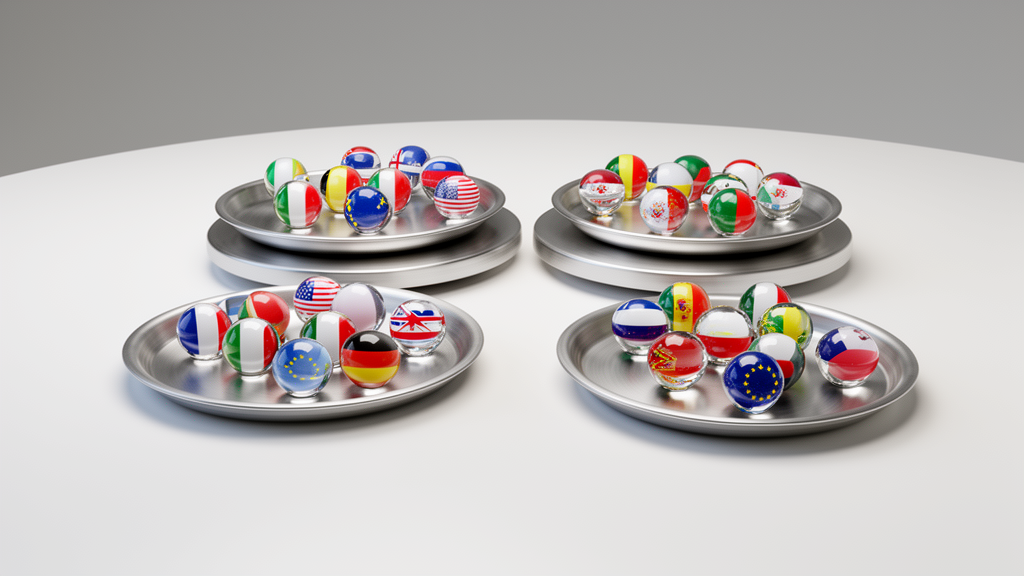
The resulting geography is striking. A North-Western European cluster combined the most favourable health, behavioural, digital and competitiveness profiles with the highest reported sickness absence. A South-Western cluster recorded the longest healthy life expectancy of all groups, but only moderate levels of physical activity and digitalisation. Central and Eastern Europe formed a cluster with the weakest health profile, the lowest reported absence and, notably, the fastest cumulative productivity growth since 2015. A smaller South-Eastern group, comprising Croatia, Cyprus and Greece, showed the lowest competitiveness, digitalisation and productivity growth.
Several of these contrasts challenge simple assumptions about the relationship between health and economic performance. The North-Western cluster pairs the best health outcomes with the highest sickness absence rates, while the Central and Eastern European cluster pairs the poorest health profile with the fastest productivity growth over the period studied. The authors emphasise that the typology is descriptive and does not identify causal mechanisms, so these patterns should not be read as evidence that one domain drives another.
Robustness received unusually thorough treatment for an exploratory clustering study. Stability was examined by repeating the analysis with hierarchical clustering and k-medoids, by removing one variable at a time, by replacing variables, by bootstrap resampling, by leaving one country out, and by shifting the productivity reference year. Agreement between partitions was quantified with the adjusted Rand index (ARI) and the Jaccard coefficient. The four-cluster solution proved robust to alternative algorithms, with ARI values between 0.84 and 0.93, but was moderately sensitive to variable selection, with ARI values ranging from 0.53 to 1.00.
The two large clusters formed a stable core. The North-Western and Central-Eastern groups held together under bootstrap resampling with a mean Jaccard coefficient of 0.87. The three-country South-Eastern cluster was the least stable element, with a mean Jaccard coefficient of 0.61, and it dissolved entirely when the productivity index was taken from 2019 instead of 2020. This suggests the group partly reflects the 2020 pandemic shock to measured productivity rather than a durable structural similarity among the three countries.
One finding stands out across every partition: digitalisation consistently separated the country groups, regardless of how the clustering was configured. The authors suggest the typology may support cross-country benchmarking and the tailoring of health and digital policy monitoring to regional profiles. They are careful, however, to frame the work as a starting point for comparison rather than an explanation, noting that the single-year indicators cannot capture change within countries and that the analysis covers only the EU-27 over a short window shaped by the pandemic.
Subject of Research: Cross-country clustering of population health, labour productivity and competitiveness indicators across the EU-27
Article Title: Population health, labour productivity dynamics and competitiveness in the EU-27: an exploratory cross-country cluster analysis
Article References: Majcherek, D. (2026). Population health, labour productivity dynamics and competitiveness in the EU-27: an exploratory cross-country cluster analysis. BMC Public Health. https://doi.org/10.1186/s12889-026-30089-2
Image Credits: AI Generated
DOI: 10.1186/s12889-026-30089-2
Keywords: EU-27, population health, healthy life expectancy, labour productivity, competitiveness, digitalisation, k-means clustering, sickness absence, BMC Public Health, cluster analysis, health policy, DESI
Cite Scienmag News
Phoebe Ingram. (October 27, 2026). Health, Productivity and Competitiveness Sort EU Countries into Four Distinct Groups. Scienmag. https://scienmag.com/health-productivity-and-competitiveness-sort-eu-countries-into-four-distinct-groups/
Phoebe Ingram. "Health, Productivity and Competitiveness Sort EU Countries into Four Distinct Groups." Scienmag, 27 October 2026, https://scienmag.com/health-productivity-and-competitiveness-sort-eu-countries-into-four-distinct-groups/. Accessed 30 October 2026.
Phoebe Ingram. "Health, Productivity and Competitiveness Sort EU Countries into Four Distinct Groups." Scienmag. October 27, 2026. https://scienmag.com/health-productivity-and-competitiveness-sort-eu-countries-into-four-distinct-groups/