


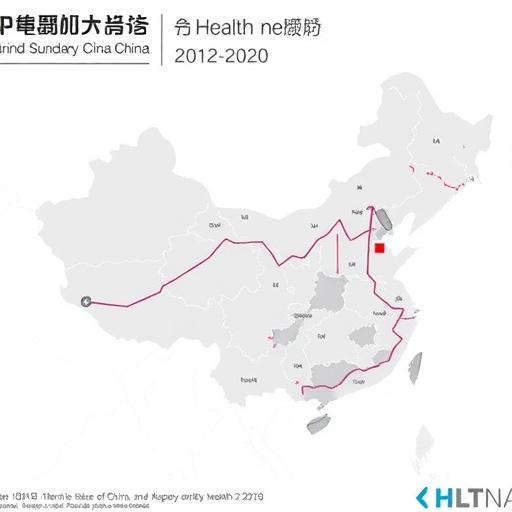
In a groundbreaking study examining health expenditures in mainland China over nearly a decade, researchers Bi, Wang, and Li have highlighted significant spatiotemporal characteristics of these expenditures during the period from 2012 to 2020. The findings, detailed in their paper published in BMC Health Services Research, present a comprehensive analysis of how various regions in China allocate financial resources towards healthcare. The research not only sheds light on the current state of health financing but also suggests implications for policy makers and healthcare providers looking to understand and potentially predict future spending trends.
The researchers utilized a robust methodological framework to analyze vast datasets, examining regional disparities in health expenditures. Their approach included the utilization of econometric techniques, enabling them to isolate the effects of various factors influencing health spending, such as population demographics, economic growth, and healthcare access. This analytical depth provides a rare window into the complexities of health financing in a country undergoing rapid economic transition and urbanization.
One of the remarkable aspects of this study is its attention to temporality. The timeline from 2012 to 2020 captures not only the growth of health expenditure but also significant policy shifts and cultural changes that may affect healthcare funding. For example, in recent years, the Chinese government has intensified its focus on expanding healthcare accessibility and quality, which in turn has implications for financial allocations at both national and provincial levels.
The results of the study reveal stark contrasts across different geographic locations. Wealthier provinces tend to allocate a higher proportion of their GDP to health expenditures, in part due to better infrastructure and more developed healthcare systems. Conversely, underdeveloped regions struggle with inadequate funding, leading to disparities in healthcare outcomes. These inequities in health financing are alarming, suggesting a need for targeted policies that address funding shortfalls in poorer areas, thus promoting an equitable healthcare system.
Moreover, the researchers’ findings indicate a correlation between regional economic performance and health expenditure patterns. Provinces that performed well economically were found to invest more in health services, which raises important questions about sustainability and priority-setting. As economic conditions fluctuate, the ongoing commitment to healthcare funding remains critical to ensuring sustained health outcomes, particularly in less affluent areas of the country.
Additionally, the longitudinal aspect of this study allows for the observation of trends over time, offering insights into how external factors such as the COVID-19 pandemic have influenced health expenditure patterns. The pandemic has heightened awareness around health funding, prompting shifts in priorities that may reshape health spending in the years to come. Policymakers will need to remain adaptable, recognizing that unexpected events can dramatically alter health financing landscapes.
The research also delves into the implications of health expenditures for health outcomes. Higher spending does not always correlate with improved health outcomes, which raises questions about efficiency and resource allocation. The study emphasizes the importance of evaluating the efficacy of health programs and the need for strategic investment in areas that maximize health gains for broader populations.
The insights gathered provoke a critical discourse about the role of the government and private sector in health financing. As health expenditures continue to surge, there is an urgent need for frameworks that foster collaborative efforts between both sectors. By leveraging private investment alongside public funding, there may be opportunities to expand health services and enhance the quality of care across all regions.
In exploring the spatiotemporal dimensions of health expenditure, the authors advocate for a system that allows for real-time monitoring of healthcare finances. Such frameworks could be instrumental in creating data-driven policies that respond dynamically to regional needs, enabling a bespoke approach to healthcare financing that recognizes the uniqueness of each region.
This pivotal research reinforces the notion that health expenditure is not merely a financial issue but a fundamental aspect of societal well-being. As life expectancy rises and the burden of chronic diseases increases, the imperative to invest wisely in health systems becomes even more pronounced. The evidence presented in this study constitutes a clarion call for heightened awareness and action from all stakeholders involved in health policy and management.
It is apparent that the landscape of healthcare financing in China is shifting, and this study provides essential groundwork for future explorations into health expenditure strategies. The data illuminated in this analysis is expected to spur further inquiries into effective health funding mechanisms that can adapt to emerging challenges, ultimately contributing to a healthier population.
The implications of this research extend beyond China; they invite global comparisons and lessons learned from differing approaches to healthcare financing. As countries worldwide grapple with similar health expenditure issues, the insights derived from China’s experience could provide valuable guidance for nations seeking to enhance their health systems’ sustainability and effectiveness.
As the world enters a new era of health challenges, the findings from this study underscore the need for robust health financing mechanisms that can adapt and respond to evolving demographics, economic pressures, and global health emergencies. The research lays the foundation for critical dialogue about health investments, invites questions about equity in healthcare access, and encourages a re-examination of how we prioritize health expenditure in the face of a rapidly changing world.
In summary, the research by Bi, Wang, and Li offers a compelling look into the dynamics of health expenditure in mainland China. Through its meticulous analysis and attention to detail, this study sets the stage for informed discussions about healthcare funding and policy implications that could resonate on a global scale. As the world continues to evolve, the lessons learned from this research will undoubtedly play a crucial role in shaping the future of health financing strategies.
Bi, Y., Wang, Q., Li, Q. et al. Spatiotemporal characteristics of health expenditure in mainland China during 2012–2020.
BMC Health Serv Res (2026). https://doi.org/10.1186/s12913-026-14081-5
Cite Scienmag News
Ophelia Keating. (January 28, 2026). Health Expenditure Trends in Mainland China: 2012-2020. Scienmag. https://scienmag.com/health-expenditure-trends-in-mainland-china-2012-2020/
Ophelia Keating. "Health Expenditure Trends in Mainland China: 2012-2020." Scienmag, 28 January 2026, https://scienmag.com/health-expenditure-trends-in-mainland-china-2012-2020/. Accessed 7 September 2026.
Ophelia Keating. "Health Expenditure Trends in Mainland China: 2012-2020." Scienmag. January 28, 2026. https://scienmag.com/health-expenditure-trends-in-mainland-china-2012-2020/


