


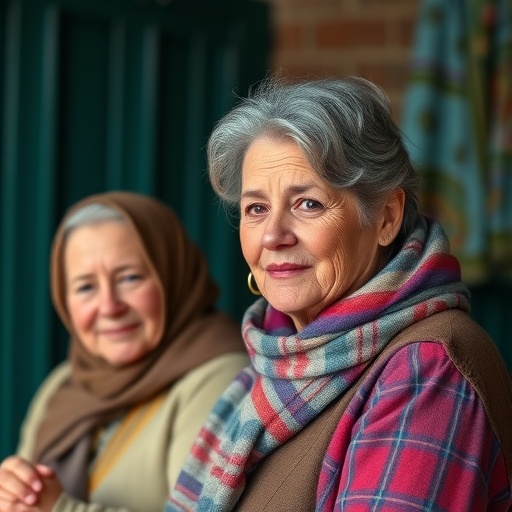
In a world increasingly defined by global migration and demographic shifts, understanding the nuanced health needs of older migrant women has become an urgent priority. Recent qualitative research conducted in Norway offers critical insights into how health-promoting dialogues between older migrant women and researchers can bridge cultural divides and advance equity in healthcare. This groundbreaking study unpacks the complex layers of communication, trust, and empowerment that shape health outcomes among one of the most vulnerable populations in Europe.
The demographic landscape of Norway—and much of Europe—has transformed over recent decades, with a growing population of older migrants whose experiences remain understudied, especially in the context of healthcare access and equity. Older women migrants often face compounded barriers to health due to language differences, cultural misunderstandings, and systemic discrimination. This study sheds light on how these barriers are experienced and navigated through direct conversations that prioritize respect, cultural sensitivity, and reciprocal understanding.
By employing qualitative methodologies, the researchers engaged in in-depth dialogues with older migrant women, creating spaces where the women’s voices could be elevated as central to the research process rather than peripheral. This approach contrasts sharply with more conventional studies that may rely on quantitative data and imposed health frameworks, thereby missing the lived realities of participants. The research highlights the immense value of dialogic engagement, affirming the principle that health promotion is most effective when it aligns with individuals’ social contexts and identities.
Culturally congruent communication emerged as a pivotal theme in this research. The findings underscore that health dialogues must move beyond mere translation of language to an intercultural exchange that respects diverse worldviews on health, illness, and aging. The study reveals that migrant women’s perceptions of health are deeply embedded in their cultural histories and social practices, which frequently differ from dominant biomedical models. Such understandings challenge healthcare providers to rethink standardized approaches and to embrace more flexible, inclusive frameworks.
The researchers documented numerous instances where older migrant women expressed frustration with health services that overlooked their unique needs or failed to acknowledge traditional healing practices. This disconnect often led to mistrust and disengagement from formal health systems, amplifying health inequalities. The study advocates that a participatory research approach, where migrant women actively contribute to shaping health interventions, can counteract these gaps and foster empowerment through mutual learning.
One of the crucial technical insights emerging from this study is the role of narrative as a tool for health promotion. Narratives allowed older migrant women to share embodied experiences, including struggles with chronic illness, mental health challenges, and social isolation. The researchers argue that these personal stories function not only as data but as mechanisms that facilitate healing and resilience. Importantly, narrative practices encourage reflexivity among researchers, prompting them to recognize their positionalities and biases.
This research further elaborates on the concept of “safe spaces” in health dialogues—environments characterized by trust, confidentiality, and non-judgmental listening. Creating such spaces required researchers to cultivate long-term relationships with participants, often navigating institutional constraints and ethical considerations. The sustained commitment to dialogue is presented as foundational to dismantling power imbalances inherent in healthcare research and delivery.
The study also highlights systemic challenges faced by older migrant women, including limited digital literacy, socioeconomic precarity, and fragmented social support networks. These structural impediments intersect with cultural barriers, creating a complex web that affects health behavior and access to care. Through dialogue, women articulated their needs not only for medical treatment but for holistic support systems encompassing mental health, social inclusion, and practical resources.
Importantly, the research provides compelling evidence that health promotion is more effective when it is community-centered and honors intersectionality—a framework that accounts for multiple, overlapping social identities and related systems of oppression or privilege. The analysis demonstrates that gender, age, ethnicity, migration history, and socioeconomic status collectively shape health experiences. Such an intersectional lens is essential for framing health interventions that are equitable and tailored to real-world diversity.
The Norwegian context of this research is particularly significant given the country’s robust public health infrastructure juxtaposed with disparities in migrant health outcomes. The findings reveal that—even in welfare states with universal health coverage—systemic inequities persist, influenced by cultural insensitivity and policy gaps. This underscores the universal relevance of these findings as they transcend localized settings to inform global discourses on migrant health.
A methodological strength of the study is the collaborative nature of the research team, which included native speakers and individuals with migration backgrounds. This diversity enhanced authenticity and cultural resonance in the dialogues. Employing qualitative content analysis alongside critical reflection enabled a nuanced deconstruction of power dynamics and meaning-making in the interviews.
The researchers’ focus on older women specifically addresses a blind spot in migration and health research, which often marginalizes gender and age intersections. The study illuminates how aging migrants maintain distinct health identities and priorities shaped by lifelong biographical trajectories. This attention to life-course perspectives in health dialogues proposes innovative routes for tailored health promotion strategies.
Notably, the paper points toward future directions for policy and practice, urging the integration of participatory dialogue models into health service design and training for healthcare professionals. It emphasizes the need for culturally competent communication skills, reflexive practice, and sustained engagement with migrant communities to produce equitable health outcomes.
In an era where migration continues to reshape societies worldwide, this study’s revelations about dialogic health promotion establish a compelling paradigm shift. They advocate moving beyond tokenistic consultations toward genuine, reciprocal conversations that honor the complexity of migrant women’s lives. By doing so, health equity becomes an attainable goal anchored in respect, inclusion, and shared humanity.
This research not only enriches academic discourse but has pragmatic implications for practitioners, policymakers, and civil society actors committed to inclusive health systems. It reminds us that the voices of older migrant women, often muted in mainstream narratives, are crucial drivers of innovation and justice in public health. Such voices must be heard—not just studied—to build a healthier, more equitable future for all populations.
Cite Scienmag News
Courtney Benton. (October 8, 2025). Health Dialogue Insights: Older Migrant Women in Norway. Scienmag. https://scienmag.com/health-dialogue-insights-older-migrant-women-in-norway/
Courtney Benton. "Health Dialogue Insights: Older Migrant Women in Norway." Scienmag, 8 October 2025, https://scienmag.com/health-dialogue-insights-older-migrant-women-in-norway/. Accessed 4 September 2026.
Courtney Benton. "Health Dialogue Insights: Older Migrant Women in Norway." Scienmag. October 8, 2025. https://scienmag.com/health-dialogue-insights-older-migrant-women-in-norway/


