


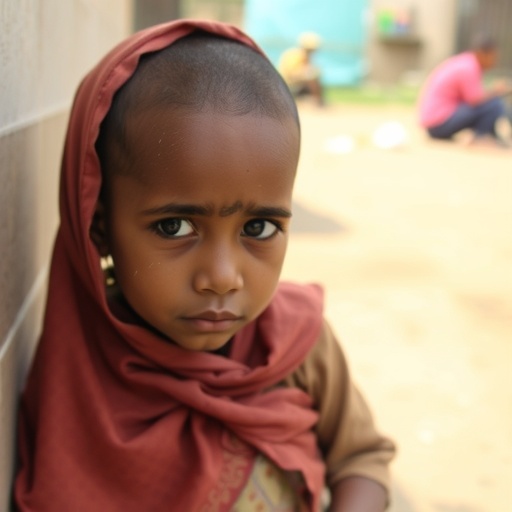
In the heart of Ethiopia’s urban landscapes, a troubling yet often overlooked public health crisis silently unfolds among the most vulnerable population: street children infested with scabies. A recent comprehensive study exposes the stark reality of health-seeking behaviors and the barriers these marginalized children face when attempting to access medical care. This insight not only unpacks the medical and social dimensions of scabies infestation but also highlights systemic failures that perpetuate health inequities in an already fragile health system.
Scabies, a highly contagious skin disease caused by the infestation of the mite Sarcoptes scabiei, thrives unhindered in environments characterized by overcrowding, poor hygiene, and limited access to healthcare. For street children in Ethiopia—who routinely inhabit these conditions—scabies is not merely a dermatological nuisance but a profound health challenge that exacerbates their precarious living conditions. The disease manifests in intense itching, skin rashes, and secondary infections, potentially escalating to life-threatening complications without timely and adequate treatment.
The research underscores a critical paradox: while these children experience significant health burdens, their health-seeking behaviors are shockingly inconsistent and often contingent upon the subjective goodwill of individual health professionals. This reliance on benevolence exposes the fragility of healthcare access for disenfranchised groups, effectively leaving treatment hinging on personal discretion rather than institutionalized support structures. Consequently, scabies infestation among street children persists as both a symptom and a marker of entrenched social inequity.
Systemic obstacles abound. The Ethiopian healthcare infrastructure, though progressing, remains ill-equipped to cater comprehensively to non-traditional populations like street children, who often fall outside the purview of formal health services. Stigmatization and discrimination within health facilities further alienate these children, discouraging them from seeking care proactively. The study reveals that many rely on informal care networks or self-medication, leading to delayed treatment and increased transmission risk.
Delving deeper, socio-economic determinants heavily influence health-seeking patterns. Many street children lack consistent guardianship or financial means, impeding their ability to navigate healthcare systems that demand registration, documentation, or payment. The intersectionality of poverty, homelessness, and disease creates a vicious cycle where untreated scabies exacerbates physical discomfort and social exclusion, diminishing opportunities for education or employment.
The healthcare providers themselves operate under challenging circumstances. Limited resources, overcrowded clinics, and insufficient training in managing neglected tropical diseases like scabies often translate into suboptimal care. Health professionals face ethical dilemmas, balancing workload with empathy, and sometimes resort to discretionary practices that inadvertently marginalize vulnerable populations further.
From a public health perspective, the persistence of scabies among street children is deeply concerning. Scabies is easily transmissible within close-contact groups, creating a reservoir for ongoing community transmission. Failure to control outbreaks within this demographic risks spill-over into broader populations, undermining disease control efforts at the municipal and national levels.
Addressing these concerns requires multifaceted interventions. The study advocates for enhanced integration of street children into public health planning, emphasizing the development of stigma-free, accessible healthcare services tailored to their unique needs. This involves training health workers in culturally sensitive approaches and instituting policies that guarantee treatment irrespective of social status or ability to pay.
Moreover, community-based initiatives play a pivotal role. Outreach and mobile clinics can bridge service gaps, delivering diagnosis and treatment directly within the children’s environment. Educational programs aimed at increasing awareness among street children about scabies transmission and prevention can empower them to take proactive health measures, breaking cycles of neglect and infection.
The findings also illuminate the importance of cross-sectoral collaboration, joining forces among health, social welfare, and child protection agencies to create comprehensive safety nets. Social workers and NGOs dedicated to child welfare are instrumental in advocating for the rights of street children and facilitating their access to healthcare and social services.
Technological advancements may provide additional leverage. Digital health platforms could offer anonymous symptom reporting and telemedicine consultations, reducing barriers imposed by stigma and fear. Nonetheless, the success of such innovations depends on infrastructural investments and digital literacy among vulnerable populations.
On a policy level, the Ethiopian government is called upon to strengthen regulatory frameworks that enshrine the right to health for all children, including those without stable housing. Allocating targeted funding toward neglected diseases in marginalized groups will help dismantle systemic inequities and demonstrate a commitment to universal health coverage.
Importantly, this study’s revelations resonate beyond Ethiopia, echoing challenges faced by street children worldwide who suffer silently under the weight of neglected infectious diseases. The interplay of social determinants and healthcare accessibility emerges as a universal theme demanding urgent attention in global health discourses.
In conclusion, the plight of scabies-infested street children in Ethiopia is emblematic of broader health disparities fueled by social exclusion and systemic neglect. Addressing their health needs requires a holistic approach intertwining medical interventions with social support and policy reform. Only through concerted, compassionate action can the cycle of infection and marginalization be broken, paving the way for an equitable future where every child’s right to health is upheld uncompromisingly.
Cite Scienmag News
Courtney Benton. (November 29, 2025). Health Access for Scabies-Infested Ethiopian Street Children. Scienmag. https://scienmag.com/health-access-for-scabies-infested-ethiopian-street-children/
Courtney Benton. "Health Access for Scabies-Infested Ethiopian Street Children." Scienmag, 29 November 2025, https://scienmag.com/health-access-for-scabies-infested-ethiopian-street-children/. Accessed 4 September 2026.
Courtney Benton. "Health Access for Scabies-Infested Ethiopian Street Children." Scienmag. November 29, 2025. https://scienmag.com/health-access-for-scabies-infested-ethiopian-street-children/


