

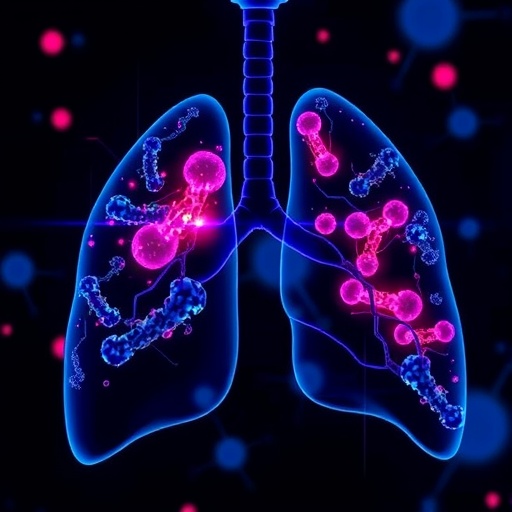
In an era where cancer immunotherapy is reshaping the oncology landscape, recent advancements spotlight an innovative approach that could revolutionize the treatment of non-small cell lung cancer (NSCLC). A groundbreaking study published in Cell Death Discovery by Liu, Z., Xu, X., Wang, M., and collaborators has unveiled the promising role of immunogenic cell death (ICD) in enhancing immune responses against NSCLC, offering new hope for patients facing this aggressive disease. This emerging paradigm hinges on the capacity of ICD to convert dying tumor cells into a therapeutic vaccine, thereby mobilizing the host’s immune system to recognize and eradicate malignant cells more effectively.
Non-small cell lung cancer remains one of the leading causes of cancer-related mortality worldwide, characterized by late diagnosis, limited therapeutic options, and often dismal prognoses. Traditional approaches, including chemotherapy and radiotherapy, mainly aim at tumor reduction but frequently fail to elicit durable anti-tumor immunity. The integration of immunotherapy strategies, like immune checkpoint inhibitors, has improved outcomes; nonetheless, resistance and relapse still pose significant challenges. In this context, the concept of ICD emerges as a compelling mechanism that could synergize with existing modalities to potentiate long-term tumor control.
Immunogenic cell death diverges from classical apoptotic or necrotic pathways by actively engaging the immune system through a cascade of molecular signals. When tumor cells undergo ICD, they emit a specific set of damage-associated molecular patterns (DAMPs), such as calreticulin exposure, ATP release, and HMGB1 secretion, which function as “danger signals.” These signals facilitate dendritic cell recruitment and activation, fostering antigen presentation to T cells and ultimately triggering a robust cytotoxic immune response. This sophisticated interplay underscores the therapeutic potential of manipulating cell death pathways to “educate” the immune system against cancer.
The study meticulously delineates how chemotherapeutic agents traditionally used in NSCLC, including platinum-based drugs and taxanes, can be optimized to induce ICD rather than mere cytotoxicity. The researchers emphasize the significance of dosing regimens and combinatorial strategies that align chemotherapy-induced ICD with immune checkpoint blockade, such as PD-1/PD-L1 inhibitors. This dual approach aims to amplify antigen-specific T cell responses while overcoming the immunosuppressive tumor microenvironment, which often hinders effective immune surveillance.
Furthermore, the authors explore the molecular underpinnings governing ICD in NSCLC cells, highlighting key signaling pathways implicated in immunogenic stress responses. Activation of endoplasmic reticulum stress sensors, modulation of reactive oxygen species, and autophagic flux modulation are critical modulators in this context. These intricate molecular events not only dictate the immunogenicity of dying tumor cells but also represent potential therapeutic targets for enhancing ICD induction. Such insights pave the way for the design of novel agents that selectively trigger ICD without exacerbating systemic toxicity.
Importantly, the integration of ICD into NSCLC treatment portfolios necessitates robust biomarkers to predict and monitor therapeutic efficacy. The study discusses promising candidates, including calreticulin surface levels, extracellular ATP quantification, and serum HMGB1 concentrations, which could serve as dynamic indicators of ICD engagement. Implementing these biomarkers in clinical trials would enable real-time assessment of treatment responses and facilitate personalized immunotherapeutic regimens. This precision medicine approach aligns with the current trend of tailoring cancer therapy to individual patient profiles for optimal outcomes.
In addition to chemotherapy, radiation therapy is also recognized for its capacity to induce ICD in NSCLC. The phenomenon known as the “abscopal effect”—where localized radiation leads to systemic anti-tumor immunity—can be partly attributed to ICD-mediated immune activation. The authors highlight ongoing clinical trials combining radiotherapy with immunotherapy, leveraging ICD to convert immunologically “cold” tumors into “hot” lesions that respond favorably to immune checkpoint blockade. This strategy holds promise for overcoming intrinsic resistance mechanisms and achieving durable remission.
Beyond conventional therapies, emerging modalities such as oncolytic virotherapy and photodynamic therapy are investigated for their ICD-inducing potential in NSCLC. Oncolytic viruses selectively infect and lyse cancer cells, releasing DAMPs and tumor-associated antigens that prime immune responses. Photodynamic therapy, leveraging light-activated compounds to generate reactive oxygen species, also fosters ICD by causing immunogenic oxidative stress within tumor cells. These innovative treatments, when integrated with immunotherapy, could orchestrate multifaceted immune engagement to eradicate NSCLC more effectively.
The translational implications of harnessing ICD extend to the development of cancer vaccines derived from tumor cells undergoing immunogenic death. The concept involves ex vivo induction of ICD in autologous tumor cells, followed by their reinfusion as a personalized vaccine capable of stimulating potent T cell responses. Preclinical models have demonstrated enhanced survival and tumor regression using this strategy, setting the stage for early-phase clinical trials. This approach epitomizes the shift towards immune-centric cancer treatment models that actively manipulate tumor-immune dynamics.
Critically, the authors address potential challenges in the widespread adoption of ICD-based therapies. Tumor heterogeneity, differences in the intrinsic ICD competence of various NSCLC subtypes, and the complex immunosuppressive milieu represent formidable hurdles. The interplay between tumor genetic alterations and ICD responsiveness remains an area ripe for investigation. Additionally, balancing immune activation with the risk of autoimmune toxicities necessitates rigorous safety assessments in clinical protocols to ensure patient well-being.
Another dimension explored is the integration of ICD with emerging checkpoints beyond PD-1/PD-L1, including novel inhibitory receptors expressed by T cells and myeloid cells. Targeting these alternative pathways could potentiate ICD-driven immune responses, augmenting the arsenal of immune modulators in NSCLC. This multifaceted immune modulation strategy underscores the dynamic and evolving nature of cancer immunotherapy, where layering diverse interventions can amplify anti-tumor efficacy.
Technological advances in single-cell sequencing and spatial transcriptomics provide unprecedented resolution to dissect the tumor microenvironment’s immune landscape during ICD induction. These tools enable precise mapping of immune cell infiltration, activation states, and spatial distribution relative to ICD events, offering insights into the mechanisms mediating successful immune priming. Applying such high-dimensional analyses in clinical samples will expedite the rational design of ICD-focused therapies with enhanced precision.
Personalized medicine approaches incorporating ICD also involve predictive modeling and artificial intelligence to identify optimal therapeutic combinations tailored to individual tumor immunogenic profiles. Computational frameworks integrating genomic, transcriptomic, and proteomic data facilitate the prediction of ICD susceptibility and immunotherapy responsiveness. This convergence of immunology, computational biology, and clinical oncology heralds a new frontier in NSCLC treatment paradigms.
In conclusion, the integration of immunogenic cell death within the NSCLC treatment armamentarium represents a transformative leap forward in harnessing the immune system’s power to combat lung cancer. The convergence of mechanistic insights, biomarker development, combinatorial strategies, and innovative therapeutics positions ICD as a cornerstone of next-generation immunotherapy. While challenges remain, continued multidisciplinary research and clinical translation efforts promise to redefine patient outcomes and propel the fight against NSCLC into a new era of immune-mediated precision oncology.
Subject of Research: Integration of immunogenic cell death in the treatment landscape of non-small cell lung cancer to enhance immune system engagement.
Article Title: Integration of immunogenic cell death in the treatment landscape of non-small cell lung cancer: harnessing the power of the immune system.
Article References:
Liu, Z., Xu, X., Wang, M. et al. Integration of immunogenic cell death in the treatment landscape of non-small cell lung cancer: harnessing the power of the immune system. Cell Death Discov. (2026). https://doi.org/10.1038/s41420-026-03012-2
Image Credits: AI Generated


