


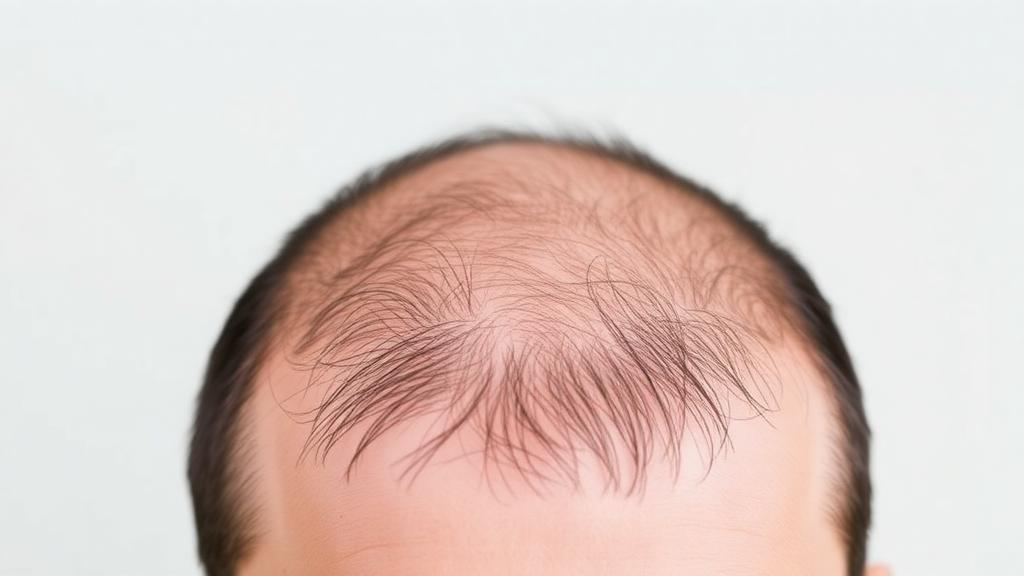
For decades, patients watching their hairlines recede have been told to stock up on zinc, iron, and selenium supplements, on the theory that some hidden mineral deficiency must be starving their follicles. A large new study from China now delivers a sobering verdict: when it comes to the most common form of hair loss, the blood of patients looks remarkably ordinary. Researchers at Sichuan Provincial People’s Hospital measured the serum concentrations of more than a dozen trace elements in 1,297 people with androgenetic alopecia and compared them with 476 healthy individuals, and the results, published in the Archives of Dermatological Research, suggest that routine mineral screening for this condition may be a waste of time and money.
Androgenetic alopecia, often called male or female pattern hair loss, is the dominant cause of hair thinning worldwide, driven by a genetic sensitivity of hair follicles to dihydrotestosterone, a potent derivative of testosterone. Under its influence, follicles on the scalp gradually miniaturize, producing finer, shorter hairs over successive growth cycles until they eventually stop producing cosmetically meaningful hair at all. Because the condition is so widespread, affecting a large share of men by middle age and a substantial number of women, the market for supplements claiming to restore hair through nutrition has flourished, often citing older, smaller studies that reported altered levels of zinc, copper, or iron in people with hair loss.
The new investigation set out to test that idea at a scale rarely attempted before. The team retrospectively collected patient data from Sichuan Provincial People’s Hospital covering the period from October 2021 to December 2024. Patients diagnosed with androgenetic alopecia formed the experimental group, while healthy individuals served as controls. Serum concentrations of copper, zinc, calcium, phosphorus, magnesium, iron, selenium, manganese, molybdenum, nickel, chromium, cobalt, and lithium were quantified using inductively coupled plasma mass spectrometry, an analytical technique capable of detecting metals and metalloids at extraordinarily low concentrations by ionizing atoms in a plasma torch and sorting the resulting ions by their mass-to-charge ratio.
The statistical analysis, performed with GraphPad Prism 9.0 software, used unpaired t-tests to compare the two groups, with a threshold of P less than 0.05 for significance. Out of the full panel of elements, only four showed statistically significant differences between patients and controls: copper, lithium, calcium, and phosphorus. And even those differences, on close inspection, were modest and clinically unconvincing. Serum copper averaged 897.8 plus or minus 164.2 nanograms per milliliter in the alopecia group versus 922.3 plus or minus 188.2 in the controls, both comfortably inside the reference interval of 240 to 2000 nanograms per milliliter. Serum lithium, measured at 1.20 versus 1.35 nanograms per milliliter, sat far below the upper limit of 200 nanograms per milliliter in both groups.
Calcium and phosphorus told a similar story of technical significance without clinical meaning. Some individuals in the control group had serum calcium values exceeding the reference interval of 80 to 100 micrograms per milliliter, but the proportion of out-of-range results was similar in both groups, indicating no meaningful association with hair loss. Phosphorus levels remained within the reference interval of 25 to 200 micrograms per milliliter in more than 99 percent of participants in both arms of the study. In other words, the elements that reached statistical significance did so on the strength of a very large sample size, which can detect tiny shifts that would go unnoticed in smaller cohorts, rather than because of any dramatic biological divergence.
Perhaps most striking was what did not differ at all. Zinc, the element most frequently blamed for hair loss in popular nutrition discourse, showed no statistically significant difference between patients and healthy controls. Neither did magnesium, iron, manganese, molybdenum, nickel, selenium, chromium, or cobalt. This null result carries particular weight because zinc and iron have been the focus of numerous earlier investigations, some of which reported lower serum levels in people with various forms of hair loss, fueling a persistent belief that supplementation could slow or reverse the process. The new data, drawn from a far larger patient population, undercut that assumption for androgenetic alopecia specifically.
The authors draw a direct practical conclusion: because serum trace element levels in patients with androgenetic alopecia fall within reference intervals and do not differ meaningfully from those of healthy individuals, routine screening of serum trace elements in these patients is not recommended. That recommendation, if adopted widely, could reshape clinical practice. Dermatologists frequently order panels of micronutrient tests when patients present with pattern hair loss, partly to reassure anxious patients and partly because historical literature suggested deficiencies might contribute. Each panel costs money, delays diagnosis, and can lead to unnecessary supplementation, which is not always harmless. Excess selenium, for example, has been linked in animal studies to changes in hair structure, and indiscriminate zinc supplementation can interfere with copper absorption.
The biology of why trace elements became suspects in the first place is not entirely unreasonable. Zinc participates in hundreds of enzymatic reactions, including processes central to the hair follicle cycle, and severe zinc deficiency is a documented cause of hair loss in conditions such as acrodermatitis enteropathica. Iron deficiency anemia is associated with diffuse hair shedding. Copper is a cofactor for enzymes involved in cross-linking keratin, and experimental work has explored copper-binding peptides in tissue remodeling. Selenium-dependent enzymes protect follicles from oxidative stress. The follicle, one of the most metabolically active structures in the human body, plausibly depends on an adequate mineral supply, which is precisely why the absence of measurable serum differences in this study is informative: the problem in androgenetic alopecia is not supply but signaling.
That signaling problem is hormonal and genetic. Follicles in the scalp of susceptible individuals express androgen receptors and the enzyme 5-alpha reductase, which converts testosterone into dihydrotestosterone. In these follicles, dihydrotestosterone binding to the androgen receptor triggers a cascade that shortens the growth phase of the hair cycle and progressively miniaturizes the follicle. Recent research has even traced how miniaturization depletes follicular stem cells through mechanosensory signals involving calcium flux and inflammatory mediators, an intracellular pathway entirely independent of how much calcium circulates in the serum. Approved treatments, including topical minoxidil and oral finasteride, act on vascularization and hormone conversion respectively, not on nutrition, and their efficacy reflects the true nature of the disease.
None of this means nutrition is irrelevant to hair health in general. Diffuse shedding can accompany crash dieting, malabsorption disorders, or genuine deficiencies, and clinicians should still investigate those contexts. But the distinction matters: androgenetic alopecia is a genetically programmed, hormone-driven process, and this study provides the strongest evidence yet that a blood test for minerals will not reveal anything useful about it. For the millions of people spending money on mineral supplements in the hope of regrowing a receding hairline, the message from this large, carefully measured dataset is blunt and liberating at once. The minerals are there. The hair loss has other causes, and future progress will come from targeting the hormonal and molecular machinery of the follicle itself rather than the chemistry of the bloodstream that feeds it.
Subject of Research: Serum trace element concentrations in patients with androgenetic alopecia compared with healthy controls
Article Title: A study on the serum trace element concentration in patients with androgenetic alopecia
Article References: Sun, H., Luo, J., & Xie, C. (2026). A study on the serum trace element concentration in patients with androgenetic alopecia. Archives of Dermatological Research, 318(1), Article 486. https://doi.org/10.1007/s00403-026-04967-z
Image Credits: AI Generated
DOI: 10.1007/s00403-026-04967-z
Keywords: androgenetic alopecia, trace elements, serum copper, zinc, hair loss, inductively coupled plasma mass spectrometry, micronutrients, dermatology, clinical screening, mineral supplements, hair follicle, case-control study
Cite Scienmag News
Ophelia Keating. (October 2, 2026). Hair Loss Is Not a Trace Element Problem, Massive Serum Study Finds. Scienmag. https://scienmag.com/hair-loss-is-not-a-trace-element-problem-massive-serum-study-finds/
Ophelia Keating. "Hair Loss Is Not a Trace Element Problem, Massive Serum Study Finds." Scienmag, 2 October 2026, https://scienmag.com/hair-loss-is-not-a-trace-element-problem-massive-serum-study-finds/. Accessed 4 October 2026.
Ophelia Keating. "Hair Loss Is Not a Trace Element Problem, Massive Serum Study Finds." Scienmag. October 2, 2026. https://scienmag.com/hair-loss-is-not-a-trace-element-problem-massive-serum-study-finds/


