


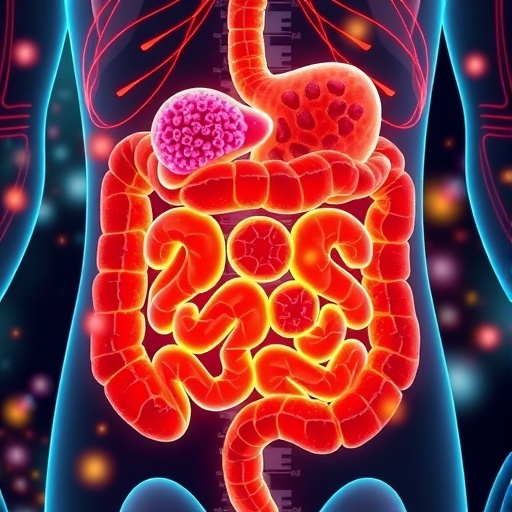
In a groundbreaking advancement poised to transform the landscape of gastrointestinal healthcare, scientists have identified a suite of novel biomarkers that may dramatically enhance the early detection and treatment of gastrointestinal diseases (GIDs). These diseases, which encompass gastric cancer (GC), colorectal cancer (CRC), and inflammatory bowel disease (IBD), represent a significant global health burden. Traditionally reliant on invasive diagnostic techniques such as endoscopy and biopsies, the field is now looking towards more refined, minimally invasive approaches driven by insights into the human microbiome and metabolome.
At the heart of this pioneering research is the intricate relationship between gut microorganisms and the metabolic byproducts they generate. Utilizing cutting-edge machine learning and artificial intelligence algorithms, researchers meticulously analyzed large-scale microbiome and metabolome datasets from patients afflicted with GC, CRC, and IBD. This analytical approach not only illuminated disease-specific microbial and metabolic patterns but also revealed fascinating cross-disease predictive capabilities, challenging conventional clinical paradigms.
For instance, machine learning models trained on gastric cancer data demonstrated remarkable accuracy in predicting biomarkers traditionally associated with inflammatory bowel disease. Conversely, models developed from colorectal cancer datasets were proficient in identifying biomarkers pertinent to gastric cancer. This cross-disease analytical strategy underscores a potential shared pathogenic framework within gastrointestinal diseases, highlighting molecular intersections that may serve as targets for universal diagnostic tools.
Delving deeper into microbial specifics, the researchers found that bacteria belonging to the Firmicutes, Bacteroidetes, and Actinobacteria phyla prominently feature in gastric cancer pathology. Accompanying these microbial shifts were changes in metabolites such as dihydrouracil and taurine, crucial intermediates implicated in cellular processes and immune modulation. Notably, some of these biomarkers exhibited overlap with those detected in IBD patients, suggesting a biological continuum or interplay between inflammatory and neoplastic processes in the gastrointestinal tract.
Colorectal cancer, by contrast, displayed a distinct microbial signature characterized by elevated levels of Fusobacterium and Enterococcus species. Metabolic profiling identified amino acids like isoleucine and nicotinamide as significant markers, compounds known for their roles in energy metabolism and cellular repair mechanisms. Interestingly, these markers sometimes coincided with those linked to gastric cancer, reinforcing the hypothesis of converging molecular pathways in these malignancies.
In the context of inflammatory bowel disease, members of the Lachnospiraceae family emerged as critical microbial contributors. Metabolites such as urobilin and glycerate were also implicated, the former associated with heme breakdown and the latter involved in central carbon metabolism. The observation that certain IBD-related biomarkers are also involved in cancerous pathways sheds light on the intricate molecular cross-talk underpinning chronic inflammation and tumorigenesis in the gut.
A pivotal aspect of this study was simulating gut microbial growth and metabolite fluxes to uncover the metabolic divergences between healthy and diseased states. These simulations revealed that alterations in microbial population dynamics directly influence metabolic pathways, which in turn contribute to disease progression. Such insights reinforce the gut microbiome’s pivotal role as both a mediator and indicator of gastrointestinal health, opening avenues for metabolic intervention and therapeutic modulation.
Dr. Animesh Acharjee, lead co-author and a prominent figure in Health Data Science at the University of Birmingham, emphasized the clinical implications of these discoveries. He noted that while current diagnostic protocols remain effective, their invasiveness and cost limit widespread early detection. The integration of microbial and metabolic biomarkers into clinical practice could revolutionize diagnostics by offering non-invasive, precise, and personalized disease detection. This paradigm shift promises not only earlier intervention but also the tailoring of treatment strategies to individual patients’ molecular profiles.
Beyond diagnosis, these biomarker insights hold promise for the future of targeted therapies. By understanding the microbial and metabolic underpinnings of gastrointestinal diseases, clinicians can develop interventions that specifically modulate aberrant pathways. Such therapies could restore microbial equilibrium or correct metabolic dysfunctions, potentially halting disease progression or improving treatment responses.
The researchers’ forward-looking strategy involves validating their findings across larger, demographically diverse patient cohorts. This step is critical to ensure the robustness and generalizability of the biomarker profiles, accounting for variations in diet, genetics, environment, and lifestyle. Additionally, the team aims to investigate whether these biomarkers have predictive value for other gastrointestinal or related systemic diseases, expanding their potential clinical utility.
This study is a testament to the power of interdisciplinary collaboration, blending microbiology, biochemistry, data science, and clinical medicine to tackle complex diseases. The use of AI-driven algorithms in parsing multifaceted biological data sets exemplifies the new frontier in precision medicine—where computational tools synergize with biological insights to yield actionable knowledge.
Ultimately, this research heralds a future where gastrointestinal diseases are detected earlier, diagnosed more accurately, and treated more effectively. By leveraging microbial and metabolic biomarkers as diagnostic and therapeutic cornerstones, the medical community stands on the cusp of a revolution that could significantly reduce the morbidity and mortality associated with these challenging conditions. The ongoing pursuit of universal diagnostic tools, as championed by Dr. Acharjee and colleagues, offers hope for millions worldwide suffering from GIDs.
News Publication Date: 16-May-2025
Web References:
https://translational-medicine.biomedcentral.com/articles/10.1186/s12967-025-06552-w
References:
Philip D, Hodgkiss R, Kollampallath Radhakrishnan S, Sinha A, Acharjee A. Deciphering microbial and metabolic infuences in gastrointestinal diseases-unveiling their roles in gastric cancer, colorectal cancer, and infammatory bowel disease. Journal of Translational Medicine. 2025.
Cite Scienmag News
Nathaniel Bowman. (May 28, 2025). Gut Microbiome: Unlocking New Frontiers in Cancer Treatment. Scienmag. https://scienmag.com/gut-microbiome-unlocking-new-frontiers-in-cancer-treatment/
Nathaniel Bowman. "Gut Microbiome: Unlocking New Frontiers in Cancer Treatment." Scienmag, 28 May 2025, https://scienmag.com/gut-microbiome-unlocking-new-frontiers-in-cancer-treatment/. Accessed 6 September 2026.
Nathaniel Bowman. "Gut Microbiome: Unlocking New Frontiers in Cancer Treatment." Scienmag. May 28, 2025. https://scienmag.com/gut-microbiome-unlocking-new-frontiers-in-cancer-treatment/


