


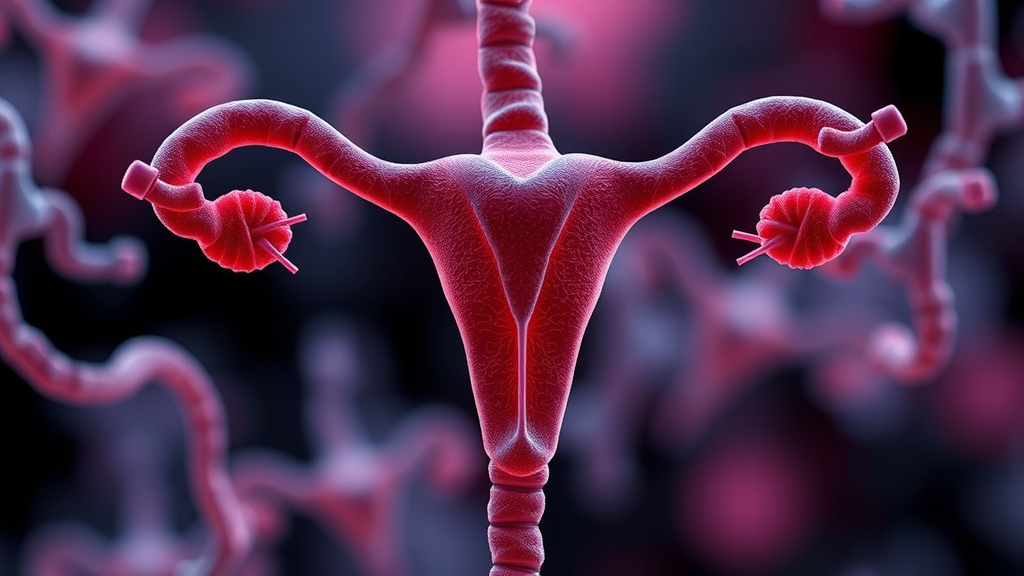
The trillions of microbes living in the human gut have already been linked to conditions ranging from depression to diabetes, but a new study suggests they may also play a role in some of the most common and consequential disorders of the ovary. Using a genetic technique called Mendelian randomization, researchers in China report evidence of causal connections between specific gut bacterial genera and seven ovarian-related diseases, including polycystic ovary syndrome, endometriosis, and ovarian cancer. The findings, published in the Journal of Ovarian Research, add weight to the emerging concept of a gut-ovary axis, a communication pathway through which intestinal microbes could influence reproductive health.
The research team, led by Xiaojie Jiang and corresponding author Yong Tan of Nanjing University of Chinese Medicine and its affiliated hospital, set out to answer a question that observational studies alone cannot settle: does an altered gut microbiome actually contribute to ovarian disease, or do ovarian diseases simply change the gut environment? Because people with a given illness often share diets, medications, and lifestyle factors that also shape their microbiomes, correlation in these studies is notoriously difficult to interpret causally. Mendelian randomization offers a way around this impasse by exploiting the random shuffle of genes that occurs at conception.
The logic of the method rests on a simple analogy. If certain genetic variants are reliably associated with higher abundance of a particular gut bacterium, and those same variants also show up more often in people with a particular disease, the bacterium becomes a plausible causal suspect, much as elevated LDL cholesterol flagged by genetic markers is a confirmed cause of heart disease. Because gene variants are fixed at birth and generally unaffected by later disease, they are largely immune to the reverse causation and confounding that plague conventional epidemiology.
To conduct the analysis, the team drew on genome-wide association study (GWAS) data from two large public resources: the MiBioGen consortium, which catalogued genetic determinants of gut microbial taxa across tens of thousands of individuals, and the FinnGen project, a Finnish biobank initiative with extensive disease records. From these datasets, the researchers selected instrumental variables for 119 gut microbiota traits, applying rigorous quality control to ensure that the genetic proxies were strongly associated with the microbes and not unduly influenced by linkage disequilibrium, the tendency of nearby genes to be inherited together. They then used the inverse-variance weighted method, the workhorse of two-sample Mendelian randomization, to estimate causal effects of each microbial trait on each of seven ovarian conditions: polycystic ovary syndrome, primary ovarian failure, endometriosis of the ovary, ovarian hyperstimulation syndrome, ovarian cysts, benign ovarian neoplasms, and malignant ovarian neoplasms.
The results revealed a striking pattern of genetic overlap. Polycystic ovary syndrome, a leading cause of infertility affecting roughly one in ten women of reproductive age, was associated with 47 single-nucleotide polymorphisms derived from four bacterial genera. Primary ovarian failure, which causes premature loss of ovarian function, was linked to 20 variants from two genera, while ovarian endometriosis showed associations with 18 variants from a single genus. Ovarian hyperstimulation syndrome, a potentially dangerous complication of fertility treatment, was connected to 48 variants from four genera. Ovarian cysts involved 31 variants from two genera, and both benign and malignant ovarian neoplasms showed broad microbial links, with 47 variants from four genera and 61 variants from five genera respectively. In total, every one of the seven diseases examined showed at least one genetically predicted association with the gut microbiome.
Causal estimates from Mendelian randomization are only as trustworthy as their sensitivity checks, and the team ran a battery of them. Complementary methods such as weighted median and MR-Egger regression help detect whether a single influential genetic variant or hidden pleiotropic effects, in which variants affect the disease through pathways other than the microbe, are driving the signal. Additional tests assess heterogeneity among the genetic instruments and look for bias from directional pleiotropy. Across these analyses, the reported associations held up, which the authors interpret as evidence that their findings are stable and statistically reliable rather than artifacts of the methodology.
Crucially, the researchers did not stop at the forward direction. In reverse Mendelian randomization analyses, they asked whether developing an ovarian disease could itself reshape the gut microbiome. The data suggested bidirectional causal relationships between gut microbes and all seven conditions, meaning the influence appears to flow in both directions along the gut-ovary axis. This two-way traffic is biologically plausible: microbes can modulate circulating estrogen levels, inflammatory signaling, insulin sensitivity, and immune function, all of which are deeply entwined with ovarian physiology, while hormonal shifts and chronic inflammation associated with ovarian disease can in turn alter the gut environment that microbes inhabit.
The mechanistic story remains incomplete, and the authors are careful to frame their study as a source of hypotheses rather than clinical prescriptions. Mendelian randomization identifies genetically predicted associations, but it cannot specify which bacterial metabolites or immune pathways carry the signal from gut to ovary. Nor do the results identify specific probiotic strains or microbial interventions that would safely reduce disease risk. Still, the identification of particular bacterial genera as genetic suspects gives laboratory scientists concrete targets for mechanistic work, and it raises the long-term prospect of microbiome-based biomarkers or even therapies for conditions that currently lack satisfactory prevention strategies.
The clinical stakes are considerable. Polycystic ovary syndrome and endometriosis are among the most common causes of infertility worldwide, ovarian cancer remains one of the deadliest malignancies because it is usually detected late, and primary ovarian failure carries lifelong consequences for fertility, bone health, and cardiovascular risk. If even a fraction of the microbial associations reported here translate into modifiable risk factors, the gut microbiome could eventually join the short list of actionable levers in reproductive medicine, complementing existing approaches to diagnosis and treatment.
For now, the study stands as one of the most comprehensive genetic surveys of the gut-ovary axis to date, covering 119 microbial traits and seven diseases in a single bidirectional framework. Its reliance on large public biobanks demonstrates how openly available genetic data can be repurposed to probe questions that would be impractical to address in randomized trials, given that manipulating the human microbiome prospectively across decades is neither feasible nor ethical. The next step, the authors suggest, is mechanistic research to trace how the implicated microbial genera exert their effects, work that could ultimately determine whether the gut holds new keys to ovarian health.
Subject of Research: Causal associations between gut microbiota and ovarian-related diseases assessed by bidirectional Mendelian randomization
Article Title: Gut microbiota and ovarian-related diseases: insights from a Mendelian randomization study on the gut-ovary axis
Article References: Jiang, X., Zhang, M., Du, W., & Tan, Y. (2026). Gut microbiota and ovarian-related diseases: insights from a Mendelian randomization study on the gut-ovary axis. Journal of Ovarian Research. https://doi.org/10.1186/s13048-026-02256-x
Image Credits: AI Generated
DOI: 10.1186/s13048-026-02256-x
Keywords: gut microbiota, gut-ovary axis, Mendelian randomization, polycystic ovary syndrome, endometriosis, ovarian cancer, primary ovarian failure, ovarian hyperstimulation syndrome, GWAS, microbiome, reproductive health, dysbiosis
Cite Scienmag News
Juliet Wilcox. (September 25, 2026). Gut Microbes May Shape Ovarian Disease Risk, Genetic Study Finds. Scienmag. https://scienmag.com/gut-microbes-may-shape-ovarian-disease-risk-genetic-study-finds/
Juliet Wilcox. "Gut Microbes May Shape Ovarian Disease Risk, Genetic Study Finds." Scienmag, 25 September 2026, https://scienmag.com/gut-microbes-may-shape-ovarian-disease-risk-genetic-study-finds/. Accessed 4 October 2026.
Juliet Wilcox. "Gut Microbes May Shape Ovarian Disease Risk, Genetic Study Finds." Scienmag. September 25, 2026. https://scienmag.com/gut-microbes-may-shape-ovarian-disease-risk-genetic-study-finds/


