

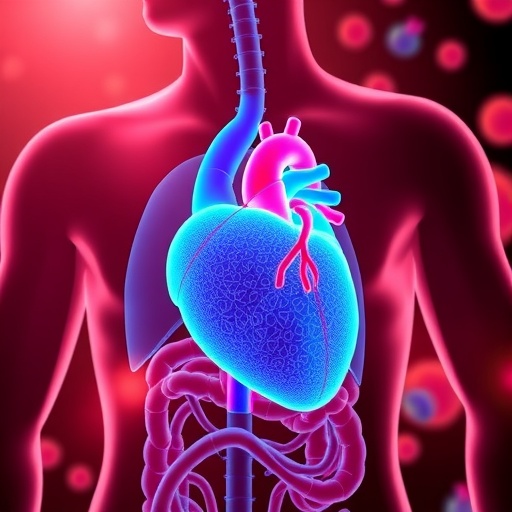
In a groundbreaking study poised to reshape our understanding of coronary heart disease, researchers have uncovered a compelling link between specific molecules produced by gut microbes and the risk of developing this leading cause of death. Leveraging blood samples from thousands of diverse participants across the United States and Shanghai, China, the team identified nine distinct gut microbe metabolites whose bloodstream concentrations are statistically associated with either an increased or decreased likelihood of future coronary heart diagnoses. Presented by Danxia Yu and colleagues from Vanderbilt University Medical Center in the open-access journal PLOS Medicine, these findings highlight the intricate biochemical dialogue between our gut microbiome and cardiovascular health, opening potential new pathways for diagnostics and therapeutics.
The human digestive tract harbors a vast and complex microbial ecosystem, with trillions of bacteria inhabiting the gut lumen. These microbes are not mere bystanders but active biochemical factories that metabolize dietary and endogenous substances, generating a plethora of metabolites. Such metabolites can translocate into the circulatory system, exerting systemic physiological effects. While it has long been recognized that gut microbial composition varies widely among individuals, the precise molecular intermediaries linking gut microbial activity to heart disease risk had remained elusive—until now. By focusing on circulating small molecules derived from microbial metabolism, Yu’s team sought to unravel these elusive biochemical signatures.
The research employed a rigorously structured, multi-stage metabolomics approach. Initially, nearly 2,000 participants provided baseline blood samples which were subjected to high-resolution mass spectrometry analysis to quantify a wide array of microbial metabolites. This discovery phase identified candidate metabolites exhibiting significant correlation with incident coronary heart disease over subsequent follow-up periods. Subsequent validation phases incorporated external cohorts and employed quantitative methodologies to refine these associations. Importantly, the analysis rigorously adjusted for confounding variables such as age, sex, body mass index, family history of cardiovascular disease, and dietary factors, ensuring robustness of findings.
From this expansive effort, nine specific gut microbial metabolites emerged as consistent biomarkers of coronary heart disease risk. These metabolites spanned diverse chemical classes, including short-chain fatty acids, bile acid derivatives, and other microbial metabolic byproducts. Remarkably, some metabolites were linked to heightened risk, while others appeared protective. The strength and direction of these associations persisted even when participants were stratified based on lifestyle factors or familial predisposition, underscoring their potential as independent indicators or contributors to disease pathogenesis.
Intriguingly, subgroup analyses revealed variations in metabolite-disease relationships across racial and age demographics, suggesting that gut microbial metabolic impacts on cardiovascular health might be modulated by genetic or environmental factors. For instance, the influence of certain metabolites was more pronounced in some ethnic groups, hinting at the interplay between host genetics, microbial ecology, and metabolite production. These nuances further complicate and enrich the landscape of microbiome-cardiovascular research and underscore the necessity of diverse populations in biomedical studies.
The mechanistic implications of these findings are profound. Many gut microbe metabolites are known to interact with host immune and metabolic pathways, potentially contributing to atherosclerosis, inflammation, and endothelial dysfunction, which are cardinal processes in coronary heart disease. By delineating which metabolites correlate with disease risk, this study provides a molecular roadmap to explore how microbial metabolism influences vascular biology. Such knowledge may catalyze the development of novel interventions aimed at modulating the gut microbiome or its metabolic outputs to mitigate cardiovascular risk.
Moreover, the study exemplifies the power of metabolomics—the comprehensive analysis of small molecules in biological samples—to illuminate clinically relevant biochemical phenotypes. Combining large-scale cohort data with cutting-edge analytic techniques enabled the researchers to surmount prior limitations and identify reproducible biomarkers with translational potential. This integrative approach heralds a new era in precision medicine, wherein microbiome-derived metabolites can be harnessed for early diagnosis, risk stratification, and targeted therapeutics in coronary heart disease.
The authors emphasize the necessity for future research to dissect the causal roles of these identified metabolites. Interventional studies manipulating gut microbial composition or metabolic pathways could establish whether modulating these molecules can concretely alter disease trajectories. Additionally, experimental models can elucidate the underlying biological mechanisms and validate candidate metabolites as drug targets. Such endeavors will be instrumental in transforming associative findings into actionable clinical strategies.
This investigation also sheds light on the broader significance of gut microbial metabolism in human health. Given the central role of the microbiome in metabolite production, alterations in diet, antibiotic use, or other environmental exposures may substantially impact cardiovascular outcomes via changes in these metabolites. Understanding this dynamic interplay may enable public health initiatives to incorporate microbiome-targeted lifestyle recommendations for heart disease prevention.
In summary, this comprehensive multi-ethnic, multi-stage metabolomics study advances our understanding of how the gut microbiome’s metabolic activity is intricately linked with coronary heart disease risk. The identification of nine gut microbial metabolites associated with disease susceptibility across diverse populations marks a significant scientific milestone with far-reaching implications. By unveiling these molecular interconnections, the research paves the way for innovative biomarker development and therapeutic interventions aimed at one of the world’s deadliest conditions.
Such findings underscore the emerging paradigm in cardiovascular research where microbiome science merges with traditional risk factor analysis to create a more holistic view of disease etiology. As gut microbial metabolites ascend as crucial players in cardiovascular pathology, targeting microbial metabolism may soon complement existing prevention and treatment modalities. The horizon now beckons for mechanistic and interventional studies to translate these promising discoveries into tangible health benefits.
The full study is freely available in PLOS Medicine, inviting researchers and clinicians worldwide to probe deeper into the microbial molecules shaping heart health. The interplay between our microbial inhabitants and cardiovascular systems continues to reveal uncharted biological territory, promising to yield novel insights and avenues for combating coronary heart disease on a global scale.
Subject of Research: People
Article Title: Circulating gut microbial metabolites and risk of coronary heart disease: A prospective multi-stage metabolomics study
News Publication Date: March 17, 2026
Web References: https://doi.org/10.1371/journal.pmed.1004750
References: Zheng Y, Yang JJ, Gupta DK, Herrington DM, Yu B, Nguyen NQH, et al. (2026) Circulating gut microbial metabolites and risk of coronary heart disease: A prospective multi-stage metabolomics study. PLoS Med 23(3): e1004750.
Image Credits: Hey Paul Studio, Flickr (CC-BY 2.0)
Keywords: Gut microbiome, metabolites, coronary heart disease, metabolomics, cardiovascular risk, microbial metabolism, biomarker, precision medicine


