


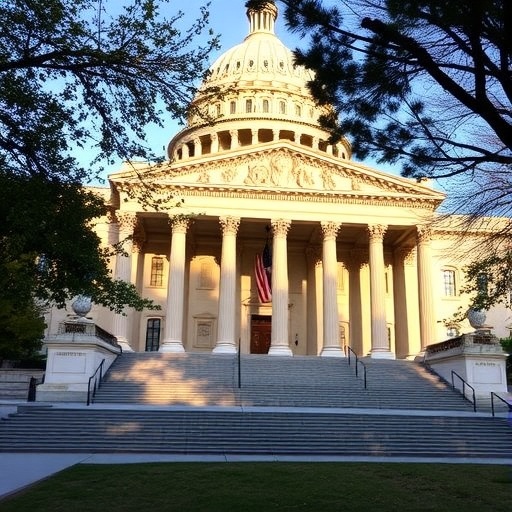
Senate appropriators have reached a bipartisan agreement on a short-term government funding measure that would delay implementation of a proposed rule potentially reshaping how federal grants are awarded across the United States. The continuing resolution includes a provision targeting a regulation from the White House Office of Management and Budget (OMB) that would place political appointees in a central role in approving federal financial assistance.
The proposal has attracted attention because federal grants are a critical infrastructure for science, medicine, public health, education, and social services. Grants and cooperative agreements provide the financial foundation for university research laboratories, nonprofit initiatives, health systems, workforce-training programs, aging services, and community-based organizations. Any change to the approval process could therefore influence not only government administration, but also the pace and direction of research and public programs nationwide.
Under the proposed framework, political appointees could gain authority over decisions traditionally handled through established grant-management systems and career civil-service procedures. Federal grantmaking typically involves technical review, eligibility screening, compliance checks, and evaluation against published program objectives. These processes are designed to ensure that awards are based on scientific merit, demonstrated need, statutory requirements, and the capacity to carry out proposed work. Shifting final authority toward political officials could introduce new uncertainties into that system.
The proposed rule would affect funding administered through 42 federal agencies, making its potential reach unusually broad. Agencies that support biomedical research, disease prevention, health-care delivery, education, housing, nutrition, environmental programs, and aging services could all be touched by changes in grant approval. Because many organizations rely on multiyear awards, even a temporary delay or alteration in the approval process could affect hiring, data collection, clinical studies, training programs, and service delivery.
For research institutions, the timing of grant decisions can be as important as the amount of funding itself. Scientific projects often depend on continuous support to maintain laboratory personnel, recruit study participants, preserve biological samples, operate equipment, and meet regulatory obligations. Delays can create gaps that are difficult to repair, particularly in longitudinal studies that follow people over many years or in clinical and public-health projects that require uninterrupted data collection.
The same concern applies to programs serving older adults and their families. Aging-related research and services frequently connect universities, hospitals, professional organizations, local governments, and nonprofit groups. These partnerships support studies of dementia, chronic disease, mobility, caregiving, social isolation, workforce development, and healthy aging. They also help translate scientific findings into practical interventions, such as community health programs, evidence-based exercise initiatives, and services that allow older adults to remain independent.
The Gerontological Society of America, the oldest and largest interdisciplinary organization focused on aging, welcomed the Senate appropriators’ effort to delay the rule. The organization said the measure would help ensure that federal grant funding is administered consistently with congressional intent. Its position reflects a broader concern among research and service organizations that grant systems must remain transparent, predictable, and open to qualified applicants regardless of institutional size or political connections.
A stable grants ecosystem also functions as a mechanism for distributing expertise. Federal agencies often rely on independent scientific review and program-specific knowledge to determine whether a proposed project is technically sound and likely to produce public value. Reviewers may assess study design, statistical methods, data-management plans, recruitment strategies, ethical safeguards, and the feasibility of the proposed timeline. Preserving these safeguards is especially important when public funds support complex work involving human participants or vulnerable populations.
The Senate agreement does not permanently resolve the dispute over the proposed OMB rule. Instead, the continuing resolution would postpone its implementation while Congress continues its appropriations work. That delay could give lawmakers, agencies, researchers, and nonprofit organizations additional time to examine how the rule would operate in practice, including its effects on accountability, administrative efficiency, conflicts of interest, and the independence of scientific decision-making.
As negotiations continue, the debate over federal grants is also becoming a debate over how scientific knowledge and public services are produced. Universities, health systems, professional societies, and community organizations depend on reliable government partnerships to generate evidence, train specialists, test innovations, and deliver programs. The Gerontological Society of America is urging policies that protect transparency, stability, and broad participation, arguing that these principles are essential to improving health and well-being throughout the aging process.
Web References:
https://www.appropriations.senate.gov/imo/media/doc/division_a_continuing_appropriations_act_2027_appropriations_committee.pdf
https://www.federalregister.gov/documents/2026/05/29/2026-10817/regulation-for-federal-financial-assistance
Cite Scienmag News
Ophelia Keating. (August 4, 2026). GSA Responds to Senate Funding Bill Language Affecting Federal Grants. Scienmag. https://scienmag.com/gsa-responds-to-senate-funding-bill-language-affecting-federal-grants/
Ophelia Keating. "GSA Responds to Senate Funding Bill Language Affecting Federal Grants." Scienmag, 4 August 2026, https://scienmag.com/gsa-responds-to-senate-funding-bill-language-affecting-federal-grants/. Accessed 4 September 2026.
Ophelia Keating. "GSA Responds to Senate Funding Bill Language Affecting Federal Grants." Scienmag. August 4, 2026. https://scienmag.com/gsa-responds-to-senate-funding-bill-language-affecting-federal-grants/


