

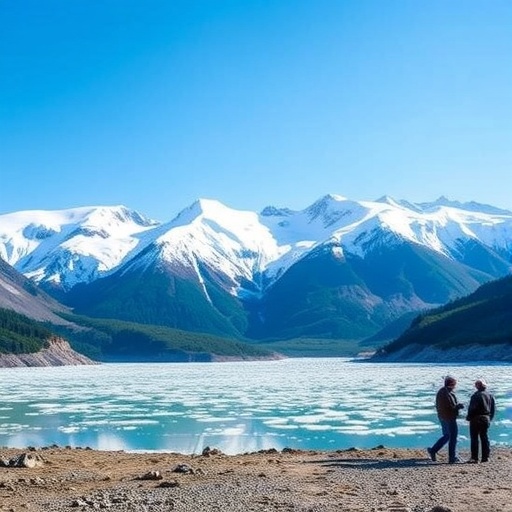
As the Earth’s ice masses continue their relentless retreat under the influence of a warming climate, an often overlooked yet rapidly transforming resource is emerging: glacial lakes. Recent research by Veh, Schwanghart, Korup, and colleagues delves deep into the evolving potential of these water bodies, highlighting their significance not just as markers of environmental change but as vital, albeit complex, reservoirs with multifaceted implications for water resource management, hazard mitigation, and renewable energy generation.
Glacial lakes form primarily through the melting and retreat of glaciers, with meltwater accumulating in depressions carved by ice or dammed by moraines and bedrock. The ongoing deglaciation driven by climate warming accelerates this process, leading to the formation of new lakes and the expansion of existing ones. While these lakes embody the dramatic physical transformations accompanying climate change, their increasing volume and distribution also herald significant shifts in hydrological regimes across mountainous and downstream regions worldwide.
One crucial aspect illuminated by the study is the dual nature of glacial lake development. On one hand, these lakes represent a growing potential for freshwater resources in regions historically dependent on glacial meltwater runoff. Climate models and field observations reveal that, during the initial phases of glacier retreat, increased meltwater fluxes contribute to peak water availability, enhancing water supplies for agriculture, urban consumption, and ecosystem sustenance. Such changes can significantly affect water security in many downstream communities.
However, this boon is tempered by the inherent instability of many glacial lakes, particularly those dammed by unconsolidated moraines, which pose a risk of catastrophic outburst floods. The interplay between hydro-meteorological extremes and the fragility of natural dams creates a precarious situation where expanding lakes may threaten settlements and infrastructure. The authors emphasize that understanding the physical and temporal evolution of these lakes is essential for hazard assessment and disaster risk reduction strategies.
Another fascinating dimension explored is the shifting resource potential of glacial lakes for energy generation. With the urgent global transition to renewable energy, hydropower sourced from glacial meltwater is garnering substantial interest. The temporal evolution of glacial lake volumes suggests windows of opportunity for expanding hydropower capacity, especially in high-mountain regions. Yet, the sustainability of such ventures depends on the balance between continued glacial meltwater supply and the stabilization of lake volumes as glaciers diminish further.
The study leverages advanced geospatial analysis, remote sensing datasets, and hydrological modeling to quantify changes in lake areas and volumes across diverse glaciated regions. By integrating satellite imagery with ground observations, the researchers provide a comprehensive picture of how the global inventory of glacial lakes is evolving in response to warming trends. This methodology unlocks unprecedented capabilities to monitor and predict future developments critical for managing water and energy resources.
In parallel, the research discusses the implications of glacier retreat and lake formation on regional ecosystems. Newly formed glacial lakes create novel aquatic habitats, altering biodiversity patterns and ecological processes. These environments support unique assemblages of species adapted to cold, oxygen-rich waters but also face threats from changing physical parameters such as temperature, nutrient influx, and sediment load. Consequently, ecological monitoring becomes a vital complement to hydrological and hazard-related studies.
Moreover, the paper highlights the importance of adaptive governance frameworks to address the multifaceted challenges and opportunities posed by expanding glacial lakes. Policies focusing exclusively on hazard mitigation or resource exploitation may fall short in capturing the dynamic and interconnected nature of these systems. Instead, integrated approaches balancing risk management, sustainable water use, ecosystem conservation, and community involvement are essential for harnessing the full spectrum of benefits while minimizing adverse impacts.
The temporal dimension of glacial lake change emerges as a critical consideration throughout the analysis. During the early stages of deglaciation, lakes commonly exhibit rapid growth, contributing to high water availability and increased hazard potential. As glaciers continue shrinking beyond critical thresholds, lakes may stabilize or even shrink, altering hydrological cycles and challenging long-term planning. The researchers stress the necessity of continuous monitoring to anticipate and respond to these evolving conditions.
Technological advances such as unmanned aerial vehicles (UAVs), in situ sensors, and machine learning algorithms play a pivotal role in enhancing data collection and analysis capabilities. The amalgamation of diverse datasets enables more accurate estimations of lake volumes, identification of critical dam structures, and early warning systems for glacial lake outburst floods. The study foresees a future where real-time monitoring underpins decision-making processes.
Examining regional case studies further enriches the understanding of glacial lake dynamics. High mountain ranges such as the Himalayas, Andes, and European Alps exhibit varied responses owing to differing climatic regimes, glacier typologies, and topographic settings. The findings underscore that localized knowledge alongside global assessments is key to implementing effective risk management, water resource planning, and ecosystem protection tailored to regional contexts.
Importantly, the research intersects with pressing societal questions about climate adaptation and sustainable development. Communities reliant on glacial meltwater face uncertainty regarding long-term availability, while also confronting potential hazards from lake outbursts. Balancing these contradictory realities requires collaborative efforts crossing scientific disciplines, policy domains, and international borders, from local municipalities to transnational water governance bodies.
Beyond immediate practical concerns, the evolving resource potential of glacial lakes underscores broader environmental transformations wrought by the Anthropocene. These lakes, emerging from retreating ice, document the changing cryosphere and hydrosphere, serving as both indicators and agents of planetary change. Their study enriches our understanding of climate change impacts, water cycle shifts, and emerging resource frontiers in the high mountains.
In conclusion, the work by Veh and colleagues represents a vital contribution to the growing body of knowledge surrounding glacial lake dynamics amid global deglaciation. By combining rigorous technical analysis with a forward-looking perspective, the research illuminates pathways to responsibly harness the emergent resource potentials of glacial lakes, while addressing inherent risks and preserving ecological integrity. As glaciers continue their unfolding retreat, these waters will undoubtedly shape the future of mountain hydrology, hazard resilience, and renewable energy.
The insights gained from this study call for intensified interdisciplinary collaboration and investment in monitoring infrastructure. Only through coordinated scientific, technological, and policy initiatives can societies optimally navigate the complex landscape of deglaciation-driven water resources. The evolving glacial lakes remind us that climate change is not only a story of losses but also one of dynamic transitions that must be understood, respected, and wisely managed.
Subject of Research: The evolving potential of glacial lakes as resources amid ongoing climate-driven glacier retreat, focusing on hydrology, hazard risks, renewable energy, and ecosystem impacts.
Article Title: Evolving resource potential of glacial lakes with ongoing deglaciation.
Article References:
Veh, G., Schwanghart, W., Korup, O. et al. Evolving resource potential of glacial lakes with ongoing deglaciation. Nat Water (2026). https://doi.org/10.1038/s44221-025-00578-6
Image Credits: AI Generated


