

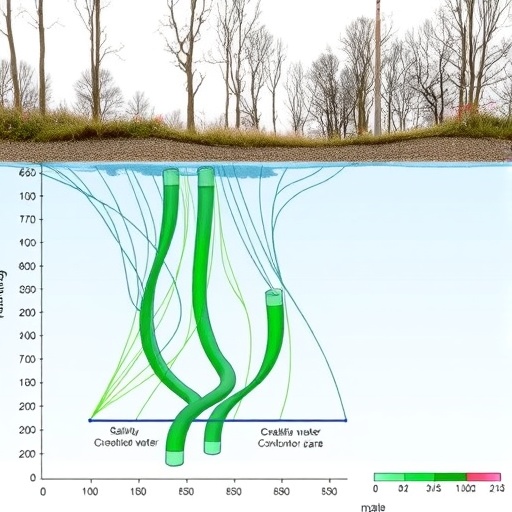
The decommissioning of salt mines has significant implications for surrounding ecosystems, particularly in terms of water quality. In recent years, a study undertaken by d’Obyrn et al. has shed light on the changes in salinity levels in groundwater and surface water around the decommissioned borehole salt mine “Łężkowice” located in southern Poland. This research provides critical insights into how the legacy of salt mining operations continues to influence local hydrological systems long after the cessation of active mining.
As salt mines are closed, various geochemical processes kick in, altering the natural balance of saline levels in both groundwater and surface bodies of water. The research conducted at Łężkowice aims to monitor these changes and quantify the specific impacts of salt mine decommissioning on local water quality. Groundwater salinity levels can fluctuate significantly due to factors such as rainfall patterns, evaporation, and the natural dissolution processes of salts left behind in mine structures.
In the study area, d’Obyrn and colleagues meticulously collected water samples from designated sites, both upstream and downstream of the mining site. This approach enabled them to establish a comprehensive baseline for assessing the salinity levels before and after the cessation of mining activities. Their sampling protocols were designed to capture seasonal variations, facilitating a deeper understanding of temporal effects on salinity.
An essential finding from the research is that the decommissioning of the salt mine has led to increased salinity in nearby groundwater sources. The elevated salinity was primarily attributed to the infiltration of saline water from abandoned mine workings into the aquifer systems. This infiltration can compromise local freshwater resources, thereby posing risks to agricultural practices, drinking water supplies, and native aquatic habitats.
Furthermore, the study employed advanced geochemical analysis techniques to map the changes in ionic composition associated with fluctuating salinity levels. Through the application of hydrogeochemical modeling, the researchers discerned the pathways through which saline water migrated from the mine and interacted with local water systems. Such insights are crucial for developing informed management strategies to mitigate adverse impacts on the environment.
Water temperature and pH levels were also studied as critical components of water quality. It was noted that changes in salinity could consequently influence the thermal characteristics and acidity of water bodies. The study emphasized the need for ongoing monitoring, as variations in temperature and pH can have cascading effects on aquatic biota, spawning cycles, and overall ecosystem health.
Salinity not only presents challenges for ecological sustainability but also poses challenges for human communities that rely on these water sources for various activities. The impact of elevated salinity may reduce the usability of agricultural lands and compromise freshwater availability, leading to increased long-term economic costs for affected communities. The importance of proactive management is underscored, emphasizing the necessity of regulatory frameworks that address such environmental concerns.
Moreover, the research’s implications extend beyond local contexts to global conversations about sustainable mining practices and land rehabilitation. As mining operations pose similar risks in various regions worldwide, findings from the Łężkowice study can inform policies aimed at minimizing environmental degradation. Strategies such as adopting “best management practices” in mining operations have the potential to prevent similar issues from arising in the future.
The researchers also highlighted the significance of public awareness and community engagement in tackling such environmental issues. Educating local communities about the potential long-term effects of mining activity on water resources will cultivate a collaborative effort toward sustainable practices. Involving stakeholders in decision-making processes can ensure that local knowledge is leveraged alongside scientific research to address challenges more effectively.
The case study of Łężkowice serves as a crucial reminder of the enduring effects of industrial activities on natural resources. As the global demand for mineral resources continues to grow, our understanding of the long-term ramifications of extraction must keep pace. The research carried out by d’Obyrn et al. contributes significantly to this pursuit, underlining the necessity of bridging knowledge gaps in environmental research and mining operations.
Technical interventions, such as the development of barriers to prevent saline water from migrating into freshwater systems, are part of the potential solutions to combat this issue. Research shows that implementing such measures can significantly improve the quality of the surrounding water bodies and contribute to environmental restoration efforts.
In conclusion, the study on salinity shifts around the decommissioned borehole salt mine “Łężkowice” raises important awareness about the ongoing impacts of mining activities on local hydrology. Highlighting the significance of continued study and monitoring, it provides a roadmap for future research and proactive management strategies. As the effects of human activity on the Earth’s systems become increasingly evident, understanding these complex interactions is crucial for ensuring the sustainability of our water resources.
While the findings from this research are vital for the immediate region, they also resonate with broader global challenges regarding water quality and environmental management. The ongoing dialogue between scientific findings and policy enforcement will be instrumental in fostering resilient ecosystems capable of supporting both human and ecological needs.
This study illustrates that we must remain vigilant and proactive in our approach to environmental conservation in the wake of industrial activities. Understanding salinity changes is not merely a niche topic but rather a pressing concern that calls for our attention and action as stewards of the planet.
Subject of Research: Changes in groundwater and surface water salinity around decommissioned salt mine “Łężkowice”
Article Title: Changes in the salinity of groundwater and surface water around the decommissioned borehole salt mine “Łężkowice” (S, Poland)
Article References:
d’Obyrn, K., Motyka, J., Postawa, A. et al. Changes in the salinity of groundwater and surface water around the decommissioned borehole salt mine “Łężkowice” (S, Poland).
Environ Sci Pollut Res (2026). https://doi.org/10.1007/s11356-026-37399-3
Image Credits: AI Generated
DOI: https://doi.org/10.1007/s11356-026-37399-3
Keywords: groundwater, surface water, salinity, salt mine, environmental impacts, ecological sustainability, water quality, Poland


