


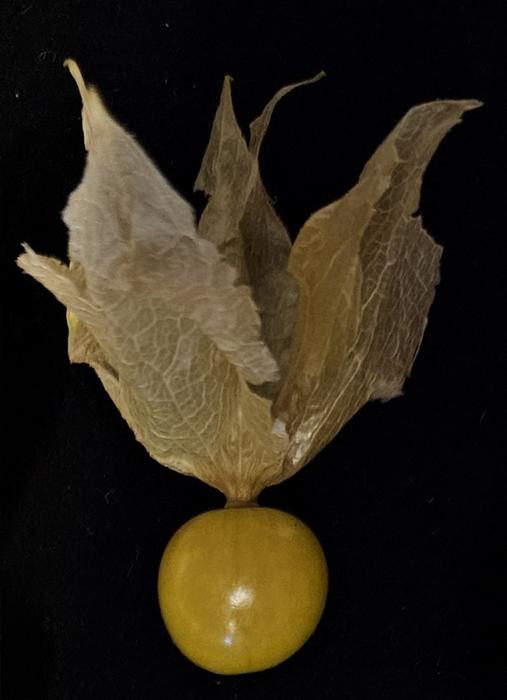
Imagine a small fruit that tastes like a cross between a tomato and a pineapple, wrapped in its own natural paper lantern. That’s the groundcherry (Physalis grisea) – a little-known relative of tomatoes that’s been quietly growing in gardens and small farms across North America for centuries. Now, this humble fruit is getting a 21st-century upgrade thanks to some cutting-edge genetic research.

Credit: Van Eck Lab, Boyce Thompson Institute
Imagine a small fruit that tastes like a cross between a tomato and a pineapple, wrapped in its own natural paper lantern. That’s the groundcherry (Physalis grisea) – a little-known relative of tomatoes that’s been quietly growing in gardens and small farms across North America for centuries. Now, this humble fruit is getting a 21st-century upgrade thanks to some cutting-edge genetic research.
For over six years, a team of scientists led by Dr. Joyce Van Eck at the Boyce Thompson Institute has been running the “Physalis Improvement Project.” The goal is to transform groundcherry from a garden novelty to a mainstream crop that could one day be a common sight alongside blueberries and blackberries in your local grocery store.
“Groundcherries have a lot going for them. They’re nutritious, have a uniquely delicious flavor, and can grow in a variety of climates. The problem is that they have some pesky traits that make them difficult to cultivate on a large scale,” noted Savanah Marie Dale, graduate student and co-first author of the team’s recent paper published in Plants, People, Planet.
Groundcherry plants have a sprawling growth habit that makes them hard to manage. They also drop their fruit to the ground when ripe (hence the name), a trait that makes harvesting difficult and increases the risk of contamination from soil-borne pathogens. Instead of spending decades selectively breeding groundcherries to overcome these issues, the team is using a gene-editing technique called CRISPR/Cas9 to make precise changes to the plant’s DNA.
By tweaking specific genes, the researchers have already made some impressive progress. They’ve created groundcherry plants with a more compact growth habit, making them easier to cultivate. They’ve also increased fruit size and are working on ways to keep the fruit attached to the plant longer, making harvesting easier and safer because the fruit doesn’t have to be gathered up from the ground.
“Beyond its agricultural applications, groundcherry serves as a valuable model species for studying the Solanaceae family, which includes economically important crops like tomatoes and potatoes,” said Elise Tomaszewski, graduate student and co-first author of the recent paper about the project.
The research on groundcherry’s unique traits, such as its paper lantern-like covering (inflated calyx) and fruit abscission mechanisms (the process by which a fruit separates from its parent plant), provides insights that could be applied to improve related crops. Groundcherry’s dual role as a crop and model organism highlights its scientific and practical significance.
The project is also exploring how groundcherries naturally resist certain insect pests, knowledge that could be applied to other crops to reduce the need for pesticides.
“Improving groundcherry not only benefits those who grow and consume this nutritious fruit but also enhances our understanding of plant biology, which is crucial for future agricultural developments,” explained Van Eck.
As we face the combined challenges of climate change and food security on a global scale, the Physalis Improvement Project offers a glimpse into a future where science can help create more resilient, productive, and sustainable food systems.
About the Boyce Thompson Institute (BTI)
Founded in 1924 and located in Ithaca, New York, BTI is at the forefront of plant science research. Our mission is to advance, communicate, and leverage pioneering discoveries in plant sciences to develop sustainable and resilient agriculture, improve food security, protect the environment, and enhance human health. As an independent nonprofit research institute affiliated with Cornell University, we are committed to inspiring and training the next generation of scientific leaders. Learn more at BTIscience.org.
Journal
Plants People Planet
Method of Research
Experimental study
Subject of Research
Cells
Article Title
Engineering the future of Physalis grisea: A focus on agricultural challenges, model species status, and applied improvements
Article Publication Date
2-Jul-2024
COI Statement
The authors declare that they have no conflicts of interest.
Cite Scienmag News
Juliet Wilcox. (July 18, 2024). Groundcherry gets genetic upgrades: Turning a garden curiosity into an agricultural powerhouse. Scienmag. https://scienmag.com/groundcherry-gets-genetic-upgrades-turning-a-garden-curiosity-into-an-agricultural-powerhouse/
Juliet Wilcox. "Groundcherry gets genetic upgrades: Turning a garden curiosity into an agricultural powerhouse." Scienmag, 18 July 2024, https://scienmag.com/groundcherry-gets-genetic-upgrades-turning-a-garden-curiosity-into-an-agricultural-powerhouse/. Accessed 4 September 2026.
Juliet Wilcox. "Groundcherry gets genetic upgrades: Turning a garden curiosity into an agricultural powerhouse." Scienmag. July 18, 2024. https://scienmag.com/groundcherry-gets-genetic-upgrades-turning-a-garden-curiosity-into-an-agricultural-powerhouse/

