


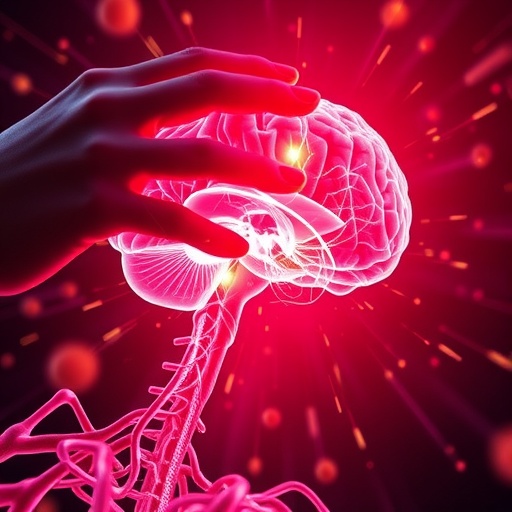
In recent years, the field of neuroscience has been under intense scrutiny, particularly in the realm of traumatic injuries to the central nervous system (CNS), which continues to pose significant challenges for medical interventions. Among these injuries, traumatic brain injury (TBI) and traumatic spinal cord injury (SCI) have garnered particular attention due to their complex nature and the subsequent oxidative stress and neuroinflammation they evoke. Current treatment strategies are predominantly focused on symptomatic management and surgical solutions, often falling short in addressing the root causes of cellular damage. This is particularly troubling as individuals suffering from such injuries typically face a myriad of secondary complications that significantly impair their quality of life.
In an enlightening development, researchers from the Institute of Process Engineering (IPE) at the Chinese Academy of Sciences, in collaboration with the Shenzhen Second People’s Hospital, have formulated an innovative exosome-based therapeutic agent designed specifically for the treatment of traumatic CNS injuries. This groundbreaking approach not only helps alleviate neuronal apoptosis but also restores glial homeostasis and remodels glia-neuron networks, thereby providing substantial therapeutic advantages in murine models of TBI and SCI. Through rigorous experimental studies, the team has successfully outlined the mechanisms by which this therapeutic agent operates, solidifying its potential for future clinical applications.
The impetus behind this research lies in the understanding that neural stem cell (NSC) therapy holds significant promise for CNS repair due to its inherent capacity for promoting cellular regeneration. However, the effectiveness of NSC-based therapies has often been hindered by the pathological microenvironments surrounding the injury sites, which adversely affect NSC survival and their ability to differentiate into mature neurons. This limitation has prompted researchers to explore alternative avenues, particularly focusing on the cellular communicative properties of exosomes. Exosomes are nanosized extracellular vesicles released from various cell types, including NSCs, and possess unique properties that allow them to engage in intercellular signaling within the complex microenvironments of the CNS.
The researchers recognized that the oxidative damage frequently caused by reactive oxygen species (ROS) significantly undermines the therapeutic efficacy of NSC-derived treatments. To address this salient issue, they initiated an innovative approach by encapsulating ultrasmall nano-selenium (Se) within NSC-derived exosomes (referred to as SeNExo). This hybrid agent not only takes advantage of the natural properties of exosomes for efficient cellular communication but also leverages the unique phagocytic properties of nano-selenium to scavenge ROS, thereby creating a dual mechanism for promoting neuronal health and resilience.
Administering SeNExo intravenously to murine models revealed remarkable efficacies in overcoming the blood-brain barrier (BBB)—a formidable challenge in CNS therapeutics. The researchers discovered that upon intravenous injection, SeNExo successfully penetrated the BBB via the APOE_LRP-1 interaction, allowing the therapeutic agents to reach the afflicted areas of the CNS efficiently. Once at the site of injury, the nano-selenium component effectively scavenged ROS, thereby mitigating the oxidative damage, while simultaneously, the NSC-derived exosomes worked to promote neuronal repair and recovery.
Clinical assessments of SeNExo outcomes demonstrated a marked reduction in cerebral lesions in mouse models of TBI, as well as tangible improvements in spatial learning and memory functions. Moreover, through comprehensive proteomics, miRNA omics, and single-nucleus RNA sequencing methodologies, the researchers were able to chart a significant downregulation of genes associated with oxidative stress and neuroinflammation. This paradigm shift not only highlights SeNExo’s multifaceted benefits in injury recovery but also underscores its potential to reshape therapeutic strategies in addressing CNS damage.
The findings advocate for enhanced glial cell resilience and functionality in response to CNS injury. By promoting a shift towards homeostasis among glial cells while enhancing neuron-glia signaling pathways, SeNExo fundamentally alters the transcriptional landscape involved in the inflammatory responses triggered by CNS injuries. The ramifications of this research extend beyond TBI; in SCI models, for instance, the efficacy of SeNExo was similarly pronounced, yielding notable improvements in locomotor recovery.
Prominent figures in the neurological research community, including experts Prof. MA Guanghui from IPE and clinical professionals from Shenzhen Children’s Hospital, have rallied behind the assertion that SeNExo represents a pioneering and promising therapeutic modality for tackling traumatic CNS injuries. Peer reviews from established journals, including the evidence amassed in Cell Reports Medicine, lend credence to the claims surrounding SeNExo’s protective capabilities against TBI and its potential applications for SCI.
Importantly, the overall biocompatibility and stability exhibited by SeNExo provide a compelling argument for its translational potential. Prof. WEI Wei from IPE noted the strong therapeutic efficacy and safety profile highlighted during experimental investigations, positioning SeNExo as a viable candidate for advancing clinically relevant treatments for CNS injuries. Should these findings translate into human applications, the prospects for enhancing recovery among patients suffering from traumatic CNS injuries could witness a substantial transformation.
In essence, the intersection of NSC-derived exosomes and nano-selenium represents an evolution in the approach to CNS injury treatment, paving the way for innovative strategies that may address the limitations of traditional therapies. The multifunctional capabilities of SeNExo underscore the importance of interdisciplinary research in forging new pathways for neuronal regeneration and recovery. As the global medical community increasingly gravitates towards targeted therapies, the implications of these findings serve as a promising beacon of hope for millions of individuals affected by CNS injuries, heralding a new chapter in therapeutic intervention.
The unfolding narrative of SeNExo is one laden with intrigue, as researchers actively explore its full potential in both laboratory conditions and upcoming clinical trials. The future of CNS injury treatments may very well rest upon the effectiveness of agents like SeNExo, igniting hope for a new frontier in medical science. There remains much ground to cover, yet each step forward contributes to our comprehensive understanding of CNS repair mechanisms, fundamentally reshaping how we approach the management of traumatic neurological injuries in years to come.
Keywords
Central nervous system, traumatic brain injury, traumatic spinal cord injury, exosomes, neural stem cells, oxidative stress, nano-selenium, blood-brain barrier, neuroinflammation, therapeutic efficacy, neuronal regeneration, biocompatibility.
Cite Scienmag News
Cassandra Pierce. (August 28, 2025). Groundbreaking Treatment Unveiled for Central Nervous System Injuries. Scienmag. https://scienmag.com/groundbreaking-treatment-unveiled-for-central-nervous-system-injuries/
Cassandra Pierce. "Groundbreaking Treatment Unveiled for Central Nervous System Injuries." Scienmag, 28 August 2025, https://scienmag.com/groundbreaking-treatment-unveiled-for-central-nervous-system-injuries/. Accessed 4 September 2026.
Cassandra Pierce. "Groundbreaking Treatment Unveiled for Central Nervous System Injuries." Scienmag. August 28, 2025. https://scienmag.com/groundbreaking-treatment-unveiled-for-central-nervous-system-injuries/


