


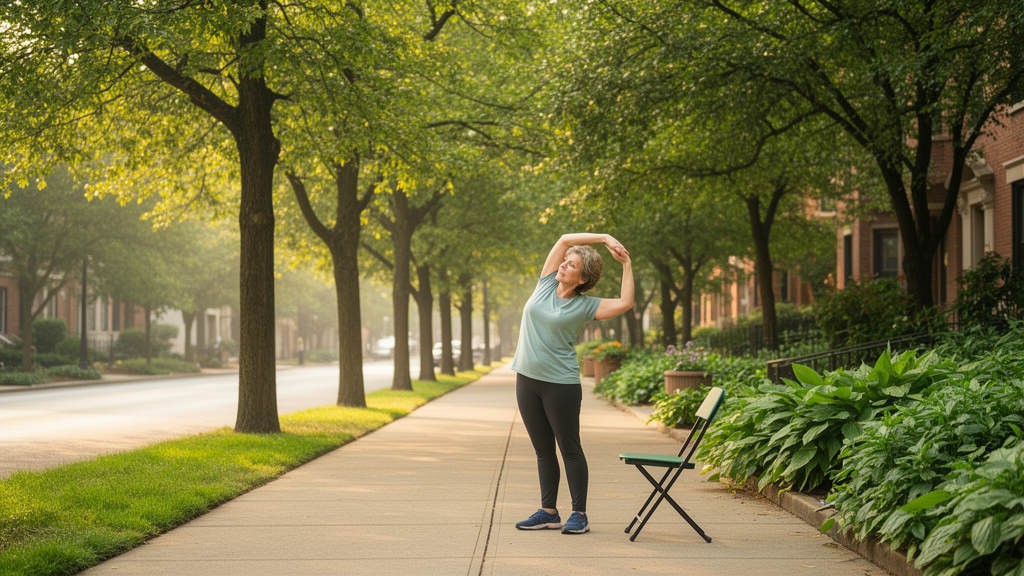
Neighborhood greenness, defined as the density of tree canopy, grassland, open spaces, and waterfronts, has long been associated with healthier living and improved cardiovascular health. While previous research has frequently suggested that increased physical activity serves as the primary mechanism linking these natural environments to better health outcomes, a new study published in Public Health in Practice offers a distinct perspective. The research, conducted by Dongwoo Yang, Jung-Min Lee, Junhao Shen, Xiaolin Wen, and Jahyun Kim, indicates that sedentary behavior, specifically prolonged sitting, may be a more significant mediator in the relationship between neighborhood greenness and cardiovascular outcomes than physical activity itself.
The study utilized data from the 2020 Korea National Health and Nutrition Examination Survey (KNHANES), an annual sample survey administered by the Korea Disease Control and Preventive Agency. The dataset comprised 6,133 adults aged 19 years or older, with a mean age of 52.25 years and 55% female participants. The researchers merged this individual health data with neighborhood greenness metrics derived from the 2022 National Land Cover Maps. These metrics were calculated at the Eup, Myun, or Dong (EMD) level, the finest administrative unit in South Korea, representing a mesoscale neighborhood. The average neighborhood greenness among participants was 48.29%, with a standard deviation of 22.10, indicating a wide variation in environmental exposure across the sample.
To examine the complex interplay between environmental factors, behavioral patterns, and health outcomes, the researchers employed structural equation modelling (SEM). This statistical approach allowed them to test direct and indirect pathways simultaneously, controlling for confounding variables such as age, sex, and body mass index. The model conceptualized neighborhood greenness as an independent variable, physical activity and sedentary behavior as potential mediators, and cardiovascular outcomes as dependent variables. The cardiovascular outcomes included both risk factors, such as hypertension and hyperlipidemia, and diseases, including stroke, myocardial infarction, and angina. By using SEM, the study aimed to determine whether the health benefits of green spaces were driven by increased movement or by a reduction in time spent sitting.
The results revealed a nuanced picture of how neighborhood environments influence behavior. Contrary to some previous expectations, neighborhood greenness was not significantly associated with vigorous or moderate physical activity during work or leisure time. However, a significant negative association was found between greenness and active commuting, suggesting that greener areas might involve longer destination distances or lower pedestrian accessibility for utilitarian trips. More importantly, neighborhood greenness was significantly and negatively associated with daily sitting time. Participants in greener neighborhoods reported spending less time in sedentary activities, with a standardized coefficient of -0.0594, indicating a robust relationship between environmental greenness and reduced sedentary behavior.
When examining the link between these behaviors and cardiovascular health, the study found that prolonged sitting was significantly associated with an increased likelihood of being diagnosed with hypertension and hyperlipidemia. Furthermore, longer sitting hours were linked to a higher risk of stroke, with a marginally significant trend observed for myocardial infarction. In contrast, none of the specific physical activity domains examined showed statistically significant associations with these cardiovascular outcomes. This finding highlights the distinct physiological impacts of sedentary behavior, which can impair vascular function and metabolic health, independent of the benefits provided by active exercise. The data suggests that the mere absence of prolonged sitting may be a critical factor in maintaining cardiovascular health, separate from the presence of vigorous activity.
The indirect pathway analysis confirmed that sitting time served as a significant mediator between neighborhood greenness and cardiovascular outcomes. Greater neighborhood greenness was indirectly associated with a lower likelihood of hypertension and hyperlipidemia through the reduction of sitting hours. Additionally, greener environments were linked to a less sedentary lifestyle, which in turn was associated with a reduced risk of stroke. These findings suggest that the cardiovascular benefits of living in greener areas may be partly attributable to the environment’s ability to encourage intermittent disruptions to sedentary lifestyles, such as brief standing, strolling, or light stretching, rather than facilitating structured, high-intensity exercise.
The authors propose that neighborhood greenness may lower the psychological barrier to light, casual movements, which require less motivation and planning than formal physical activity. While engagement in vigorous physical activity often depends on specific facilities, peer support, and individual motivation, reducing sitting time can be achieved through frequent, low-effort movements integrated into daily life. This distinction is crucial for urban planning and public health strategies. It suggests that creating environments that discourage prolonged sitting, such as dispersed vegetation, pocket parks, and varied open spaces that invite brief movement, may be as important as building infrastructure for intense exercise. The findings imply that place-making for health promotion should focus on reducing sedentary behavior as a primary goal.
Despite the significant findings, the study has several limitations that must be considered. The environmental exposure was limited to natural greenness at the administrative unit level, without incorporating urbanicity or micro-level built environment features like street connectivity or land use mix. Additionally, physical activity and sedentary behavior were self-reported, which may introduce measurement inaccuracies compared to objective device-based measures like accelerometers. The temporal mismatch between the 2020 health data and 2022 greenness metrics also introduces uncertainty when interpreting causal relationships. Furthermore, the study did not incorporate survey weights or complex survey design in the SEM analyses, limiting the direct generalisability of the findings to the national population.
In conclusion, this study provides compelling evidence that sedentary behavior is a key mediator in the relationship between neighborhood greenness and cardiovascular health. While physical activity remains a vital component of a healthy lifestyle, the findings suggest that the environmental setting plays a crucial role in reducing prolonged sitting, which independently contributes to cardiovascular risk. Future urban design strategies should consider both promoting physical activity and creating environments that naturally discourage sedentary behavior. Longitudinal and intervention studies are needed to confirm whether changes in neighborhood environments lead to sustained reductions in sitting time and improved cardiovascular outcomes across diverse geographical and cultural settings.
Subject of Research: Mediation of physical activity and sedentary behavior on the relationship between neighborhood greenness and cardiovascular outcomes
Article Title: Mediation of physical activity and sedentary behavior on the relationship between neighborhood greenness and cardiovascular outcomes
Article References: Yang, D., Lee, J.-M., Shen, J., Wen, X., & Kim, J. (2026). Mediation of physical activity and sedentary behavior on the relationship between neighborhood greenness and cardiovascular outcomes. Public Health in Practice, 12, Article 100873. https://doi.org/10.1016/j.puhip.2026.100873
Image Credits: AI Generated
DOI: 10.1016/j.puhip.2026.100873
Keywords: Mediation, physical, activity, sedentary, behavior, relationship, between, neighborhood, greenness, cardiovascular, outcomes, scientific research
Cite Scienmag News
Ophelia Keating. (October 18, 2026). Greener Neighborhoods May Protect Hearts by Reducing Sitting Time. Scienmag. https://scienmag.com/greener-neighborhoods-may-protect-hearts-by-reducing-sitting-time/
Ophelia Keating. "Greener Neighborhoods May Protect Hearts by Reducing Sitting Time." Scienmag, 18 October 2026, https://scienmag.com/greener-neighborhoods-may-protect-hearts-by-reducing-sitting-time/. Accessed 18 October 2026.
Ophelia Keating. "Greener Neighborhoods May Protect Hearts by Reducing Sitting Time." Scienmag. October 18, 2026. https://scienmag.com/greener-neighborhoods-may-protect-hearts-by-reducing-sitting-time/


