


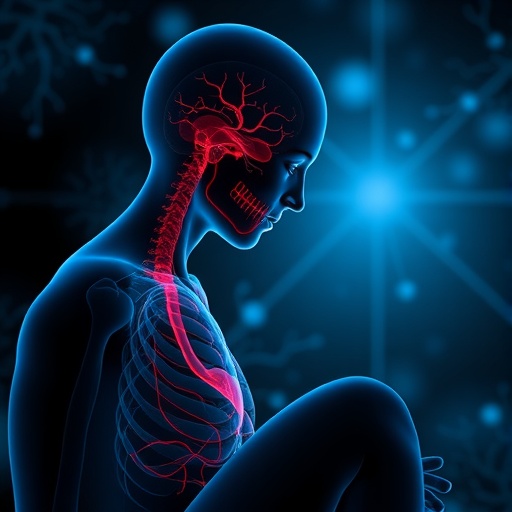
In a groundbreaking study published recently in Translational Psychiatry, a team of researchers led by Chen, S., Xu, Z., and Guo, Z. has unveiled compelling evidence linking glymphatic system dysfunction to cortisol dysregulation in individuals suffering from major depressive disorder (MDD). This pioneering work advances our understanding of the biological underpinnings of MDD, shedding light on how impairments in a critical brain waste-clearance pathway may interplay with hormonal imbalances commonly observed in depression, thus potentially opening new therapeutic avenues.
The glymphatic system, a recently discovered macroscopic waste clearance pathway in the brain, is responsible for removing metabolic byproducts and toxic proteins from the central nervous system. Operating predominantly during sleep, this system utilizes a network of perivascular channels formed by astroglial cells to facilitate the convective flux of cerebrospinal fluid and interstitial fluid. Dysfunction in this system has been implicated in numerous neurological disorders, yet its direct association with major depressive disorder has, until now, remained understudied.
Cortisol, known as the stress hormone, exerts broad regulatory effects on metabolism, immune responses, and brain function. Dysregulated cortisol secretion patterns, especially hypercortisolemia, have long been observed in patients with MDD, correlating with symptom severity and poor prognosis. The study proposes for the first time a mechanistic link whereby abnormal cortisol levels may disrupt glymphatic function, thereby exacerbating the neuropathological processes contributing to depressive symptomatology.
Employing advanced neuroimaging techniques paired with biomarker analysis, the researchers conducted a comprehensive assessment of glymphatic function in a cohort of diagnosed MDD patients and healthy controls. Dynamic contrast-enhanced MRI sequences enabled quantification of glymphatic clearance efficiency by tracking the movement of tracers injected intrathecally, providing unprecedented insights into real-time fluid dynamics within the brain’s extracellular space.
The results reveal a significant reduction in glymphatic clearance rates among depressed individuals when compared to controls. This impairment was most pronounced in brain regions critical for mood regulation, such as the prefrontal cortex and hippocampus. Additionally, cerebrospinal fluid measurements indicated altered solute transport kinetics consistent with suboptimal elimination of neurotoxic substances, which may contribute to the neuroinflammatory state often observed in MDD.
Crucially, the study identifies a robust correlation between aberrant cortisol profiles and diminished glymphatic activity. Elevated evening cortisol levels and a flattened diurnal cortisol rhythm, hallmark features of HPA axis dysfunction in depression, were strongly associated with reduced clearance capacity. This finding suggests that elevated stress hormones may interfere with the astrocytic polarization and aquaporin-4 water channels fundamental to glymphatic flow, ultimately impairing waste removal.
In exploring potential mechanisms, the authors hypothesize that cortisol-mediated inflammation and oxidative stress could lead to astroglial dysfunction and vascular alterations that disrupt the delicate balance needed for effective glymphatic transport. Moreover, chronic cortisol elevation might compromise sleep architecture, further reducing the restorative glymphatic activity that predominantly occurs during slow-wave sleep.
These insights challenge the existing paradigm that views depression strictly through neurotransmitter availability or neuroendocrine dysregulation lenses, urging a more integrative model that incorporates neurovascular and clearance systems. By outlining this novel pathophysiological framework, the research lays a foundation for future interventions aimed at restoring glymphatic function as a complementary strategy to traditional antidepressant therapies.
Therapeutic implications are vast and promising. Potential treatment modalities could include pharmacologic agents targeting aquaporin-4 channel expression or function, modulation of cortisol levels through HPA axis normalization, or lifestyle interventions such as sleep enhancement protocols designed to optimize glymphatic clearance. This multifaceted approach might significantly enhance patient outcomes by addressing both hormonal imbalances and impaired brain detoxification simultaneously.
Furthermore, the study highlights the importance of considering glymphatic efficiency in the diagnosis and monitoring of MDD. Advanced neuroimaging biomarkers reflecting glymphatic transport capability could evolve as indicators of disease progression or therapeutic response, enabling more personalized and effective clinical management strategies in psychiatry.
The authors caution, however, that while their findings reveal a strong association between glymphatic dysfunction and cortisol abnormalities, causality remains to be conclusively demonstrated. Longitudinal studies and experimental models will be crucial in dissecting the temporal and mechanistic relationships between these processes, as well as in confirming that restoration of glymphatic activity can indeed ameliorate depressive symptoms.
This research opens exciting avenues for further exploration into how systemic hormonal disruptions might interact with localized brain clearance pathways to drive complex neuropsychiatric conditions. It reinforces the emerging perspective that mental illnesses such as MDD encompass an intricate web of neurobiological alterations extending beyond neurotransmission deficits to include glial and vascular contributions.
In conclusion, the study by Chen et al. represents a seminal advancement in the quest to unravel the multifactorial biology of major depressive disorder. By unveiling impaired glymphatic clearance as a previously underappreciated dimension linked to cortisol dysregulation, this work not only deepens our understanding of depression pathogenesis but also lights the path toward innovative diagnostic tools and targeted therapies that harness the brain’s innate clearance mechanisms.
As the field moves forward, integrating glymphatic system assessment in both clinical research and routine practice could transform how depression is conceptualized and treated, ultimately improving quality of life for millions afflicted worldwide. The convergence of neuroendocrinology, neuroimaging, and neurovascular biology promises a new era of precision psychiatry based on solid mechanistic evidence unveiled by this critical study.
Cite Scienmag News
Glenn Wilkins. (August 5, 2025). Glymphatic Dysfunction Linked to Cortisol in Depression. Scienmag. https://scienmag.com/glymphatic-dysfunction-linked-to-cortisol-in-depression/
Glenn Wilkins. "Glymphatic Dysfunction Linked to Cortisol in Depression." Scienmag, 5 August 2025, https://scienmag.com/glymphatic-dysfunction-linked-to-cortisol-in-depression/. Accessed 9 November 2026.
Glenn Wilkins. "Glymphatic Dysfunction Linked to Cortisol in Depression." Scienmag. August 5, 2025. https://scienmag.com/glymphatic-dysfunction-linked-to-cortisol-in-depression/




