

Thursday, July 16, 2026
Science
No Result
View All Result
  • Login
  • HOME
  • SCIENCE NEWS
  • CONTACT US
  • HOME
  • SCIENCE NEWS
  • CONTACT US
No Result
View All Result
Scienmag
No Result
View All Result
Home Science News Technology and Engineering

Global study finds shipping and human activity reshape bacteria in port waters

July 16, 2026
in Technology and Engineering
Reading Time: 2 mins read
0
Global study finds shipping and human activity reshape bacteria in port waters

Global study finds shipping and human activity reshape bacteria in port waters

65
SHARES
587
VIEWS
Share on FacebookShare on Twitter
ADVERTISEMENT

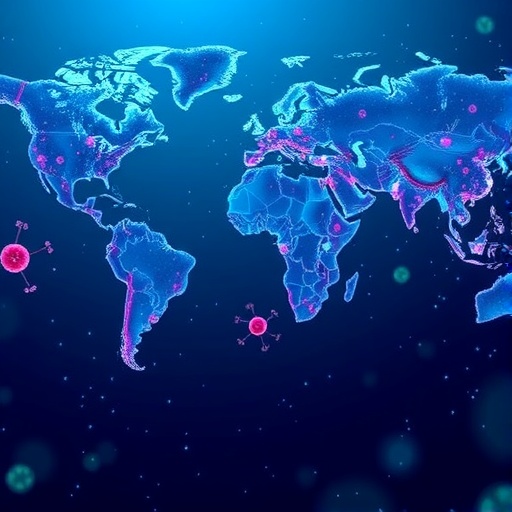
Ports are critical nodes in global commerce, but they also act as ecological mixing chambers where shipping activity, wastewater inputs, and coastal development reshape the microbial life that drives marine biogeochemistry. A new global synthesis maps how these pressures are recorded in the port-water microbiome, revealing both geography-linked patterns and signatures of human influence at continent scale.

Researchers compiled bacterial community data from ports in 23 cities spanning eight countries across five continents. Using 1,045 water samples and more than 16.5 million high-quality 16S rRNA gene sequences, the team compared microbial diversity, the spatial distribution of taxa, and the ecological mechanisms that assemble communities.

A strong distance-decay relationship emerged: ports that are closer together tended to share more similar bacterial communities, while similarity dropped as geographic separation increased. Notably, this spatial pattern weakened in high-capacity ports, implying that frequent traffic can promote long-range microbial transport via ballast water and cells attached to ship surfaces.

Latitude showed an unusual trend. Instead of a typical peak toward the tropics, bacterial richness reached its maximum at mid-latitudes, although latitude explained only a small fraction of total variation. This suggests that local physicochemical gradients and anthropogenic inputs may outweigh broad climatic effects.

Across the dataset, the authors identified 12 core bacterial genera that together comprised nearly one-quarter of the community. Among them, SAR11 subclade IIIa dominated and is known for its role in carbon cycling, while other core lineages likely support degradation of organic matter and cycling of nitrogen and sulfur.

Beyond background diversity, the study detected 295 distinct potential pathogenic variants, accounting for about 6% of sequences. Their relative abundance varied by region, with African port samples showing the highest potential pathogen levels, and some taxa appearing in restricted geographic distributions.

The work emphasizes an important technical nuance: DNA-based surveys indicate the presence of pathogen-associated sequences, not that viable disease-causing organisms are actively causing illness in every location. Still, the ecological distribution of these variants provides actionable intelligence for risk-oriented monitoring.

Source-tracking analyses pointed to major contributions from air and human-associated reservoirs. Human excretion contributed an estimated 26.6% of potential bacterial sources, while air accounted for 26.9%, reinforcing the connectivity between urban processes and coastal microbial assembly.

Deterministic ecological processes outweighed stochastic ones. Environmental selection—driven by salinity, temperature, pH, and dissolved oxygen—played a larger role in shaping global port bacterial communities than random dispersal alone.

The findings support using microbial community profiles as sensitive indicators of port ecosystem health and argue for strengthened wastewater management, pathogen surveillance, and ballast-water controls, alongside standardized sampling and next-generation approaches such as metagenomics for improved functional resolution.

Subject of Research: Port water microbiome biogeography and anthropogenic associations
Article Title: A global synthesis of port water microbiome biogeography and anthropogenic associations
News Publication Date: 1-May-2026
Web References: https://doi.org/10.48130/biocontam-0026-0005
References: Lv B, Zhang Q, An T, Mei S, Kan G, et al. 2026. A global synthesis of port water microbiome biogeography and anthropogenic associations. Biocontaminant 2: e008. doi:10.48130/biocontam-0026-0005
Image Credits: Baoyi Lv, Qitong Zhang, Tingxuan An, Shenglong Mei, Guolin Kan, Dong Wu & Jianhong Shi

Keywords

Ports; microbiome biogeography; 16S rRNA; distance-decay; ballast water; wastewater; potential pathogens; source tracking; ecological assembly; SAR11

Tags: biogeography of port water bacteriacoastal development and microbial community shiftsecological mechanisms shaping port microbiomeseffects of ballast water on microbial transportglobal ports microbial comparisonhuman influence on port water bacterialatitude and microbial richness in port watersmarine biogeochemistry and microbial dynamicsMarine port microbiomemicrobial diversity in port ecosystemsmicrobial signatures of anthropogenic pollutionshipping activity impact on microbial communities
Share26Tweet16
Previous Post

Scientists Discover Immune Cells Form Cancer-Fighting Hubs Within Tumors

Next Post

New Study Suggests Possible Atmosphere on Rocky Planet Near Nearby Star

Related Posts

Biochar Enables Earthworms to Survive Copper and Glyphosate Pollution
Technology and Engineering

Biochar Enables Earthworms to Survive Copper and Glyphosate Pollution

July 16, 2026
UCLA Engineers Integrate High-Powered Terahertz Systems Onto One Semiconductor Chip
Technology and Engineering

UCLA Engineers Integrate High-Powered Terahertz Systems Onto One Semiconductor Chip

July 16, 2026
Fractional High-Chern Insulator Realized in Twisted Rhombohedral Graphene
Medicine

Fractional High-Chern Insulator Realized in Twisted Rhombohedral Graphene

July 16, 2026
Global analysis reveals changing early-onset inflammatory bowel disease burden worldwide
Technology and Engineering

Global analysis reveals changing early-onset inflammatory bowel disease burden worldwide

July 16, 2026
Stealthy Spinning Drone Blends In With Everyday Objects
Technology and Engineering

Stealthy Spinning Drone Blends In With Everyday Objects

July 16, 2026
Selectivity Achieved Despite Indiscriminate Photoreduction in New Study
Medicine

Selectivity Achieved Despite Indiscriminate Photoreduction in New Study

July 16, 2026
Next Post
New Study Suggests Possible Atmosphere on Rocky Planet Near Nearby Star

New Study Suggests Possible Atmosphere on Rocky Planet Near Nearby Star

  • Mothers who receive childcare support from maternal grandparents show more

    Mothers who receive childcare support from maternal grandparents show more parental warmth, finds NTU Singapore study

    27656 shares
    Share 11059 Tweet 6912
  • University of Seville Breaks 120-Year-Old Mystery, Revises a Key Einstein Concept

    1061 shares
    Share 424 Tweet 265
  • Bee body mass, pathogens and local climate influence heat tolerance

    682 shares
    Share 273 Tweet 171
  • Researchers record first-ever images and data of a shark experiencing a boat strike

    546 shares
    Share 218 Tweet 137
  • Groundbreaking Clinical Trial Reveals Lubiprostone Enhances Kidney Function

    531 shares
    Share 212 Tweet 133
Science

Embark on a thrilling journey of discovery with Scienmag.com—your ultimate source for cutting-edge breakthroughs. Immerse yourself in a world where curiosity knows no limits and tomorrow’s possibilities become today’s reality!

RECENT NEWS

  • Perioperative D-dimer to albumin ratio predicts serious complications, mortality after hip fracture
  • Lehigh University Joins Global Consortium to Advance Commercial Space Research
  • Biochar Enables Earthworms to Survive Copper and Glyphosate Pollution
  • Early inflammation signal fuels oral cancer, suggests immunoprevention strategy

Categories

  • Agriculture
  • Anthropology
  • Archaeology
  • Athmospheric
  • Biology
  • Biotechnology
  • Blog
  • Bussines
  • Cancer
  • Chemistry
  • Climate
  • Earth Science
  • Editorial Policy
  • Marine
  • Mathematics
  • Medicine
  • Pediatry
  • Policy
  • Psychology & Psychiatry
  • Science Education
  • Social Science
  • Space
  • Technology and Engineering

Subscribe to Blog via Email

Enter your email address to subscribe to this blog and receive notifications of new posts by email.

Join 5,146 other subscribers

© 2025 Scienmag - Science Magazine

Welcome Back!

Login to your account below

Forgotten Password?

Retrieve your password

Please enter your username or email address to reset your password.

Log In
No Result
View All Result
  • HOME
  • SCIENCE NEWS
  • CONTACT US

© 2025 Scienmag - Science Magazine

Discover more from Science

Subscribe now to keep reading and get access to the full archive.

Continue reading
