

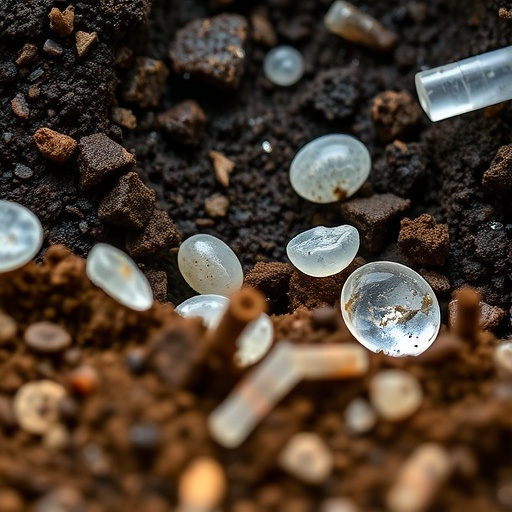
Microplastics are emerging as a formidable environmental concern, especially in our soils, where they present significant implications for both ecosystems and human health. Recent research conducted by a team of experts, including Fan, Song, and Wang, provides a comprehensive overview of the current state of soil microplastic research, delving into the myriad challenges faced by scientists in this burgeoning field. This insight is crucial as it outlines the urgent need for systematic efforts to understand the impact of microplastics in terrestrial environments.
The study indicates that microplastics, tiny plastic particles less than five millimeters in size, can originate from various sources, including the breakdown of larger plastic items or the shedding of synthetic fibers from clothing. As these particles infiltrate the soil, they can alter its structure, nutrient dynamics, and microbial communities, which are essential for maintaining healthy ecosystems. The research underscores the pressing necessity to assess how these contaminants affect soil health and the broader environment.
Key to the team’s findings is the alarming prevalence of microplastics in agricultural soils, which have been noted to accumulate due to intensive agricultural practices. The application of fertilizers, which often contain microplastics, coupled with the degradation of plastic-based agricultural products, significantly contributes to this contamination. This accumulation not only affects soil quality but also raises concerns about food safety as these particles may enter the food chain.
In their research, the authors highlight significant gaps in our understanding of the transport mechanisms of microplastics in soil. Unlike water systems where movement can be somewhat predictable, the transport pathways of microplastics through soil remain poorly characterized. This lack of knowledge complicates risk assessments associated with microplastic contamination, as different soil types and structures may influence the fate and transport of these particles.
The biological impact of microplastics on soil organisms is another vital area of concern, with studies indicating detrimental effects on soil fauna. Microorganisms, insects, and even larger soil-dwelling organisms may be adversely affected by the ingestion of microplastics, leading to decreased biodiversity and ecosystem functions. Furthermore, the bioavailability of harmful chemicals associated with the particles may pose additional risks, potentially leading to toxic effects across trophic levels.
Researchers are also grappling with methodological challenges in measuring microplastic concentrations in soils. The heterogeneous nature of soils makes sampling and analysis fraught with difficulties. Current methodologies may not accurately capture the extent of contamination or may overlook smaller, more elusive microplastics. Thus, there is a critical need for refined techniques that can reliably quantify microplastics in diverse soil types.
Public awareness and education surrounding microplastics are crucial components of mitigating this issue. The authors advocate for enhanced communication of the risks posed by microplastics, particularly within agricultural communities. This includes engaging farmers in best practices to reduce plastic use and promoting responsible disposal techniques. Reducing plastic input into the agricultural system is fundamental to preventing future contamination of soil.
Furthermore, the research emphasizes the importance of interdisciplinary collaboration in tackling the microplastic crisis. By bringing together experts from various fields such as soil science, ecology, environmental engineering, and policy, a more holistic understanding of the implications of microplastics can be achieved. This collaboration is essential not only for advancing scientific knowledge but also for facilitating targeted regulations and solutions.
Policy-makers also play a pivotal role in addressing the microplastic dilemma. The study calls for urgent revisions of regulations regarding plastic production and waste management. Legislation aimed at reducing plastic usage, promoting biodegradable alternatives, and fostering sustainable practices can be instrumental in curbing the influx of microplastics into soil systems.
International cooperation is equally vital, as microplastic pollution knows no borders. The authors propose the establishment of global initiatives to monitor and address microplastic contamination. Such collaborations could lead to standardized guidelines and shared resources, facilitating a unified approach to tackling this pressing environmental challenge.
In conclusion, ongoing research into soil microplastics presents both challenges and opportunities for advancing our understanding of environmental health. As the team led by Fan, Song, and Wang highlights, addressing the implications of microplastics in soils is an urgent scientific endeavor. By fostering collaboration, enhancing public awareness, and advocating for robust policy frameworks, we can start to mitigate the impacts of microplastics and protect our planet for future generations.
The journey ahead requires concerted efforts from scientists, policymakers, and the public alike to ensure that the soil—a fundamental resource upon which we all depend—remains healthy and free from pollution. As the research unfolds, it is imperative that we heed these findings and take action to safeguard our soils from the looming threat of microplastic pollution.
Subject of Research: Soil microplastics
Article Title: A global perspective on soil microplastic research: status, challenges, and suggestions.
Article References:
Fan, C., Song, J., Wang, C. et al. A global perspective on soil microplastic research: status, challenges, and suggestions.
Front. Environ. Sci. Eng. 19, 133 (2025). https://doi.org/10.1007/s11783-025-2053-0
Image Credits: AI Generated
DOI:
Keywords: Microplastics, soil health, ecological impacts, environmental policy, interdisciplinary collaboration


