

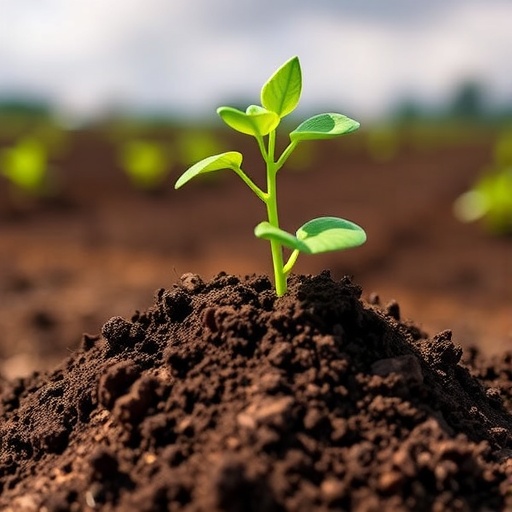
In a groundbreaking virtual convening held on March 11, 2026, the 22nd Carbon and Soil Research International Forum tackled a formidable challenge in the realm of sustainable agriculture: how best to synergize soil health enhancement with maximizing the sequestration of carbon through organic amendments. The online session, titled “Reconciling Soil Health Benefits with Carbon Sequestration Value of Organic Carbonaceous Amendments,” brought together preeminent scientists and industry experts seeking to unravel the complex interplay between soil fertility, crop productivity, and climate mitigation.
The forum’s keynote was delivered by Professor Nanthi Bolan, an esteemed Soil Science authority from The University of Western Australia, who illuminated the intricate dynamics of organic carbon inputs in soils. Chaired by Professor Hailong Wang of Foshan University, the event delved into critical questions surrounding the application of diverse organic materials—including crop residues, compost, manure, and biosolids—that are increasingly employed as soil amendments worldwide. These materials confer multiple agronomic benefits, yet their role as long-term carbon sinks is fraught with complexity.
Central to Professor Bolan’s presentation was the recognition that while organic carbonaceous amendments improve soil structure, nutrient availability, and biological activity, the carbon they introduce is not uniformly stable. Rapid microbial decomposition of labile carbon fractions often results in the emission of greenhouse gases such as carbon dioxide (CO₂), methane (CH₄), and nitrous oxide (N₂O). These emissions may partially negate the potential climate benefits gained from carbon storage, underscoring the need for a detailed understanding of carbon fate pathways within amended soils.
The crux of the issue lies in carbon stabilization mechanisms. Soil organic matter comprises both recalcitrant compounds resistant to microbial breakdown and more readily degradable components. The forum explored how the chemical composition and molecular architecture of organic amendments influence their decomposition rates and ultimate stabilization in soil matrices. The bioavailability of carbon fractions, their association with mineral particles, and microbial processing all modulate the persistence of sequestered carbon, affecting the net greenhouse gas balance in agricultural systems.
Emerging strategies highlighted during the session focused on optimizing amendment formulations to enhance the proportion of stable carbon fractions. These include pre-treatment of organic materials through pyrolysis to produce biochar, which possesses high aromatic carbon content known for soil persistence and minimal greenhouse gas emissions. Coupling biochar with compost or manure can create synergistic effects that promote soil fertility and improve carbon retention simultaneously, representing a promising integrative approach.
Another promising avenue involves precise management of amendment application rates and timing to align with soil microbial dynamics and crop nutrient demand. By tailoring inputs to maximize microbial immobilization and humification processes, practitioners can reduce rapid mineralization losses and enhance long-term carbon stabilization. This level of precision agriculture requires advanced soil monitoring technologies and a mechanistic understanding of soil carbon cycles.
The forum further examined the influence of soil texture, mineralogy, and environmental factors such as moisture and temperature on carbon sequestration potential. Clay-rich soils, for instance, facilitate stronger organo-mineral associations that protect carbon from decomposition, whereas sandy soils may exhibit higher turnover rates. Climate variability and land management practices also significantly affect the balance between carbon inputs and greenhouse gas emissions, complicating the implementation of universal agronomic recommendations.
Professor Bolan emphasized the necessity of integrating quantitative soil carbon models with empirical field data to predict and verify sequestration outcomes. Such predictive frameworks can guide policy and inform carbon crediting schemes, incentivizing farmers to adopt sustainable amendment practices that deliver verifiable climate benefits alongside agronomic improvements.
The session’s insights are critical not only for the scientific community but also for policymakers, extension services, and agricultural stakeholders aiming to develop comprehensive strategies that align food security with climate change mitigation targets. These findings underscore the multidimensional nature of soil carbon management and highlight the importance of cross-disciplinary collaboration in advancing sustainable agriculture systems.
The recorded presentation is now publicly available for viewing and serves as an invaluable resource for ongoing research and practical applications. By enhancing our mechanistic understanding of organic carbon transformations and stabilization, agriculture can become a pivotal player in global efforts to sequester atmospheric carbon while maintaining productive and healthy soils.
The Carbon and Soil Research International Forum continues to foster vital dialogue among soil scientists, agronomists, environmental chemists, and climate experts, driving forward innovations that reconcile agricultural productivity with ecological stewardship and climate resilience.
Subject of Research: Soil health improvement and carbon sequestration via organic carbonaceous amendments
Article Title: Reconciling Soil Health Benefits with Carbon Sequestration Value of Organic Carbonaceous Amendments
News Publication Date: March 11, 2026
Web References:
https://youtu.be/O74-UoQnRvY?si=p8K2ldZ3V9H4qLIh
Image Credits: Nanthi Bolan
Keywords: soil health, carbon sequestration, organic carbonaceous amendments, greenhouse gas emissions, biochar, soil fertility, climate mitigation, carbon stabilization, sustainable agriculture, soil organic matter, microbial decomposition, organo-mineral associations


