

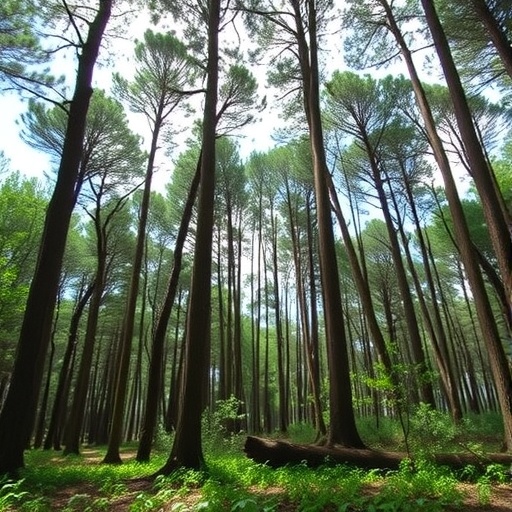
In a pioneering study that investigates the efficiency of small vegetation biomass retention across global forests, researchers Chen, Wei, and Yang contribute significant findings that can reshape our understanding of ecosystem dynamics. The research is not only timely but also crucial, given the alarming rates of deforestation and climate change challenges threatening our global forest reserves. This comprehensive investigation encompasses various forest ecosystems worldwide and garners insights into how different regions maintain and manage their biomass.
The study identifies key factors that influence biomass retention in small vegetation, critically analyzing the complex interactions among environmental variables, land management practices, and ecological dynamics. By evaluating how these factors fluctuate across diverse geographical landscapes, the authors provide a nuanced perspective on the importance of local biome characteristics in vegetation retention strategies. This work is fundamental in realizing the intricacies involved in forest maintenance and the role of small vegetation in contributing to larger environmental objectives.
Drawing from extensive field studies and data analytics, the authors apply a robust methodological framework that combines field measurements with satellite imagery. Through this innovative approach, they successfully quantify the biomass retention rates and juxtapose them against various external stressors such as human encroachment, invasive species, and climatic fluctuations. The results reveal startling disparities in biomass retention efficiencies, prompting further inquiries into specific regulatory mechanisms at play.
As forests act as vital carbon sinks, understanding their functioning is becoming increasingly paramount. The retention of vegetation biomass is critical for carbon storage, and the implications of the study underscore the need for urgent actions towards sustainable forest management practices. By illuminating the links between biomass retention and carbon sequestration, the findings have profound implications for climate policies and ecosystem conservation efforts worldwide.
Another vital aspect of this research is its interdisciplinary approach that synthesizes ecological science with socio-economic factors. The authors emphasize the interdependencies between local communities and their forest ecosystems, revealing how traditional land-use practices can either enhance or undermine biomass retention efforts. This perspective introduces crucial social dimensions to the conversation about forest management, highlighting the importance of including local stakeholders in conservation strategies.
Furthermore, the study distinguishes between various forest types, noting the unique challenges and advantages present within them. Tropical forests, for example, exhibit remarkable resilience but are also subject to intense deforestation pressures. In contrast, boreal forests, while more stable, face threats from climate change that alter their growth dynamics. By categorizing forests in this manner, the authors provide tailored recommendations that can enhance biomass retention efficiency according to specific ecological contexts.
The role of biodiversity within these ecosystems cannot be understated. The research reveals a strong correlation between species diversity and biomass retention efficiency, suggesting that more diverse ecosystems tend to have higher rates of vegetation retention. This finding prompts significant discussions about the mechanisms through which biodiversity contributes to ecosystem stability and resilience, reinforcing the intrinsic value of preserving species variety.
Moreover, the authors explore emergent technologies, such as remote sensing and machine learning, that could revolutionize the monitoring of vegetation biomass. By applying advanced analytical techniques, scientists can gain real-time insights into forest health, efficiency of biomass retention, and adaptability to environmental changes. This technological shift could lead to faster responses in conservation strategies and enhanced international collaboration on global forest issues.
Collaboration among different countries and research institutions emerges as a key recommendation from the study. Global forest preservation depends on shared knowledge and practices, and the authors advocate for creating international frameworks that facilitate data sharing and collective action. This transnational approach acknowledges that while forest management often takes place at a local level, the ramifications of these practices ripple through our interconnected global ecological system.
The urgency of the findings cannot be overstated, as the study emphasizes the growing threats posed by climate change on forest ecosystems. As temperatures rise and weather patterns fluctuate, forest resilience and biomass retention capabilities are tested, making it increasingly critical to adapt our management strategies. The authors stress that acknowledging these imminent threats is vital for formulating actionable recommendations that can safeguard not only forests but also the livelihoods and well-being of communities that depend on them.
Finally, as the research concludes, it opens a dialogue regarding future research directions. The finding that small vegetation biomass retention is markedly variable prompts questions concerning the long-term ecological impacts of various human activities. Future studies may explore ways to enhance these retention efficiencies, including innovative agricultural practices, restoration techniques, and the role of policy frameworks in conserving forest resources.
In summary, with their groundbreaking insights into small vegetation biomass retention efficiency, Chen, Wei, and Yang present a clarion call for global attention to forest ecosystems’ health. The study seamlessly intertwines ecological knowledge with socio-economic considerations, advocating for a holistic approach to forest conservation. As the world stands at a crossroads regarding environmental sustainability, this research lays the groundwork for more informed policies and practices that can adequately address the pressing issues facing our forests.
Subject of Research: Efficiency of small vegetation biomass retention across global forests
Article Title: Small vegetation biomass retention efficiency across global forests
Article References:
Chen, J., Wei, F., Yang, H. et al. Small vegetation biomass retention efficiency across global forests.
Commun Earth Environ (2025). https://doi.org/10.1038/s43247-025-03138-8
Image Credits: AI Generated
DOI: 10.1038/s43247-025-03138-8
Keywords: biomass retention, global forests, vegetation, ecological dynamics, conservation, carbon sequestration, biodiversity, climate change, land management, remote sensing.


