


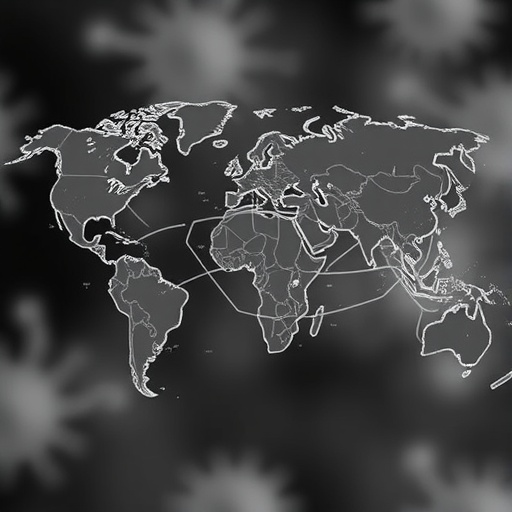
In a groundbreaking new meta-analysis published in Acta Parasitologica, researchers have unveiled the global epidemiological landscape of Cyclospora cayetanensis infections among individuals living with HIV/AIDS. This comprehensive work, conducted by Mahdavi, Pouryousef, Mohammadi, and colleagues, meticulously synthesizes data spanning continents, providing unprecedented insights into the prevalence, geographical distribution, and clinical significance of this elusive protozoan parasite in immunocompromised populations.
Cyclospora cayetanensis, a coccidian parasite transmitted primarily through fecal-oral routes, is known for causing cyclosporiasis—a diarrheal disease that can inflict severe gastrointestinal distress. Though often self-limiting in immunocompetent hosts, the infection poses a significant threat to those with impaired immunity, such as patients with HIV/AIDS. Historically underreported due to diagnostic challenges and limited surveillance, the global burden of Cyclospora in this vulnerable group has remained clouded in uncertainty—until now.
The meta-analysis aggregates findings from dozens of epidemiological studies conducted worldwide, spanning diverse settings and patient demographics. By employing rigorous inclusion criteria and advanced statistical methods, the authors calculated pooled prevalence rates and dissected factors influencing infection risk. Their quantitative evaluation reveals notable regional disparities, illuminating hotspots where Cyclospora cayetanensis infection represents a particularly critical health issue for HIV/AIDS patients.
One of the study’s salient discoveries is the uneven global distribution of Cyclospora infections in HIV-infected cohorts. The highest reported prevalence clusters in tropical and subtropical regions, including select parts of Asia, Africa, and South America, reflecting both environmental conditions favorable to the parasite’s lifecycle and infrastructural vulnerabilities affecting water sanitation and hygiene. Conversely, lower prevalence rates in developed regions underscore the importance of public health infrastructure and targeted interventions in mitigating pathogen transmission.
The intricate lifecycle of Cyclospora cayetanensis complicates surveillance efforts. The parasite’s oocysts require days to sporulate in the environment before becoming infective, making direct human-to-human transmission improbable but highlighting the risk inherent in contaminated food and water. These complexities hinder real-time detection and contribute to underdiagnosis, especially in resource-limited settings where laboratory capacity is constrained.
For HIV/AIDS patients, infection by Cyclospora carries grave implications. Immunosuppression exacerbates the parasite’s capacity to cause protracted diarrhea, malabsorption, and significant morbidity. Untreated, cyclosporiasis can lead to profound nutritional deficits, complicating HIV management and diminishing quality of life. The meta-analysis underscores a critical need for enhanced diagnostic vigilance and therapeutic strategies tailored to this high-risk demographic, who may experience atypical clinical manifestations.
The authors critically examine the diagnostic methodologies employed across studies, noting heterogeneity in detection techniques ranging from conventional microscopy to PCR-based assays. Molecular methods demonstrate superior sensitivity and specificity, suggesting that broader implementation could revolutionize understanding of Cyclospora epidemiology. This technological advancement has the potential to refine infection estimates, allowing for more precise mapping of disease burden and better allocation of healthcare resources.
Beyond raw prevalence numbers, the meta-analysis probes associations between Cyclospora infection and markers of HIV disease progression. Some studies indicate correlations between lower CD4+ T-cell counts and increased susceptibility, emphasizing the parasite’s opportunistic character. However, the authors caution that causal inferences remain tentative, advocating for longitudinal studies to unravel the temporal dynamics and immunological interplay during coinfection.
Public health implications of these findings are profound. The geographic and immunological patterns identified should inform targeted screening programs, especially in endemic regions where HIV/AIDS prevalence is high. Integrating cyclosporiasis diagnostics into routine HIV care could facilitate early detection and timely intervention, potentially curtailing the morbidity associated with chronic gastrointestinal infections.
The study further highlights the importance of environmental reforms, particularly improving water quality and sanitation infrastructure in vulnerable communities. Since Cyclospora transmission hinges on fecal contamination, investments in public health infrastructures stand as critical pillars for preventing outbreaks and reducing the parasite’s impact on immunocompromised populations.
Moreover, empirical treatment protocols for cyclosporiasis in HIV patients warrant refinement. The meta-analysis reviews therapeutic regimens, emphasizing trimethoprim-sulfamethoxazole as the frontline agent, while discussing challenges posed by drug resistance and adverse effects. Customized treatment approaches balancing efficacy and tolerability are vital for optimizing outcomes in co-infected individuals.
On the research front, the authors advocate for intensified molecular surveillance, genomic studies, and strain differentiation to illuminate pathogen evolution and potential virulence factors. Such endeavors could unravel why certain regions report more severe disease or higher incidence, thus enriching global efforts to combat Cyclospora.
This exhaustive review represents a paradigm shift in parasitology and infectious disease epidemiology, spotlighting an often-overlooked threat to a high-risk population. By pooling data across heterogeneous contexts, the study transcends limited local findings and charts a comprehensive course for future clinical, diagnostic, and public health strategies aimed at mitigating cyclosporiasis burden in people living with HIV/AIDS globally.
In essence, Mahdavi and colleagues’ meta-analysis not only fills a critical knowledge gap but also galvanizes the scientific and medical communities to accord Cyclospora cayetanensis its rightful place in the pantheon of opportunistic infections warranting urgent attention. These revelations pave the way for integrated approaches combining advanced diagnostics, improved sanitation, and tailored patient care to diminish the shadow cast by this stealthy parasite on vulnerable immunocompromised populations worldwide.
As the global fight against HIV/AIDS advances, incorporating insights on co-infections like Cyclospora becomes indispensable. The intersection of parasitology and immunology illuminated by this review offers a rich tapestry of challenges and opportunities, with profound consequences for patient survival and quality of life. Ultimately, this pioneering work urges a reevaluation of current paradigms and beckons a coordinated international response leveraging science, medicine, and policy to alleviate an underappreciated yet formidable scourge.
Cite Scienmag News
Kristina Jarvis. (August 5, 2025). Global Cyclospora Infection in HIV/AIDS Patients Reviewed. Scienmag. https://scienmag.com/global-cyclospora-infection-in-hiv-aids-patients-reviewed/
Kristina Jarvis. "Global Cyclospora Infection in HIV/AIDS Patients Reviewed." Scienmag, 5 August 2025, https://scienmag.com/global-cyclospora-infection-in-hiv-aids-patients-reviewed/. Accessed 5 September 2026.
Kristina Jarvis. "Global Cyclospora Infection in HIV/AIDS Patients Reviewed." Scienmag. August 5, 2025. https://scienmag.com/global-cyclospora-infection-in-hiv-aids-patients-reviewed/


