


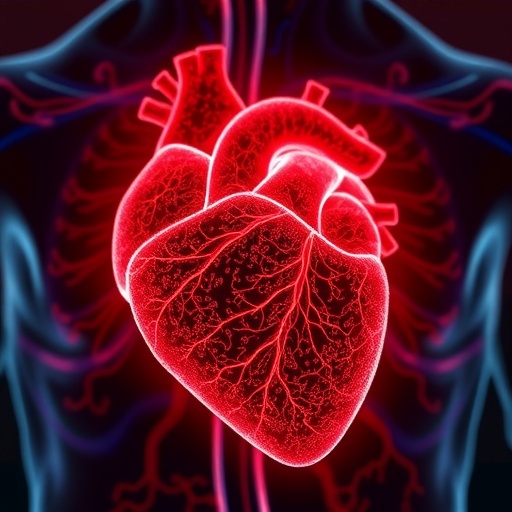
In recent years, the intersection of oncology and cardiology has drawn increasing attention due to the complex challenge of chemotherapy-induced cardiotoxicity. As advances in cancer treatment have prolonged patient survival, the unintended consequences of chemotherapeutic agents on heart health have emerged as a critical concern. Chemotherapy-induced cardiotoxicity can manifest through a variety of cardiac complications, ranging from subtle myocardial dysfunction to life-threatening conditions such as heart failure and arrhythmias. This escalating clinical issue underscores the urgent need for effective cardioprotective strategies that can safeguard cardiovascular function without compromising anticancer efficacy.
Among the promising candidates to address this challenge are ginsenosides, the biologically active compounds derived from the roots of Panax ginseng. Known for their multifaceted pharmacological properties, ginsenosides have been studied extensively for their potential to mitigate cardiovascular damage inflicted by chemotherapy. Their molecular mechanisms are diverse and encompass antioxidant, anti-inflammatory, anti-apoptotic, and vascular regulatory effects, positioning them as potent mediators of cardioprotection.
The oxidative stress induced by chemotherapeutic agents such as doxorubicin, cisplatin, and 5-fluorouracil plays a pivotal role in the pathogenesis of cardiotoxicity. Reactive oxygen species (ROS) generated during chemotherapy overwhelm the intrinsic antioxidant defenses of cardiomyocytes, leading to mitochondrial dysfunction, lipid peroxidation, and DNA damage. Ginsenosides exert a powerful antioxidant action by modulating the expression and activity of endogenous antioxidant enzymes, such as superoxide dismutase and glutathione peroxidase. This modulation reduces ROS production, thereby limiting oxidative injury and preserving cellular integrity.
In addition to attenuating oxidative stress, ginsenosides influence apoptotic signaling pathways that are heavily involved in cardiomyocyte death during chemotherapy. Apoptosis, or programmed cell death, contributes significantly to myocardial injury and subsequent functional decline. Ginsenosides have been demonstrated to inhibit key mediators of apoptosis, including caspases and pro-apoptotic proteins like Bax, while enhancing anti-apoptotic factors such as Bcl-2. This delicate balance regulation prevents excessive cell loss and supports myocardial survival and repair.
Electrophysiological disturbances are another facet of chemotherapy-induced cardiotoxicity, often increasing the risk of arrhythmias. Ginsenosides’ capacity to modulate cardiac ion channels—such as potassium and calcium channels—contributes to stabilizing cardiac electrical activity. This channel modulation not only helps maintain rhythmic contractions but also alleviates cellular calcium overload, a major trigger of cardiomyocyte injury.
Furthermore, ginsenosides exhibit favorable effects on cardiovascular hemodynamics by improving lipid metabolism, exerting anti-platelet aggregation, and demonstrating anti-thrombotic properties. By improving lipid profiles, they reduce the propensity for atherosclerosis and vascular dysfunction often exacerbated by cancer therapies. Their anti-platelet actions decrease the risk of thrombosis, which is a common complication in cancer patients, thereby enhancing overall vascular health.
One particularly intriguing property of ginsenosides is their ability to promote angiogenesis and neovascularization. Through enhancing endothelial cell proliferation and promoting the formation of new blood vessels, ginsenosides can improve myocardial perfusion and facilitate tissue repair. This angiogenic potential is especially valuable in the context of chemotherapy where microvascular injury impairs nutrient and oxygen delivery to cardiac tissues.
Preclinical studies using animal models have consistently demonstrated that administration of ginsenosides results in significant improvement in cardiac function parameters, including ejection fraction, fractional shortening, and cardiac output, following exposure to various chemotherapeutic drugs. These functional improvements highlight the therapeutic promise of ginsenosides in mitigating the cardiac side effects of anticancer treatments.
Despite these encouraging findings, translation into clinical practice remains in its infancy. Currently, clinical trials assessing the cardioprotective efficacy of ginsenosides in cancer patients are sparse. Rigorous clinical studies are imperative to evaluate optimal dosing, safety profiles, pharmacokinetics, and interaction with standard chemotherapy agents. Only through well-designed human trials can the true potential of ginsenosides as an adjunctive therapy in oncology be fully realized.
Moreover, the integration of ginsenosides into comprehensive cardioprotective protocols presents opportunities for synergistic effects when combined with existing strategies such as dexrazoxane administration, lifestyle modifications, and risk factor management. Such multidimensional approaches could revolutionize the prevention and management of chemotherapy-induced cardiotoxicity, ultimately improving patient quality of life and survival outcomes.
In conclusion, the cardioprotective effects of ginsenosides against chemotherapy-induced cardiac injury possess significant scientific and clinical appeal. Their multifactorial mechanisms, including powerful antioxidant capacity, inhibition of apoptosis, modulation of ion channels, enhancement of vascular health, and promotion of angiogenesis, position them as a versatile tool in cardio-oncology. As cancer treatment paradigms continue to evolve, incorporating natural compounds like ginsenosides may offer a novel avenue to protect the heart from the unintended toxicity of life-saving chemotherapies.
Cite Scienmag News
Nathaniel Bowman. (April 15, 2025). Ginsenosides Combat Chemotherapy-Induced Heart Damage. Scienmag. https://scienmag.com/ginsenosides-combat-chemotherapy-induced-heart-damage/
Nathaniel Bowman. "Ginsenosides Combat Chemotherapy-Induced Heart Damage." Scienmag, 15 April 2025, https://scienmag.com/ginsenosides-combat-chemotherapy-induced-heart-damage/. Accessed 5 September 2026.
Nathaniel Bowman. "Ginsenosides Combat Chemotherapy-Induced Heart Damage." Scienmag. April 15, 2025. https://scienmag.com/ginsenosides-combat-chemotherapy-induced-heart-damage/


