


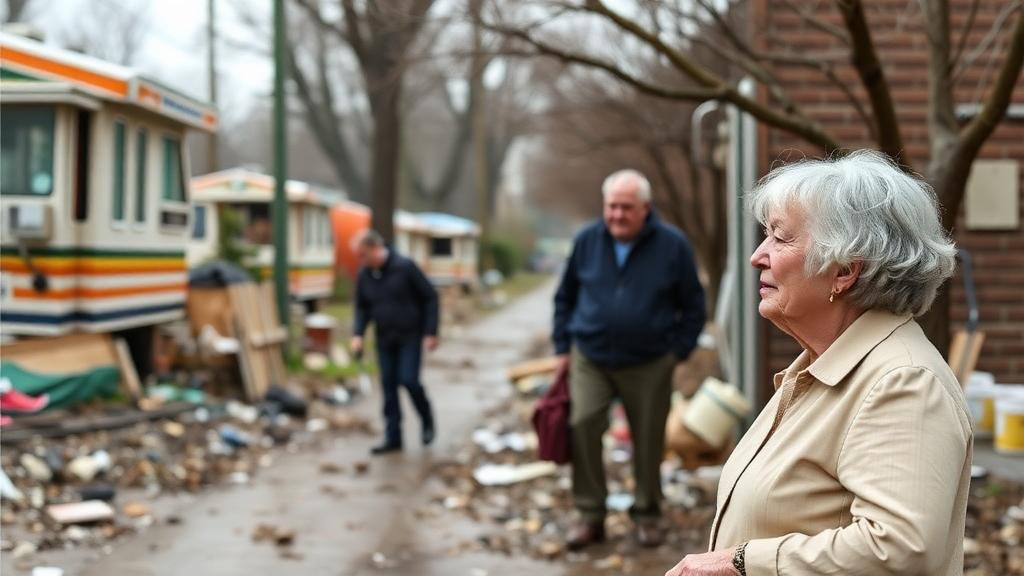
For older adults, no disaster is ever simple. That is the central message of a new editorial anchoring the October 2026 special issue of the Journal of Applied Gerontology, a peer-reviewed publication of the Southern Gerontological Society. In the opening piece, titled “Complex Emergencies and the Effects on Older Populations,” author and special issue guest editor Lindsay Peterson, PhD, of the University of South Florida School of Aging Studies, lays out how hurricanes, floods, wildfires, extreme heat, and other hazards do not strike older populations in isolation. Instead, they interact with chronic health conditions, reduced mobility, diminished social supports, and repeated exposure to emergencies, compounding one another until preparation and recovery become extraordinarily difficult. The editorial frames disaster vulnerability in later life as a cumulative phenomenon, shaped by risks and circumstances that are established long before any single emergency arrives, and argues that the systems responsible for protecting older adults must be redesigned with that complexity in mind.
The special issue assembles twelve studies examining disasters and their effects on older adults across the United States, Puerto Rico, and China, spanning home- and community-based care, assisted living communities, and nursing homes. Together, the research paints a picture of hazard exposure that is rarely limited to one event. Researchers trace how childhood adversity, extreme heat, air pollution, and multiple losses following hurricanes can shape cognitive function, mental health, and daily functioning decades later in life. Other studies document how disasters can cause sustained disruptions to home health and therapy services well beyond the central disaster zone, rippling outward through the networks of care that frail and homebound older adults depend upon daily. Still others reveal that pre-existing differences in staffing levels, organizational structure, and resident involvement leave assisted living communities and nursing homes unevenly prepared, meaning that two facilities in the same storm path may face radically different outcomes.
One of the most sobering findings highlighted in the editorial concerns persistent gaps in individual preparedness. Even older adults who live with chronic illness or who have lived through previous disasters may lack concrete plans for continuing medical care during a power outage or an evacuation. Devices such as oxygen concentrators, refrigerated medications, dialysis schedules, and mobility equipment all depend on infrastructure and logistics that fail precisely when disasters hit. Yet the research also identifies factors that strengthen preparedness and recovery: prior experience, resilience, hope, self-efficacy, caregiving relationships, and reliable access to information all emerge as protective resources. The editorial’s argument is that these modifiable factors can be deliberately cultivated by families, clinicians, and community organizations, rather than left to chance, and that doing so represents one of the most practical pathways to reducing harm in an era of intensifying climate-related hazards.
“Motivation alone is not enough,” said Peterson, of the University of South Florida School of Aging Studies. “Older adults need information that is timely, relevant, and meets their needs and life circumstances. And they need better support from all the organizations with a role in disaster planning and recovery, from emergency management and health care providers to home care, respite, and long-term care facilities.” The statement underscores a recurring theme across the special issue: preparedness campaigns that treat older adults as a homogeneous group, or that rely on generic checklists, fail to account for the enormous diversity of health status, living arrangement, caregiving situation, and geographic exposure found within the aging population itself. A rural older adult living alone with limited transportation faces a fundamentally different risk profile than a resident of a well-staffed urban nursing facility, and effective planning must reflect those differences.
The psychological dimension of disasters receives particular attention in the issue. “Disasters do not only threaten physical health. For older adults, they can cut people off from normal routines, relationships, and the caregivers they rely on. Those losses can have lasting psychological effects,” said special issue guest editor Lisa M. Brown, PhD, ABPP, of the Department of Clinical Psychology at Palo Alto University. “When preparedness includes mental health, caregiver support, and trauma-informed care, older adults—and the staff and families who care for them—will be better able to cope during a crisis and throughout recovery.” Brown’s framing points to a frequently overlooked mechanism of harm: the severing of social ties and daily routines that anchor cognitive and emotional stability in later life. For people living with dementia, the loss of familiar caregivers and environments during evacuation can accelerate decline, while the trauma of repeated evacuations can accumulate across successive storm seasons.
The third guest editor, David M. Dosa, MD, MPH, professor of medicine and chief of geriatrics at UMass Chan Medical School, emphasized the shared societal stakes of the research. “Disasters are apolitical events,” he said. “We must do our very best as a society to understand how best to prepare for and respond to disasters. Articles like the ones in this special issue can help us do just that and must be encouraged.” Dosa’s comment reflects a growing consensus among geriatricians and emergency management researchers that disaster science for older adults has historically been underfunded and fragmented, with lessons learned in one jurisdiction rarely translated into policy or practice elsewhere. The special issue is intended, in part, to consolidate evidence across settings and nations so that preparedness can become a systematic discipline rather than an improvised response.
Technically, the editorial points toward a set of concrete interventions. These include integrating disaster planning into routine clinical care, so that emergency medication supplies, power-dependency registries, and evacuation plans are established during ordinary medical visits rather than in the frantic hours before a storm. They also include building organizational capacity within assisted living communities and nursing homes, tailoring preparedness approaches to each facility’s geographic and structural vulnerabilities, and creating community-based programs that account for the full range of older adults’ circumstances, particularly in rural areas where emergency services are sparse and response times are long. The emphasis on organizational capacity reflects findings that facilities with stronger staffing, clearer chains of command, and greater resident involvement consistently fare better when hazards strike, suggesting that preparedness is as much an institutional property as an individual one.
Taken together, the twelve studies and the framing editorial deliver a clear analytical conclusion: disaster vulnerability in later life cannot be understood by examining a single event in isolation. Preparedness and recovery depend on the accumulation and interaction of prior experiences, health and social conditions, institutional capacity, geography, and access to trustworthy information. A hurricane that spares one older adult may devastate a neighbor with the same age but a different constellation of chronic illness, social isolation, and care arrangements. This systems-level view challenges the traditional emergency management model, which often treats affected populations as uniform and response as a short-term operation with a defined end point. For older adults, the research suggests, recovery may extend months or years, and the disruption of home health services far outside the disaster zone can be as consequential as the hazard itself.
The editorial also carries implications for policy at a moment when climate change is increasing the frequency and intensity of heat waves, wildfires, and severe storms across the aging societies of North America and East Asia. Because the population aged sixty-five and older is growing rapidly in all three regions studied, the number of people exposed to complex emergencies will rise even if hazard frequency alone did not increase. Strengthening modifiable factors such as resilience, self-efficacy, caregiving relationships, and access to information, while simultaneously addressing gaps in the health care, home care, and long-term care systems on which older adults rely, offers communities a concrete agenda for improving safety and security before, during, and after disasters. The editorial, published in the Journal of Applied Gerontology, will be freely accessible in perpetuity, a decision that its authors hope will speed the translation of its findings into emergency management practice, clinical protocols, and community programs serving one of the most vulnerable populations in any disaster.
Subject of Research: Disaster preparedness and complex emergencies affecting older adult populations
Article Title: New editorial in special issue calls for stronger disaster preparedness for older adults
Article References: New editorial in special issue calls for stronger disaster preparedness for older adults. (n.d.). Original publication
Image Credits: AI Generated
DOI: Not provided
Keywords: disaster preparedness, older adults, gerontology, Journal of Applied Gerontology, hurricanes, extreme heat, nursing homes, assisted living, mental health, climate-related hazards, long-term care, resilience
Cite Scienmag News
Beatrice Stafford. (October 2, 2026). Gerontologists urge stronger disaster planning as complex emergencies threaten aging populations. Scienmag. https://scienmag.com/gerontologists-urge-stronger-disaster-planning-as-complex-emergencies-threaten-aging-populations/
Beatrice Stafford. "Gerontologists urge stronger disaster planning as complex emergencies threaten aging populations." Scienmag, 2 October 2026, https://scienmag.com/gerontologists-urge-stronger-disaster-planning-as-complex-emergencies-threaten-aging-populations/. Accessed 4 October 2026.
Beatrice Stafford. "Gerontologists urge stronger disaster planning as complex emergencies threaten aging populations." Scienmag. October 2, 2026. https://scienmag.com/gerontologists-urge-stronger-disaster-planning-as-complex-emergencies-threaten-aging-populations/


