


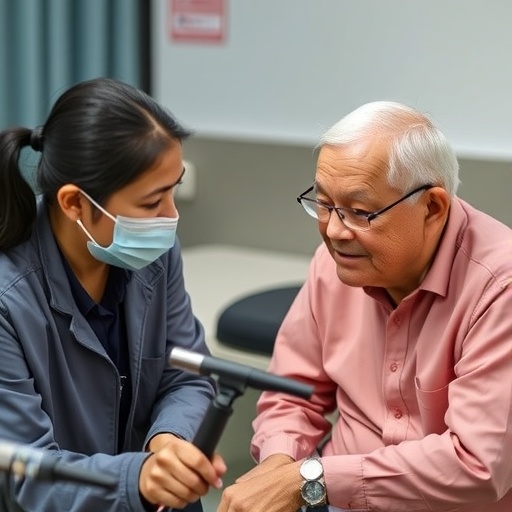
In the ever-evolving landscape of healthcare for aging populations, Thailand has recently unveiled pivotal findings that could revolutionize geriatric care on a global scale. A cutting-edge study published in BMC Geriatrics in 2026 presents an exhaustive clinical and economic evaluation of comprehensive geriatric assessment (CGA) models implemented among hospitalized frail older patients. This landmark research shines a critical light on how multifaceted approaches to elderly care not only improve clinical outcomes but also offer compelling cost-utility advantages that may prompt healthcare systems worldwide to rethink their strategies.
At the heart of the study lies the concept of the Comprehensive Geriatric Assessment—a multidisciplinary, multidimensional diagnostic process designed specifically for frail older adults. Unlike typical medical evaluations, CGA systematically integrates evaluations of medical, psychological, functional, and social capabilities, enabling individualized, patient-centered care pathways. This holistic approach is especially crucial for frail elderly individuals, whose complex health profiles often demand nuanced interventions that transcend traditional, disease-focused models.
The patient cohort under scrutiny consisted of frail older adults admitted to hospitals across Thailand, a demographic globally noted for vulnerability to adverse clinical outcomes such as prolonged hospitalization, increased morbidity, and elevated risk of functional decline. The research team embarked on a rigorous exploration of the efficacy of CGA-driven care models compared to standard geriatric care routines, meticulously tracking clinical endpoints including mortality, readmission rates, functional status, and quality of life metrics.
Clinical outcomes derived from CGA integration were compelling. Patients who received comprehensive assessments coupled with tailored care plans exhibited statistically significant reductions in hospital readmission rates and displayed enhanced preservation of functional independence post-discharge. These clinical benefits underscore the transformative potential of CGA, which fosters proactive management of comorbidities, optimization of pharmacologic regimens, and timely initiation of rehabilitative services.
Beyond clinical implications, the study delved deeply into the economic ramifications of implementing CGA models within the resource-constrained context of the Thai healthcare system. Employing state-of-the-art cost-utility analysis frameworks, researchers quantified the incremental cost-effectiveness ratios (ICERs) associated with CGA interventions relative to conventional care. By factoring in direct healthcare costs, patient-centered outcomes, and quality-adjusted life years (QALYs), the study robustly demonstrated that CGA is not merely clinically superior but also economically viable.
One striking revelation pertained to the cost offsets attributable to reduced hospital lengths of stay and fewer emergency room visits. The multidisciplinary interventions predisposed by CGA effectively curb unnecessary utilization of expensive acute care services, thereby relieving financial pressure on hospitals and payers alike. This reallocation of resources creates space for reinvestment into preventive and community-based geriatric services, fostering a sustainable continuum of care.
Importantly, the study also accentuates the pivotal role of interdisciplinary collaboration within CGA frameworks. The synchronized efforts of geriatricians, nurses, physiotherapists, pharmacists, social workers, and nutritionists culminate in a dynamic care matrix where each dimension of an older patient’s well-being is meticulously addressed. This coordinated approach facilitates precision targeting of vulnerabilities ranging from polypharmacy risks to psychosocial deficits, thereby mitigating complications that often precipitate clinical deterioration.
Moreover, the research highlights technological enablers underpinning CGA’s success, including electronic health records with geriatric-specific protocols and decision-support systems. These tools streamline data aggregation, risk stratification, and care plan customization, enhancing both efficiency and accuracy in managing complex patient needs. This interface of clinical expertise and digital innovation exemplifies how modern healthcare infrastructures can embrace geriatric challenges with agility and foresight.
Thailand’s demographic trajectory, marked by rapidly aging populations coupled with rising life expectancies, situates this research at a crucial intersection of urgency and opportunity. The findings advocate for policy adaptations that institutionalize CGA models as standard practice in hospital settings, thereby aligning national health priorities with the imperatives of equitable and effective elder care. Such alignment promises to bridge gaps between acute care and long-term support systems, fostering healthier aging trajectories.
The study also gestures toward broader implications for global health equity. As low- and middle-income countries grapple with burgeoning elder populations, Thailand’s model offers a scalable blueprint for integrating comprehensive geriatric assessments within financially constrained environments. This democratization of advanced geriatric care models may reduce disparities in aging outcomes, promoting healthier longevity across diverse socioeconomic strata.
Ethically, the CGA approach embodies a paradigm shift toward valuing the holistic personhood of older adults rather than merely addressing isolated pathologies. This holistic valorization enhances patient dignity, autonomy, and participation in care decisions—factors increasingly recognized as integral to successful health outcomes in geriatrics. By operationalizing such values in clinical settings, CGA transcends biomedical metrics to champion deeply humane care philosophies.
Looking forward, the study opens fertile avenues for further innovation, including the integration of artificial intelligence-driven predictive analytics to preempt functional decline and optimize intervention timing. Additionally, longitudinal investigations could elucidate the long-term sustainability and adaptability of CGA initiatives across varying healthcare ecosystems and cultural milieus, enriching the evidence base for geriatric care policies.
In conclusion, this pioneering Thai study offers a timely and robust validation of comprehensive geriatric assessment models as dual engines of improved medical outcomes and cost-efficient care delivery for frail elderly populations. Amid global aging trends, such insights catalyze transformative shifts in geriatric healthcare paradigms, heralding a future where aging with dignity and vitality becomes an attainable global standard rather than a privileged exception.
Cite Scienmag News
Beatrice Stafford. (June 3, 2026). Geriatric Assessments Boost Outcomes, Cut Costs in Thailand. Scienmag. https://scienmag.com/geriatric-assessments-boost-outcomes-cut-costs-in-thailand/
Beatrice Stafford. "Geriatric Assessments Boost Outcomes, Cut Costs in Thailand." Scienmag, 3 June 2026, https://scienmag.com/geriatric-assessments-boost-outcomes-cut-costs-in-thailand/. Accessed 6 September 2026.
Beatrice Stafford. "Geriatric Assessments Boost Outcomes, Cut Costs in Thailand." Scienmag. June 3, 2026. https://scienmag.com/geriatric-assessments-boost-outcomes-cut-costs-in-thailand/


