

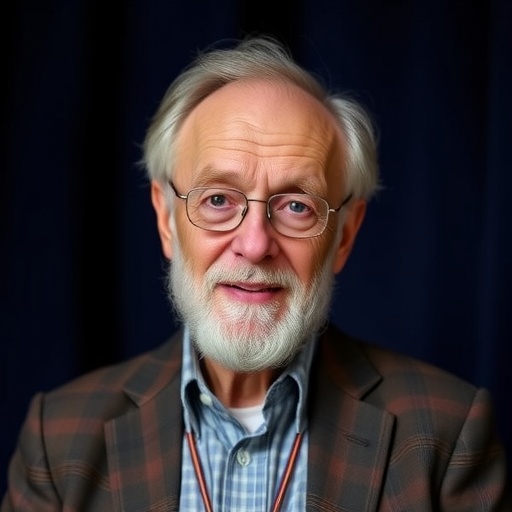
In an unprecedented milestone for Germany, Professor Gerd Faltings of the University of Bonn has been awarded the prestigious Abel Prize, marking the first time a German mathematician has received this honor. The prize will be officially presented at a high-profile ceremony in Oslo on May 26, 2026, under the auspices of the Norwegian Academy of Science and Letters and in the presence of King Harald V of Norway. Faltings, a renowned scholar in arithmetic geometry and number theory, has long been affiliated with the University of Bonn and previously served as director of the Max Planck Institute for Mathematics (MPIM). Now a Professor Emeritus, he continues to contribute to mathematical research as an associate member of the University’s Hausdorff Center for Mathematics Cluster of Excellence.
The Abel Prize, instituted by the Norwegian government to commemorate the bicentennial of Niels Henrik Abel’s birth, has gained international renown as a “Nobel Prize for Mathematics,” celebrating cutting-edge and profound advancements in the field. Unlike the Fields Medal which restricts recipients based on age, the Abel Prize’s open eligibility criteria allow recognition of lifetime achievements. The award carries significant monetary value, currently amounting to 7.5 million Norwegian kroner, approximately €670,000.
Professor Faltings’ groundbreaking work has pervasive influence throughout arithmetic geometry, a discipline synthesizing number theory with algebraic geometry. Since establishing his roots at Bonn and the MPIM in the early 1990s, his research has profoundly shaped contemporary mathematics. His pioneering contributions famously include the resolution of the Mordell conjecture, a problem that resisted proof for nearly 60 years and occupies a central role in understanding rational points on curves.
Born in Gelsenkirchen in 1954 into a family of scientists, Faltings developed an affinity for mathematics early in life. Excelling academically, he won national mathematics competitions and was awarded scholarships recognizing his talent. His formal studies at Münster and Harvard were punctuated by accelerated academic achievements, culminating in a habilitation and early professorships, including a stint at Princeton. Returning to Germany in 1994 to lead the MPIM, he simultaneously held a professorship at Bonn until retiring to emeritus status in 2023.
Throughout his career, Faltings amassed numerous accolades, including the Dannie Heineman Prize, the Fields Medal in 1986—the first German recipient of this honor —and multiple national and international prizes such as the Leibniz Prize, the von Staudt Prize, the King Faisal International Prize, and the Shaw Prize. His recognition spans memberships in prominent academies worldwide, including the Royal Society in London and the National Academy of Sciences in Washington, highlighting his global stature.
What distinguishes Faltings are his innovative methods addressing deeply complex questions at the intersection of geometry and number theory. His 1983 proof of the Mordell conjecture introduced entirely new techniques in arithmetic geometry, resolving a foundational problem regarding the finiteness of rational solutions on algebraic curves with genus greater than one. This result overturned decades of mathematical skepticism, giving rise to what is now known as Faltings’ theorem, a cornerstone of modern number theory.
The Mordell conjecture concerns the nature of rational solutions—solutions expressible as fractions of integers—to polynomial equations defining algebraic curves. The classification of these curves by their genus, a topological invariant reflecting the number of “holes” in their geometric shape, underpins their solution structure. For curves of genus zero or one, infinitely many rational solutions can exist, but Mordell conjectured that higher genus curves admit only finitely many such solutions.
Faltings’ unexpected and elegant solution demonstrated that for genus greater than one, the rational points on these curves are finite, confirming Mordell’s insight from 1922 after six decades of unresolved attempts. By merging sophisticated geometric insights with arithmetic considerations, Faltings laid the foundation for a host of further developments in Diophantine geometry and the theory of Diophantine equations, problems tracing their origin to the ancient Greek mathematician Diophantus.
His theoretical advances extended to the Lang conjectures and other fundamental problems, further cementing his role as a transformative figure. The award committee lauded Faltings for introducing new conceptual tools and structural understanding that have shaped arithmetic geometry for over 30 years. These tools have bridged gaps between geometric intuition and arithmetic rigour, influencing generations of mathematicians.
The University of Bonn’s Rector, Professor Michael Hoch, expressed pride and celebration at Faltings’ achievement, emphasizing how his work has revolutionized key areas such as number theory, surfaces’ theory, and Diophantine equations. Hoch underscored that this prestigious recognition shines a spotlight on Bonn as a world-leading mathematical hub and reflects the collaborative excellence embodied in the Hausdorff Center for Mathematics.
Faltings’ journey, from an inspired young talent to a multi-award-winning mathematician, exemplifies the power of profound insight and perseverance in mathematical discovery. His ability to solve enduring mathematical problems with fresh conceptual approaches serves as an inspiration and testament to the vitality of pure mathematical research. As the Abel Prize brings German mathematics into the international spotlight for the first time, Faltings’ legacy promises to inspire future generations pursuing answers in the abstract realms of numbers and shapes.
As the mathematics community and general public await the formal presentation of the Abel Prize in 2026, Gerd Faltings’ work stands as a beacon of creativity, rigor, and intellectual triumph. His results continue to influence ongoing research and illustrate how deep theoretical breakthroughs can unlock longstanding mathematical mysteries, reaffirming mathematics as an ever-evolving, dynamic discipline integral to human knowledge.
Subject of Research: Arithmetic geometry, number theory, Diophantine equations, algebraic curves
Article Title: Not specified in the original content
News Publication Date: Not specified; announcement leading to the 2026 award ceremony
Web References: https://mediasvc.eurekalert.org/Api/v1/Multimedia/ffc7e164-8dc5-440f-ab98-0bd7450ab0c9/Rendition/low-res/Content/Public
Image Credits: Photo by Peter Badge/Typos1
Keywords: Gerd Faltings, Abel Prize, arithmetic geometry, Mordell conjecture, number theory, Diophantine equations, University of Bonn, Max Planck Institute for Mathematics, Fields Medal, algebraic curves, genus, rational solutions


