


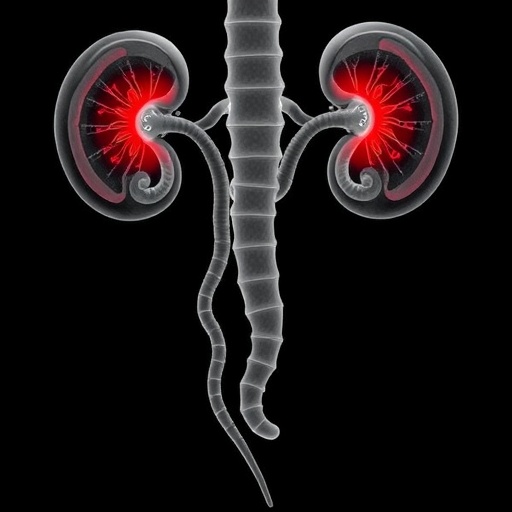
In a groundbreaking advancement for pediatric nephrology, a recent study published in Pediatric Research delves into the intricate genotype-phenotype correlations of congenital nephrotic syndrome (CNS) and infantile nephrotic syndrome (INS) within the North American population. These syndromes, notorious for their devastating impact on kidney function in the earliest months of life, have long posed challenges in diagnosis and management due to their genetic heterogeneity and clinical variability. The new research sheds light on the molecular underpinnings of these conditions, emphasizing the pivotal roles of NPHS1 and NPHS2 gene mutations and their distinct clinical presentations.
CNS and INS are fundamentally characterized by podocyte dysfunction. Podocytes, specialized epithelial cells in the glomerulus, are critical components of the kidney’s filtration barrier. Their slit diaphragm junctions act as selective sieves, preventing essential plasma proteins from being lost in urine. Mutations in NPHS1 and NPHS2, which encode nephrin and podocin respectively—key proteins constituting the slit diaphragm—result in profound disruption of this barrier. Consequently, massive proteinuria ensues, drastically impairing renal function from an early age.
The differentiation between CNS and INS typically hinges on the timing of onset. CNS clinically manifests within the first three months of life, frequently presenting with heavy proteinuria, edema, hypoalbuminemia, and other hallmark signs of nephrotic syndrome. In contrast, INS emerges slightly later, between three and twelve months of age. Despite overlapping clinical features, their genetic backgrounds and severity vary enough to suggest distinct pathogenic trajectories. The new North American cohort study provides a comprehensive genotype-phenotype map, revealing patterns that could revolutionize therapeutic approaches and prognostic assessments.
The study operates on a robust analytical framework, employing next-generation sequencing to identify mutations in the NPHS1 and NPHS2 genes among affected infants. Researchers meticulously correlated these genetic variants with clinical parameters, including age of onset, proteinuria levels, renal histopathology, and response to treatment. In doing so, they distinguished subtypes of CNS and INS with sufficient granularity to challenge conventional classifications that previously lumped these syndromes under broad diagnostic umbrellas.
One of the study’s remarkable findings concerns the spectrum of mutations in the NPHS1 gene, encoding nephrin. Nephrin forms a crucial structural scaffold of the slit diaphragm; mutations can cause podocyte architectural collapse. The data revealed a predominance of truncating and missense mutations, with severe truncating mutations correlating with CNS onset within the neonatal period. Conversely, milder missense mutations often coincided with later manifestations, blurring the clinical line between CNS and INS, thus underscoring the need for molecular diagnostics to refine clinical predictions.
Similarly, the NPHS2 gene, coding for podocin, exhibited mutations with a distinct genotype-phenotype landscape. Mutations frequently resulted in a loss of podocin’s ability to anchor nephrin and associated proteins within podocyte membranes. Interestingly, NPHS2 mutations tended to be associated more with INS rather than CNS, implying divergent molecular mechanisms that dictate disease trajectory. The study illustrated that compound heterozygous mutations often produced a phenotype with intermediate severity, further complicating clinical categorization.
Intrinsic to the study’s significance is its potential to influence treatment paradigms. Currently, management of CNS and INS is challenging, often culminating in early kidney failure and necessitating transplantation. By discerning the exact mutation profile, clinicians can adopt personalized therapeutic regimens. For instance, children harboring specific NPHS1 mutations benefit from aggressive initial immunosuppression and supportive care, while those with certain NPHS2 mutations may exhibit resistance, pointing to alternative interventions or transplantation sooner.
The research also underscores the importance of early genetic screening in infants displaying nephrotic syndrome symptoms. The authors advocate for integrating comprehensive genetic panels as standard clinical tools, allowing for earlier diagnosis, tailored counseling, and informed family planning. Such genetic insights can alleviate the uncertainty faced by families and healthcare providers alike, facilitating timely decisions regarding prognosis and treatment.
Another critical layer unveiled by the study is the interaction of these genotypes with environmental and epigenetic factors. Although the genetic mutations are primary drivers, variations in disease severity among patients with identical genotypes suggested additional modifiers at play. Future research directions include exploring these modifiers to fully elucidate the phenotypic variability, which could ultimately lead to novel therapeutic targets beyond genetic correction.
The geographic focus on the North American population adds further value, as regional genetic backgrounds may influence mutation prevalence and disease phenotype. Previous studies have often concentrated on European or Asian cohorts; thus, this study enriches the global understanding of CNS and INS by providing data from a genetically diverse population. Consequently, its findings may better inform clinicians serving heterogeneous communities within North America.
Importantly, the study leveraged cutting-edge bioinformatics pipelines, enabling efficient variant annotation and prediction of pathogenicity. This approach ensured the accuracy of genotype-phenotype correlation and minimized the risk of misclassification. It exemplifies the transformative role of precision medicine in nephrology, where data-driven insights translate into improved patient outcomes.
Beyond immediate clinical implications, this research may have profound impacts on genetic counseling and disease registries. Establishing clear genotype-phenotype relationships supports more accurate risk assessments for families with affected infants, fostering preventative strategies and surveillance protocols in at-risk siblings or relatives. The findings also contribute essential data to international registries, promoting collaborative efforts that can accelerate the discovery of therapeutic interventions.
Given the severity of CNS and INS, the study’s insights offer renewed hope. Early intervention strategies, grounded in genetic understanding, could significantly alter disease trajectories, potentially delaying or avoiding end-stage renal disease. Furthermore, the identification of precise mutations opens avenues for emerging gene editing technologies, such as CRISPR-based therapeutics, which could correct pathogenic variants at their source, a prospect that looms on the horizon of nephrology.
This comprehensive genotype-phenotype mapping of CNS and INS represents a pivotal stride toward demystifying complex pediatric renal disorders. It exemplifies how molecular genetics combined with clinical acumen can unravel disease heterogeneity that once baffled clinicians and researchers alike. As molecular diagnostic tools become increasingly accessible, studies of this nature will redefine the standards of care for childhood nephrotic syndromes, turning a once bleak prognosis into a more hopeful narrative.
Future research inspired by the study will likely explore longitudinal cohorts to validate these correlations and investigate gene-environment interplay in greater depth. Integration of proteomic and metabolomic analyses could further enhance the understanding of podocyte pathobiology. Moreover, as newborn screening for these mutations becomes feasible, early preventative strategies may transform the landscape of pediatric kidney disease, emphasizing the immense clinical utility of genetic knowledge.
In summary, the study published in Pediatric Research marks a milestone in nephrology by elucidating the critical genetic factors underpinning congenital and infantile nephrotic syndromes. Its rigorous methodology, detailed genotype-phenotype correlations, and clinical implications herald a new era of personalized kidney medicine that promises to profoundly impact patient care and outcomes across North America and beyond.
Cite Scienmag News
Juliet Wilcox. (December 12, 2025). Genotype-Phenotype Links in Infantile Nephrotic Syndrome. Scienmag. https://scienmag.com/genotype-phenotype-links-in-infantile-nephrotic-syndrome/
Juliet Wilcox. "Genotype-Phenotype Links in Infantile Nephrotic Syndrome." Scienmag, 12 December 2025, https://scienmag.com/genotype-phenotype-links-in-infantile-nephrotic-syndrome/. Accessed 4 September 2026.
Juliet Wilcox. "Genotype-Phenotype Links in Infantile Nephrotic Syndrome." Scienmag. December 12, 2025. https://scienmag.com/genotype-phenotype-links-in-infantile-nephrotic-syndrome/


