


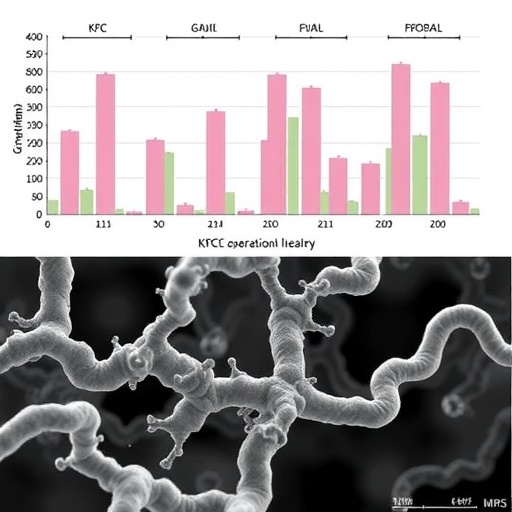
A large international genomic study has mapped the hidden population structure of one of the world’s most concerning drug-resistant bacteria, revealing that KPC-producing Pseudomonas aeruginosa is not a single, uniform threat but a collection of genetically distinct lineages shaped by geography, mobile DNA and evolutionary exchange. The analysis of 656 bacterial genomes found that nearly every strain carried the same carbapenem-resistance gene, blaKPC-2, while one high-risk bacterial lineage, ST463, accounted for almost half of the collection. The findings provide an unusually detailed view of how resistance can spread through hospitals and across borders, and highlight genomic regions that may help some lineages survive, persist and cause severe infections.
Pseudomonas aeruginosa is an environmental bacterium that can also become a formidable opportunistic pathogen, particularly in hospitals. It is associated with pneumonia, bloodstream infections, urinary tract infections and wound infections, with the greatest risks affecting people whose immune defenses are weakened or who require invasive devices such as ventilators and catheters. Treatment is difficult because the species naturally resists many antibiotics and can rapidly acquire additional resistance mechanisms. Carbapenems, a class of broad-spectrum antibiotics often reserved for serious infections, are among the drugs used when other treatments fail. KPC enzymes can destroy carbapenems before they reach their bacterial targets, converting an already difficult pathogen into a multidrug-resistant one.
The enzyme is produced from the blaKPC gene, which is frequently carried on plasmids or other mobile genetic structures. Plasmids are independent DNA molecules that can move between bacteria, sometimes transferring resistance genes across otherwise unrelated strains. This mobility makes KPC resistance especially important for genomic surveillance: investigators must determine not only whether a bacterium is resistant, but also whether the resistance is spreading through a successful bacterial clone, through transferable DNA, or through both processes at once. The new study, led by researchers in China and published in BMC Genomics, combined these perspectives by examining the chromosomes, plasmids, resistance genes and evolutionary relationships of a worldwide collection of KPC-producing P. aeruginosa genomes.
To build the dataset, the researchers first generated a complete genome for a clinical ST463 isolate known as PA328 using hybrid sequencing. This approach combines sequencing technologies with different strengths. Short-read sequencing can accurately identify individual DNA bases, while long-read sequencing helps assemble repetitive regions and resolve large structural features such as plasmids, genomic islands and rearrangements. A complete reference genome can therefore provide a more reliable framework for comparing fragmented public assemblies. The PA328 genome was analyzed alongside 655 publicly available KPC-producing P. aeruginosa genomes using comparative genomics, phylogenomic reconstruction, pangenome analysis, recombination screening and Bayesian temporal modelling.
The resulting evolutionary analysis divided the bacteria into eight major phylogenetic lineages. A phylogenetic tree reconstructs relationships from patterns of shared and differing mutations, allowing researchers to estimate which isolates are closely related and which represent more distant branches. These eight groups had different combinations of sequence types and geographic distributions rather than forming one globally mixed population. ST463 was particularly prominent in China, ST282 was associated mainly with the United States, and ST654 was linked to Chile. Such geographic clustering does not by itself prove that a lineage originated in a particular country or that transmission occurred directly between patients, but it indicates that local healthcare systems, antibiotic exposure, bacterial introductions and infection-control conditions may be influencing which clones become established.
ST463 was the dominant sequence type in the full collection, representing 43.6 percent of the genomes. Sequence types are defined through multilocus sequence typing, a method that classifies bacteria according to DNA variation in a set of housekeeping genes. They are useful for tracking major clones, but they do not capture every important difference in a bacterial genome. Two isolates with the same sequence type may still differ in plasmids, resistance genes, virulence-associated regions or recently acquired DNA. The study’s broader genomic comparisons therefore add detail to the ST463 signal, showing how a successful lineage can diversify while retaining a recognizable evolutionary backbone. The overwhelming prevalence of blaKPC-2, detected in 99.5 percent of the genomes, suggests that this particular resistance determinant has become a defining feature of the sampled KPC-producing population.
The investigators also searched the assemblies for potentially important mutations and disrupted genes. Their screening identified candidate frameshift calls in genes annotated as participating in metabolism, iron acquisition, transport and functions associated with virulence. A frameshift occurs when inserted or deleted DNA shifts the three-letter reading frame used to translate a gene into a protein. The resulting protein may be shortened or otherwise altered, potentially changing bacterial behavior. However, assembly-based predictions can be misleading when sequencing errors, repetitive DNA or mixed populations create false signals. The authors therefore present these findings as candidates requiring confirmation with raw read-level data and experimental studies. In other words, the analysis points to biological clues, but does not yet establish that each predicted frameshift changes virulence, antibiotic susceptibility or the ability to survive in a host.
The study found descriptive patterns in the way antibiotic-resistance genes and mobile genetic elements occurred together. These elements include plasmids, transposons, integrative structures and other pieces of DNA capable of moving within or between genomes. When resistance genes repeatedly appear in the same genetic neighbourhood, they may be inherited together or transferred as a package, potentially allowing exposure to one antibiotic to help maintain resistance to several others. The researchers did not frame every observed association as proof of direct gene transfer, because co-occurrence can arise through shared ancestry as well as recent mobility. Nevertheless, the patterns emphasize why routine surveillance based only on bacterial species or resistance phenotype can miss the pathways connecting outbreaks and regions.
Within ST463, the analysis identified what the researchers operationally defined as a high-recombination region, or HRR. Recombination is the exchange or replacement of DNA between related organisms, and it can accelerate bacterial evolution by bringing together genetic segments that arose in different lineages. The ST463 HRR contained genes annotated as being involved in secretion systems, biofilm formation, metabolism and mobile genetic elements. Secretion systems act as molecular machines that export proteins or other substances and can contribute to interactions with host cells. Biofilms are structured microbial communities enclosed in a self-produced matrix; they can attach to surfaces, resist environmental stress and reduce the effectiveness of antibiotics or immune responses. The presence of these gene categories in a recombination-rich region makes the area a plausible target for further investigation, although its precise effects remain untested.
A comparison between plasmid sequences and the ST463 HRR revealed partial similarity, suggesting a possible evolutionary connection between mobile DNA and the recombination-rich chromosomal region. The result could reflect past exchange, shared ancestral sequences or related mobile genetic structures, but the available evidence cannot determine which explanation is correct. Establishing the direction and timing of such events would require more complete genomes, carefully validated read mappings and laboratory experiments. The researchers also used Bayesian temporal analysis to estimate that the most recent common ancestor of the sampled Chinese ST463 population existed around 2005. A time to the most recent common ancestor is an estimate of when the sampled genomes last shared a common ancestral population, not a date marking the emergence of the species or the first appearance of KPC resistance. It can nevertheless help investigators place the expansion of a lineage within the history of antibiotic use, healthcare practices and infection-control interventions.
The authors describe the work as a genomic resource for surveillance rather than a final explanation of KPC-producing P. aeruginosa evolution. The collection is substantial, but public genomes are not a perfect mirror of global infections: countries, hospitals and outbreak settings that sequence more intensively will be overrepresented, while unsampled regions may contain additional lineages. Genome assemblies can also vary in quality, and the study’s candidate mutations and plasmid relationships need confirmation. Even with those limitations, the eight-lineage framework offers an actionable way to organize future monitoring. Hospitals and public-health laboratories could use whole-genome sequencing to identify whether a new resistant isolate belongs to a known high-risk lineage, carries a familiar mobile resistance structure or contains unusual combinations of genes. As KPC-producing P. aeruginosa continues to challenge last-resort treatment, distinguishing the bacterial clone from the resistance gene—and tracking how both move—may be essential for detecting outbreaks before they become international problems.
Cite Scienmag News
Juliet Wilcox. (August 27, 2026). Genomic Epidemiology Reveals Population Structure and Lineage-Associated Variation in KPC-Producing Pseudomonas aeruginosa. Scienmag. https://scienmag.com/genomic-epidemiology-reveals-population-structure-and-lineage-associated-variation-in-kpc-producing-pseudomonas-aeruginosa/
Juliet Wilcox. "Genomic Epidemiology Reveals Population Structure and Lineage-Associated Variation in KPC-Producing Pseudomonas aeruginosa." Scienmag, 27 August 2026, https://scienmag.com/genomic-epidemiology-reveals-population-structure-and-lineage-associated-variation-in-kpc-producing-pseudomonas-aeruginosa/. Accessed 3 September 2026.
Juliet Wilcox. "Genomic Epidemiology Reveals Population Structure and Lineage-Associated Variation in KPC-Producing Pseudomonas aeruginosa." Scienmag. August 27, 2026. https://scienmag.com/genomic-epidemiology-reveals-population-structure-and-lineage-associated-variation-in-kpc-producing-pseudomonas-aeruginosa/


