

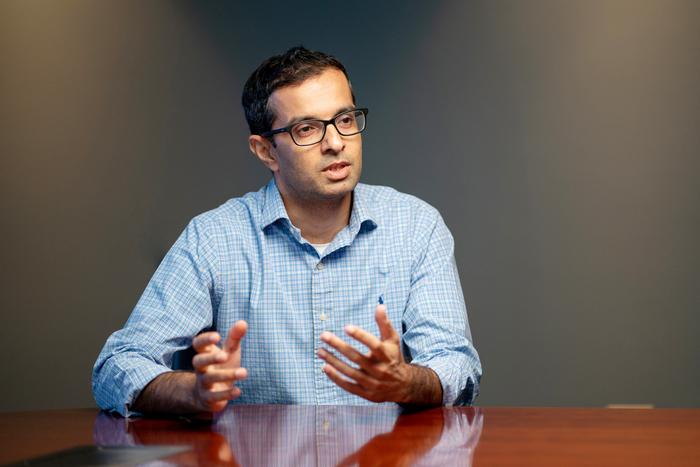
(MEMPHIS, Tenn. – April 23, 2024) Survivors of childhood cancer are at increased risk for cardiovascular disease, for which a risk factor is their greater prevalence of type 2 diabetes, with a disproportionate impact on those of non-European heritage. St. Jude Children’s Research Hospital scientists have identified four previously unknown genetic variants associated with diabetes risk in all survivors. Published today in the Journal of Clinical Oncology, their work also found an association between a previously reported genetic risk score for type 2 diabetes developed in the general population with diabetes risk in survivors. The findings also provide novel insights into differences in risk between individuals of varying ancestries.

Credit: St. Jude Children’s Research Hospital
(MEMPHIS, Tenn. – April 23, 2024) Survivors of childhood cancer are at increased risk for cardiovascular disease, for which a risk factor is their greater prevalence of type 2 diabetes, with a disproportionate impact on those of non-European heritage. St. Jude Children’s Research Hospital scientists have identified four previously unknown genetic variants associated with diabetes risk in all survivors. Published today in the Journal of Clinical Oncology, their work also found an association between a previously reported genetic risk score for type 2 diabetes developed in the general population with diabetes risk in survivors. The findings also provide novel insights into differences in risk between individuals of varying ancestries.
The work relied on the St. Jude Lifetime cohort study (St. Jude LIFE), a long-term follow-up study for individuals treated for cancer as children. This cohort enabled the researchers to identify the four previously unknown genetic variants. Those variants were more frequent in people of African descent than those of European ancestry. They also determined that compared to a polygenic risk score for type 2 diabetes derived in the general population of European ancestry, polygenic risk scores generated from diverse ancestry datasets were more informative in assessing diabetes risk in survivors of both European and African ancestries. All genetic risks appeared magnified by childhood exposure to alkylating agents, a common class of chemotherapeutics.
“We found DNA variants in survivors that increase the risk of type 2 diabetes,” said co-senior and corresponding author Yadav Sapkota, PhD, St. Jude Department of Epidemiology and Cancer Control. “Among survivors exposed to alkylating agents, these variants are conferring differential risk based on the ancestry, which may partially explain some of the disparity in type 2 diabetes burden in survivors.”
Childhood cancer survivors are at a three times increased risk of developing type 2 diabetes than their siblings. However, non-Hispanic Black survivors experience three times more risk than non-Hispanic white survivors. To understand those differences, the researchers performed whole genome sequencing on the patients from the St. Jude LIFE cohort involved in this study, comparing the DNA of survivors that had type 2 diabetes to those that did not, divided by ancestry. Through this work, the team created a rich and rare trove of combined clinical and genetic data.
Ancestry affects type 2 diabetes risk in childhood cancer survivors
“The genetic risk disproportionately affected survivors of African or African American ancestry previously treated with alkylating agents,” Sapkota said. “The same variant is implicated in both European and African-ancestry groups, but the amount of risk conferred by carrying the variant differs.”
To address that disparity in greater detail, the scientists compared previously reported polygenic risk scores for diabetes in the general population. Earlier research used many genetic variants, considered as a group, to assess disease risk. However, these risk scores were traditionally derived from those of European descent. The researchers compared three risk scores, a traditional score based only on those of European descent and two others developed by including people of different ancestries. The more inclusive scores both performed better in survivors of both European and African ancestries.
“The two risk scores derived from multiple ancestries were strongly associated with type 2 diabetes risk in survivors of diverse ancestries compared to the score developed in European-only ancestry,” Sapkota said.
Genetics amplify diabetes risk from alkylating agents in survivors
The research also suggested that another contributor to increased type 2 diabetes risk is exposure to alkylating agents, a class of chemotherapy commonly used in childhood cancer treatments.
“We saw very consistently, in three out of our four identified variants, and all of our polygenic risk scores, a significant increase in diabetes risk when survivors were exposed to alkylating agents during their initial treatment,” Sapkota said. “So genetic factors in the presence of alkylating agents can significantly enhance type 2 diabetes risk.”
The alkylating agent effect also had a greater impact on those of African ancestry. While the reasons for these differences in risk remain unclear, the study is a step in the right direction toward addressing them.
“We hope this information will help reduce disparities in the type 2 diabetes burden,” Sapkota said. “Now we know how to identify childhood cancer survivors most at risk of type 2 diabetes so we can provide more personalized opportunities for interventions and prevent cardiovascular complications down the road.”
Authors and funding
The study’s first author is Cindy Im, University of Minnesota. The study’s other co-senior author is Carmen Wilson, St. Jude. The study’s other authors are Eric Chow, Fred Hutchinson Research Center; Sogol Mostoufi-Moab, Children’s Hospital of Philadelphia; Tianzhong Yang, University of Minnesota; Melissa Richard, M. Monica Gramatges and Philip Lupo, Baylor College of Medicine; Noha Sharafeldin and Smita Bhatia, University of Alabama at Birmingham; Achal Neupane, Jessica Baedke, Brian Lenny, Angela Delaney, Stephanie Dixon, Gregory Armstrong, Melissa Hudson, Kirsten Ness, Leslie Robison and Yutaka Yasui, all of St. Jude.
The study was supported by grants from the National Cancer Institute (R21 CA261833, R01 CA261898, R01 CA216354, U01 CA195547, U24 CA55727, CA21765), Children’s Cancer Research Fund and University of Minnesota Foundation Pediatric Scholar Award and ALSAC, the fundraising and awareness organization of St. Jude.
St. Jude Media Relations Contact
Rae Lyn Hartley
Cell: (901) 686-2597
raelyn.rushing@stjude.org
media@stjude.org
St. Jude Children’s Research Hospital
St. Jude Children’s Research Hospital is leading the way the world understands, treats and cures childhood cancer, sickle cell disease and other life-threatening disorders. It is the only National Cancer Institute-designated Comprehensive Cancer Center devoted solely to children. Treatments developed at St. Jude have helped push the overall childhood cancer survival rate from 20% to 80% since the hospital opened more than 60 years ago. St. Jude shares the breakthroughs it makes to help doctors and researchers at local hospitals and cancer centers around the world improve the quality of treatment and care for even more children. To learn more, visit stjude.org, read St. Jude Progress, a digital magazine, and follow St. Jude on social media at @stjuderesearch.
Journal
Journal of Clinical Oncology
Method of Research
Observational study
Subject of Research
People
Article Title
Trans-ancestral genetic risk factors for treatment-related type 2 diabetes mellitus in survivors of childhood cancer
Article Publication Date
23-Apr-2024

