


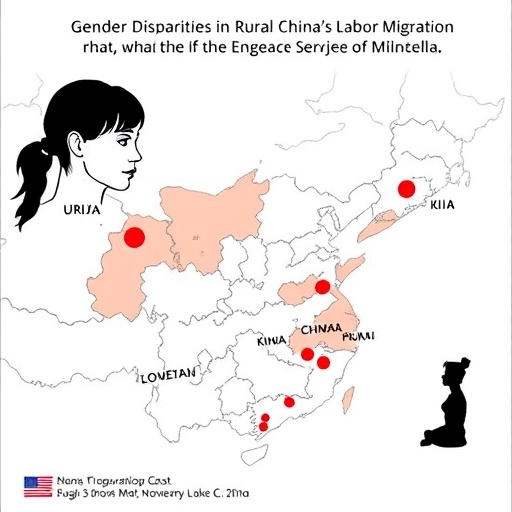
In a transformative exploration of labor migration, a pivotal study by researcher W. Lai scrutinizes the dynamics shaping gender differences in rural China’s migration patterns. This analysis, published in the journal “J Pop Research,” offers a nuanced perspective on why rural men and women embark on migration journeys under disparate circumstances. The work is not merely scholarly but underlines pressing socio-economic trends impacting millions of lives, ultimately seeking to understand whether these gender discrepancies stem from weaker intentions or lower realizations of migration potential.
At the heart of Lai’s investigation lies a fundamental question: why do women from rural areas in China migrate less frequently than their male counterparts? The research highlights a complex interplay of societal expectations, economic conditions, and personal aspirations that shape these decisions. Through in-depth qualitative and quantitative analyses, Lai uncovers the nuanced layers of intention and realization, arguing that the motivations behind migration are steeped in cultural beliefs and entrenched gender roles that dictate the opportunities afforded to men and women differently.
One striking finding from Lai’s research is that women often have higher aspirations for migration than men, yet their realization of those aspirations is significantly lower. This paradox raises vital questions about the structural barriers that inhibit women’s migration. Factors such as household responsibilities, societal norms, and safety concerns play substantial roles in shaping these gender differences. This exploration signals a need for a re-evaluation of policies aimed at promoting labor mobility, particularly in how they address the specific constraints faced by women.
Interestingly, the research also correlates with broader trends in globalization and economic development in rural China. As urban centers grow and labor demands shift, the rural populace is increasingly faced with the potential and necessity of migration as a means of survival and economic advancement. However, the ingrained traditionalism and patriarchal structures influence women’s ability to seize these opportunities, leading to a continuous cycle of under-realization of their migration intentions.
Lai employs a mixed-methods approach, synthesizing quantitative data from migration surveys with qualitative interviews from various demographics within rural communities. This methodology enhances the richness of the findings and paints a holistic picture of the migration landscape. By revealing first-person accounts of women who possess the desire to migrate but ultimately do not, the research underscores the significant emotional and psychological toll of these unfulfilled aspirations.
Moreover, the study delves into the socio-economic dimensions influencing these outcomes. By examining the economic contributions of women in their local areas and their potential roles in urban labor markets, Lai makes a compelling case for the need to empower women through targeted policies that enhance education, job training, and access to migration resources. The findings urge policymakers to consider gender-sensitive approaches to labor migration that recognize the unique challenges women face.
Another significant aspect of the research is the role of community support systems in shaping migration trends. Lai notes that women often rely heavily on informal networks for information and resources related to migration. However, these networks tend to favor male migrants, further exacerbating the gender gap. By investing in community-based initiatives that promote female migration, there is a potential to break down these barriers and provide women with the support needed to pursue their migration aspirations.
In examining the implications of these findings, Lai emphasizes the importance of recognizing labor migration as a crucial factor in economic development. Women’s participation in migration not only enhances their individual life circumstances but is also vital for the overall economic health of their communities. Creating pathways for women to migrate could catalyze transformative changes that benefit entire regions, fostering an environment of equality and opportunity.
As Lai’s study gains traction, it poses a critical challenge to conventional wisdom about labor migration in China. It pushes the narrative towards understanding migration not as merely an economic transaction but as a deeply personal journey shaped by complex social factors. The implications stretch beyond the borders of rural China, inviting a global reflection on how gender dynamics influence labor mobility in diverse cultural contexts.
The pressing need for dialogue about these issues is underscored by current events, as rural communities grapple with the effects of economic shifts and demographic changes. The study serves as a call to action for researchers, policymakers, and community leaders alike to address gender disparities in labor migration. Only through concerted efforts can a more equitable framework for migration be established that truly benefits all members of society.
In conclusion, Lai’s research serves as a pivotal contribution to the conversation about gender and migration, highlighting the intricacies of intention versus realization. As the world continues to evolve, understanding these dynamics will be vital in ensuring that women are given equal opportunities to pursue their aspirations for a better life, free from the constraints imposed by historical and societal limitations. By shedding light on these critical issues, Lai not only enriches academic discourse but also ignites societal awareness and mobilizes support for change.
The journey through Lai’s findings is not just an academic venture; it is a has transformative potential for millions of women eager to change their lives through migration. The study urges a rethinking of approaches, policies, and perceptions surrounding labor migration, thereby amplifying the voices of the often-overlooked female migrant population. As we delve deeper into this critical research, we find ourselves at the intersection of gender, economics, and human rights—elements essential for crafting a more equitable future.
Lai, W. Weaker intentions or lower realization? Explaining gender differences in labor migration from rural China.
J Pop Research 42, 24 (2025). https://doi.org/10.1007/s12546-025-09377-y
Cite Scienmag News
Courtney Benton. (August 31, 2025). Gender Disparities in Rural China’s Labor Migration. Scienmag. https://scienmag.com/gender-disparities-in-rural-chinas-labor-migration/
Courtney Benton. "Gender Disparities in Rural China’s Labor Migration." Scienmag, 31 August 2025, https://scienmag.com/gender-disparities-in-rural-chinas-labor-migration/. Accessed 4 September 2026.
Courtney Benton. "Gender Disparities in Rural China’s Labor Migration." Scienmag. August 31, 2025. https://scienmag.com/gender-disparities-in-rural-chinas-labor-migration/


