

Thursday, July 9, 2026
Science
No Result
View All Result
  • Login
  • HOME
  • SCIENCE NEWS
  • CONTACT US
  • HOME
  • SCIENCE NEWS
  • CONTACT US
No Result
View All Result
Scienmag
No Result
View All Result
Home Science News Medicine

GBA1 Status and Sex Influence Depression Severity in Parkinson’s Disease

July 9, 2026
in Medicine
Reading Time: 2 mins read
0
GBA1 Status and Sex Influence Depression Severity in Parkinson’s Disease

GBA1 Status and Sex Influence Depression Severity in Parkinson’s Disease

65
SHARES
587
VIEWS
Share on FacebookShare on Twitter
ADVERTISEMENT

New Insights Into Parkinson’s Disease: Genetic and Sex Factors Linked to Depression Severity

Recent research has uncovered a significant association between genetic variations in the GBA1 gene and the severity of depression in patients with Parkinson’s disease (PD), adding a crucial layer to our understanding of the disease’s neuropsychiatric symptoms. Published in the prestigious journal npj Parkinsons Disease in 2026, this study bridges genetic predisposition and clinical outcomes, highlighting how sex differences further modulate depression progression within this neurodegenerative context.

Parkinson’s disease, primarily recognized for its motor impairments, also manifests with a spectrum of non-motor symptoms, among which depression stands as a common and debilitating feature. Yet, the underlying mechanisms driving depression’s heterogeneity among PD patients have remained elusive. This new research focuses on the role of the GBA1 gene, which encodes the lysosomal enzyme glucocerebrosidase. Variants in GBA1 are well-documented risk factors for PD—now, they are identified as modulators of psychiatric symptoms, particularly depression.

By analyzing a diverse cohort of Parkinson’s patients, the researchers demonstrated that individuals carrying GBA1 mutations exhibited heightened depression severity compared to non-carriers. Importantly, this relationship was not uniform but displayed significant sex-specific differences. Male and female patients with GBA1 mutations differed in the progression rates and intensity of depressive symptoms, suggesting a complex interplay between genetic susceptibility and sex hormones or chromosomal factors.

The implications for clinical practice are considerable. Understanding that GBA1 status influences depression allows for more tailored neuropsychiatric evaluations and interventions. Clinicians might consider genetic screening for GBA1 mutations as part of a personalized medicine approach when treating PD patients prone to depression. Moreover, sex-specific therapeutic strategies might optimize outcomes, given the differential trajectories observed.

This genetic insight also informs mechanistic perspectives. Glucocerebrosidase dysfunction, resulting from GBA1 mutations, leads to lysosomal impairment and consequent accumulation of α-synuclein, a pathological hallmark of PD. The extended pathology may disrupt neural circuits involved in mood regulation, providing a plausible biological pathway linking genetic factors to depression severity. Investigations into such mechanisms could pave the way for targeted pharmacological agents aiming to restore lysosomal function or mitigate α-synuclein aggregation, potentially alleviating neuropsychiatric symptoms.

Future research is encouraged to explore the intersection of GBA1 variants, sex hormones, and other genetic or environmental contributors to depression in PD. Longitudinal studies deciphering how these variables influence disease progression will deepen our comprehension and open avenues for early diagnosis and intervention.

Ultimately, this study represents a leap forward in delineating the heterogeneity of Parkinson’s disease manifestations. By elucidating the genetic and sex-related determinants of depression severity, it offers a fresh perspective on patient stratification and personalized treatment modalities, reinforcing the critical importance of integrating genetic data in neurodegenerative disease management.

As Parkinson’s disease research continues to unravel complex gene-environment interactions, insights such as these fuel optimism for developing more effective, individualized therapies that address both motor and non-motor symptoms, enhancing quality of life for millions worldwide.


Subject of Research: The relationship between GBA1 gene status, sex differences, and depression severity and progression in Parkinson’s disease.

Article Title: Association of GBA1 status and sex with depression severity and progression in Parkinson’s disease.

Article References: Mitrotti, P., Avenali, M., Artusi, C.A. et al. Association of GBA1 status and sex with depression severity and progression in Parkinson’s disease. npj Parkinsons Dis. (2026). https://doi.org/10.1038/s41531-026-01460-2

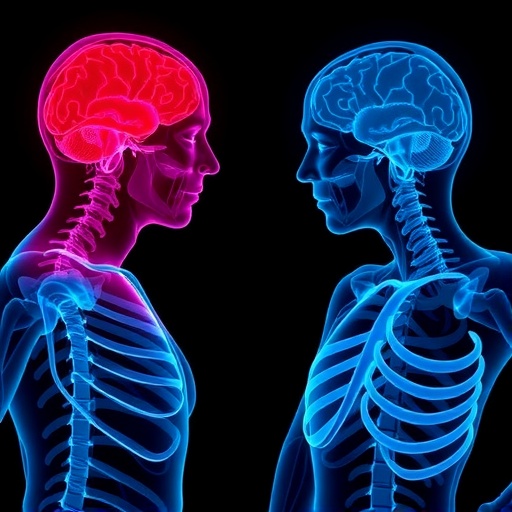
Image Credits: AI Generated

Tags: depression progression in Parkinson’s patientsGBA1 gene mutations in Parkinson’s diseasegenetic and sex-based modulation of depressiongenetic risk factors for depression in PDimpact of GBA1influence of sex on neurodegenerative disease symptomsneurogenetics of Parkinson’s diseaseneuropsychiatric symptoms in Parkinson'snon-motor symptoms of Parkinson's diseasepsychiatric symptom variability in PDrole of lysosomal enzyme glucocerebrosidase in PDsex differences in depression severity
Share26Tweet16
Previous Post

Uncovering the Mysterious Presence Within Orion’s Nebula Shell

Next Post

Enhancing Quality and Safety Across Large-Scale Systems

Related Posts

Medicare Wegovy prescriptions soar following heart disease approval
Medicine

Medicare Wegovy prescriptions soar following heart disease approval

July 9, 2026
Scientists Observe Floquet-Driven Rotational Super-Radiance Phenomenon
Medicine

Scientists Observe Floquet-Driven Rotational Super-Radiance Phenomenon

July 9, 2026
Dedicated High School Health Courses Linked to Reduced Teen Substance Use
Medicine

Dedicated High School Health Courses Linked to Reduced Teen Substance Use

July 9, 2026
Reconfigurable mmWave Microchips Integrate hBN Switches on GaN Substrates
Medicine

Reconfigurable mmWave Microchips Integrate hBN Switches on GaN Substrates

July 9, 2026
Movement Sensors Track Nighttime Sleep and Motion in Parkinson’s Disease
Medicine

Movement Sensors Track Nighttime Sleep and Motion in Parkinson’s Disease

July 9, 2026
Immune and Nutrition Impact Age-Related Survival in Nasopharyngeal Carcinoma
Medicine

Immune and Nutrition Impact Age-Related Survival in Nasopharyngeal Carcinoma

July 9, 2026
Next Post
Enhancing Quality and Safety Across Large-Scale Systems

Enhancing Quality and Safety Across Large-Scale Systems

  • Mothers who receive childcare support from maternal grandparents show more

    Mothers who receive childcare support from maternal grandparents show more parental warmth, finds NTU Singapore study

    27656 shares
    Share 11059 Tweet 6912
  • University of Seville Breaks 120-Year-Old Mystery, Revises a Key Einstein Concept

    1061 shares
    Share 424 Tweet 265
  • Bee body mass, pathogens and local climate influence heat tolerance

    682 shares
    Share 273 Tweet 171
  • Researchers record first-ever images and data of a shark experiencing a boat strike

    546 shares
    Share 218 Tweet 137
  • Groundbreaking Clinical Trial Reveals Lubiprostone Enhances Kidney Function

    531 shares
    Share 212 Tweet 133
Science

Embark on a thrilling journey of discovery with Scienmag.com—your ultimate source for cutting-edge breakthroughs. Immerse yourself in a world where curiosity knows no limits and tomorrow’s possibilities become today’s reality!

RECENT NEWS

  • Medicare Wegovy prescriptions soar following heart disease approval
  • Designing Successful Living Labs for Agriculture and Nutrition Research
  • UTS Study Finds Honesty Beats Incentives for Organizational Efficiency
  • Scientists develop AI to monitor smart vapes with digital displays

Categories

  • Agriculture
  • Anthropology
  • Archaeology
  • Athmospheric
  • Biology
  • Biotechnology
  • Blog
  • Bussines
  • Cancer
  • Chemistry
  • Climate
  • Earth Science
  • Editorial Policy
  • Marine
  • Mathematics
  • Medicine
  • Pediatry
  • Policy
  • Psychology & Psychiatry
  • Science Education
  • Social Science
  • Space
  • Technology and Engineering

Subscribe to Blog via Email

Enter your email address to subscribe to this blog and receive notifications of new posts by email.

Join 5,146 other subscribers

© 2025 Scienmag - Science Magazine

Welcome Back!

Login to your account below

Forgotten Password?

Retrieve your password

Please enter your username or email address to reset your password.

Log In
No Result
View All Result
  • HOME
  • SCIENCE NEWS
  • CONTACT US

© 2025 Scienmag - Science Magazine

Discover more from Science

Subscribe now to keep reading and get access to the full archive.

Continue reading
