


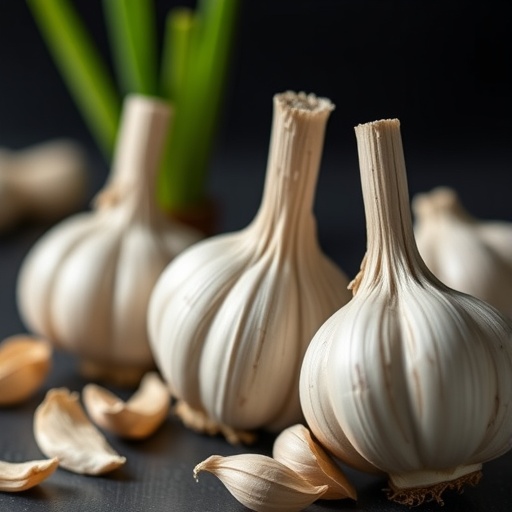
In the relentless pursuit of novel cancer therapies, an age-old natural remedy is stepping into the scientific spotlight with unprecedented vigor. Recent breakthroughs in the treatment of acute myeloid leukemia (AML) suggest that compounds derived from garlic, long celebrated in traditional medicine, may soon complement or even revolutionize current therapeutic paradigms. A newly published study by researcher C. Xue, featured in Medical Oncology, meticulously explores how the bioactive constituents of garlic can be harnessed to target AML cells, opening a promising avenue in oncology that bridges nature with cutting-edge molecular science.
Acute myeloid leukemia, a rapidly progressing malignancy of the bone marrow and blood, has historically posed significant challenges due to its heterogeneous genetic landscape and resistance to conventional chemotherapies. Xue’s investigation delves deeply into how garlic’s natural compounds, particularly organosulfur molecules such as allicin, diallyl disulfide, and S-allyl cysteine, exhibit multi-faceted anti-leukemic properties. These bioactive agents have demonstrated the ability to inhibit proliferation, induce apoptosis, and arrest the cell cycle in AML cells, effectively disrupting leukemia progression at critical molecular junctures.
The study elucidates several key biochemical pathways influenced by garlic-derived compounds. One of the primary mechanisms involves modulation of reactive oxygen species (ROS) within leukemia cells. By elevating ROS to cytotoxic levels, these compounds trigger oxidative stress that selectively targets malignant cells, sparing normal hematopoietic counterparts. Additionally, Xue highlights the role of garlic constituents in downregulating oncogenic signaling cascades such as the PI3K/AKT/mTOR pathway, which is often hyperactivated in AML and contributes to cellular survival and drug resistance.
Complementary to these signaling disruptions is the engagement of intrinsic apoptotic mechanisms via the mitochondrial pathway. The garlic compounds promote the release of cytochrome c from mitochondria, triggering cascades that culminate in caspase activation and programmed cell death. This mechanistic insight illustrates the holistic impact these natural agents have on cellular fate decisions, offering an integrative approach rather than a single-target intervention.
Beyond molecular mechanisms, Xue’s work also addresses the pharmacological challenges of applying garlic-based compounds clinically. The study evaluates pharmacokinetics, bioavailability, and potential toxicity, underscoring the necessity for optimized delivery systems. Innovative formulations, such as nanocarriers and liposomal encapsulations, are proposed to enhance the stability, solubility, and targeted delivery of these bioactives to leukemic niches, ensuring maximum therapeutic efficacy while minimizing off-target effects.
Another groundbreaking aspect of the research is the synergistic potential of garlic compounds when combined with established chemotherapeutic agents. Xue presents compelling evidence that garlic components can sensitize AML cells to cytarabine and daunorubicin, reducing required dosages and mitigating adverse side effects commonly seen with high-intensity treatments. This integration might pave the way for combination regimens that harness both natural and synthetic modalities to overcome drug resistance and improve survival outcomes.
Crucially, the immunomodulatory effects of garlic constituents are also explored. The study reveals augmentation of innate and adaptive immune responses, particularly the enhancement of natural killer cell activity and modulation of tumor-associated macrophages. These effects may create a more hostile microenvironment for leukemia cells, complementing direct cytotoxic actions and offering dual frontiers in immunotherapy and chemotherapy.
Xue’s comprehensive approach further extends to genetic and epigenetic impacts. Evidence indicates that garlic compounds can influence DNA methylation patterns and histone modifications in AML cells, reversing aberrant gene silencing and restoring normal hematopoietic differentiation pathways. This epigenetic reprogramming aspect broadens the therapeutic potential beyond mere cell death induction, hinting at sustained disease remission avenues.
The clinical implications of these findings are profound and timely. With AML’s five-year survival rates stagnating despite aggressive variants of chemotherapy and bone marrow transplantation, there is a dire need for safer, more effective strategies. Garlic-based therapies present a paradigm shift — leveraging packages of natural compounds that act on multiple molecular axes simultaneously, addressing both leukemic heterogeneity and treatment resistance.
This research also highlights the historical and cultural dimensions of medicine, where compounds revered in traditional healing practices are revisited through the lens of rigorous scientific scrutiny. Garlic, a culinary staple for centuries, carries molecules that transcend common use and might soon feature prominently in oncologists’ armamentarium against leukemia.
Moving forward, Xue advocates for extensive clinical trials to validate safety and efficacy profiles in diverse patient populations. The design of these studies will be crucial in refining dosage protocols, assessing long-term outcomes, and integrating garlic-based therapies into existing treatment guidelines. Collaborative efforts between pharmacologists, hematologists, and molecular biologists will be essential to translate these promising laboratory findings into actionable clinical interventions.
Furthermore, the research stimulates fresh interest in exploring other natural compounds for hematologic malignancies. Garlic’s success could spark a broader renaissance in drug discovery rooted in natural products, encouraging a synthesis of ethnopharmacology and modern biomedical research.
In essence, the study provides a blueprint for reimagining cancer treatment through nature’s own chemical arsenal. It challenges preconceptions about the boundaries between natural remedies and scientific medicine, suggesting a future where such integrative approaches are commonplace rather than exceptional.
The transformative potential of garlic-derived compounds in AML treatment encapsulates a broader narrative — one in which the finest nuances of molecular biology and the complexities of natural phytochemistry converge to foster innovation. As this research matures, the oncology community awaits hopeful confirmation that these natural agents can tangibly improve patient prognosis and quality of life.
Ultimately, the journey from kitchen staple to cancer fighter exemplifies the perennial human quest to unlock nature’s secrets. Garlic’s newfound role in acute myeloid leukemia therapy is not merely a scientific achievement but a poetic reminder of how traditional wisdom and modern science can harmonize to confront pressing health challenges.
With its multifactorial effects, spanning oxidative stress induction, apoptosis initiation, immunomodulation, and epigenetic regulation, garlic has emerged as an extraordinary candidate worthy of sustained exploration. This convergence elevates the narrative of botanical compounds from ancillary supplements to fundamental components of next-generation cancer care, illuminating a promising horizon in leukemia therapeutics.
Cite Scienmag News
Nathaniel Bowman. (December 26, 2025). Garlic-Based Therapies: New Advances in AML Treatment. Scienmag. https://scienmag.com/garlic-based-therapies-new-advances-in-aml-treatment/
Nathaniel Bowman. "Garlic-Based Therapies: New Advances in AML Treatment." Scienmag, 26 December 2025, https://scienmag.com/garlic-based-therapies-new-advances-in-aml-treatment/. Accessed 4 September 2026.
Nathaniel Bowman. "Garlic-Based Therapies: New Advances in AML Treatment." Scienmag. December 26, 2025. https://scienmag.com/garlic-based-therapies-new-advances-in-aml-treatment/


