


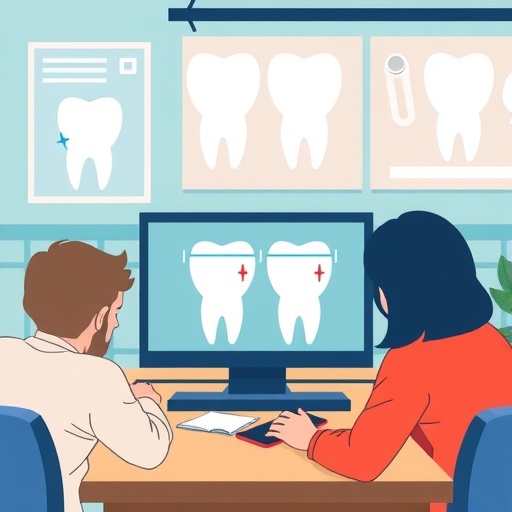
In an innovative twist on traditional education methods, a recent pilot study has introduced gamification into the realm of endodontic education, showcasing its potential to significantly enhance student engagement and perceived learning outcomes. Conducted by the adroit researcher O.R. Alkhattab, this forward-thinking study paves the way for a novel approach to medical training by integrating game-like elements into the learning process. While gamification has already made waves in various educational fields, its application in specialized dental education marks a groundbreaking leap forward.
The study was designed to evaluate how gamification influences students’ motivation and comprehension, particularly concerning complex subjects that often challenge learners in dental schools. Endodontics, a branch of dentistry focusing on the treatment of dental pulp and surrounding tissues, requires not only technical skills but also a deep understanding of theoretical concepts. By transforming tedious lessons into enjoyable and competitive activities, the research sought to ascertain whether this transformation could improve both engagement and educational outcomes.
Over the course of the study, participants were introduced to an engaging platform that employed gaming mechanics such as point systems, levels, badges, and time-based challenges. These elements were intricately woven into the curriculum, creating an immersive learning experience. The expectation was that by introducing these engaging components, students would not only stay more focused but also retain information more effectively, thus elevating their learning experiences.
To ensure the study’s effectiveness, a diverse group of dental students was selected as participants. The researchers employed both qualitative and quantitative measures to assess student engagement and perceived learning outcomes. Surveys were conducted before and after the implementation of gamification, allowing the researchers to capture shifts in students’ attitudes and understanding of the subject matter. This dual approach provided a comprehensive overview of the benefits of incorporating gameplay strategies into educational paradigms.
The findings were indeed promising. Preliminary results indicated a marked increase in student motivation, enthusiasm, and collaborative skills amongst participants. Students expressed a prevailing sense of excitement while engaging with gamified content, a notable departure from the traditionally monotonous methods often associated with more rigorous academic subjects. The fusion of education with gaming mechanisms appeared to successfully promote a more vibrant and engaging learning atmosphere.
Interestingly, the research also highlighted the sense of accomplishment students felt when completing gamified tasks. This feeling of achievement was closely tied to the system of rewards implemented in the curriculum. Each student’s performance was measured, and accomplishments were celebrated through real-time feedback, further reinforcing their connection to the material. The satisfaction derived from earning badges and points led to a deeper investment in their learning process, illustrating how gamification can cultivate a sense of ownership and pride in one’s academic journey.
The study further established that participants reported higher levels of confidence in their understanding of key endodontic concepts, attributing this boost to the interactive nature of the gamified learning. Practical assessments demonstrated that students who engaged with the gamified system performed comparably, if not better, than those who experienced traditional instructional methods. These results present compelling evidence in favor of gamification as a potentially transformative method in medical education, particularly in areas that are typically seen as dry or challenging.
Beyond the metrics of engagement and performance, this research invites broader implications about the future of medical training. If gamification can indeed enhance learning outcomes in endodontics, one may wonder how it might be adapted for other areas within health education. Fields such as surgery, pharmacology, or even patient communication could benefit from similar innovative methods, leading to improvements in learner satisfaction and preparedness in crucial clinical settings.
Denoting the success of this initiative extends beyond mere academic performance; it shapes the future landscape of dental care. By enriching the learning environment, future dentists will be better equipped to tackle the challenges they will encounter in their professional lives. A well-prepared dentist not only has technical skills but also possesses the ability to engage with patients effectively. Gamification could foster essential soft skills, including communication, empathy, and teamwork—attributes that are critical in providing comprehensive patient care.
As these results gain traction, there is no doubt that educational institutions will be taking a keen interest in integrating gamified methods into their curricula. This could lead to a significant shift in how healthcare education is approached, sparking conversations about the role of technology, interactive learning, and the necessity of adapting teaching methodologies to better suit the modern learner’s needs.
Yet, there remains an essential question to be explored: Can gamification be sustained in the long-term, and what challenges may arise in its implementation? As education moves further into the digital realm, institutions must balance the excitement of novel methodologies with the practicality of maintaining educational standards. The potential for gamified learning is immense, but ensuring it aligns with rigorous academic analysis and research will be crucial for its lasting success.
In conclusion, Alkhattab’s study serves as an important contribution to the ongoing conversation regarding the evolution of educational practices within the medical field. By harnessing the power of gamification, educators can tap into a wealth of opportunities to foster engagement and improve learning outcomes, proving that traditional education doesn’t always have to remain static. Instead, by embracing the dynamic nature of student interaction, the future of medical training appears bright, exciting, and filled with promise.
As the implications of this groundbreaking research continue to unfold, one thing is clear: the integration of gaming into endodontic education is not just a passing trend—it represents a significant shift in the paradigm of how complex subjects can be taught. As educators and students navigate this brave new world together, the lessons learned here will undoubtedly inform future developments in educational practices across multiple disciplines in healthcare.
Alkhattab, O.R. Gamification in endodontic education: a pilot study on student engagement and perceived learning outcomes.
BMC Med Educ 25, 1214 (2025). https://doi.org/10.1186/s12909-025-07753-z
Cite Scienmag News
Courtney Benton. (August 29, 2025). Gamifying Endodontic Education: Boosting Student Engagement. Scienmag. https://scienmag.com/gamifying-endodontic-education-boosting-student-engagement/
Courtney Benton. "Gamifying Endodontic Education: Boosting Student Engagement." Scienmag, 29 August 2025, https://scienmag.com/gamifying-endodontic-education-boosting-student-engagement/. Accessed 4 September 2026.
Courtney Benton. "Gamifying Endodontic Education: Boosting Student Engagement." Scienmag. August 29, 2025. https://scienmag.com/gamifying-endodontic-education-boosting-student-engagement/


