


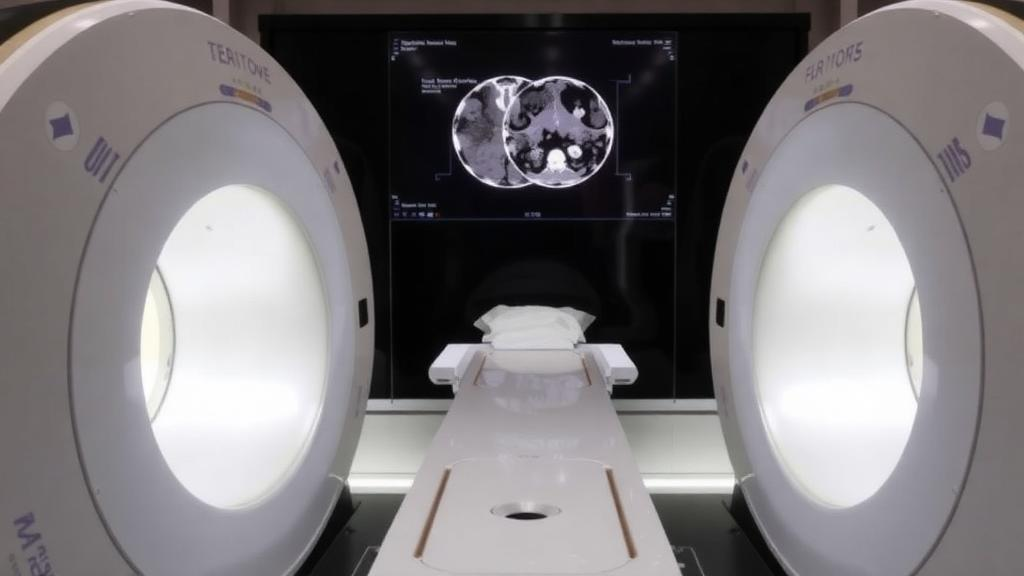
Whole-body magnetic resonance imaging has become one of the most talked-about products in consumer health, promoted by private clinics and celebrity endorsements as a single scan that can peer into nearly every organ at once and catch disease before symptoms appear. But a new systematic review and meta-analysis published in the Journal of General Internal Medicine suggests that the reality of these scans is far less dramatic than the marketing. In a pooled cohort of 18,043 people who underwent whole-body MRI without any evidence-based medical reason, the vast majority of scans produced either nothing at all or findings that never required follow-up, and only about 1.4 percent of screened individuals turned out to have a pathologically confirmed cancer.
The review, led by Muhammad Danyal Ahsan and colleagues at Weill Cornell Medicine, was preregistered with PROSPERO and conducted according to the PRISMA 2020 reporting standard. The team searched MEDLINE, Embase, and the Cochrane Central Register of Controlled Trials from their inception through August 2025, screening 18,231 abstracts to identify 17 original research studies published between 2005 and 2024. The studies came from eight countries, with Germany contributing nine of the seventeen, and sample sizes ranged from 22 to 7,287 participants. Critically, the researchers only included studies of people who had no established indication for the scan, excluding patients with known hereditary cancer syndromes, people undergoing cancer staging or recurrence surveillance, and studies that selectively reported results from a single organ system.
The headline numbers are striking. Across the pooled data, only 16.9 percent of scanned individuals had no findings reported, while 78.0 percent had at least one finding. That sounds alarming until the nature of those findings is examined. The most common abnormalities were degenerative spinal disease in 22.0 percent of scans, subcortical cysts in 15.4 percent, and bone marrow edema in 6.2 percent, conditions that are ubiquitous in aging populations and rarely change clinical management when discovered incidentally. The authors estimate that roughly 62 to 67 percent of people undergoing whole-body MRI without a medical indication will receive findings that are not actionable at all.
A smaller but clinically meaningful fraction of scans did flag something requiring attention. Non-malignant actionable findings, defined as non-cancerous abnormalities that prompted laboratory testing, additional imaging, or procedural follow-up, were reported in 14.8 percent of screened individuals. These were most frequently located in the gastrointestinal system, the musculoskeletal system, and the lymphatic or vascular system. The most common specific actionable findings were hepatic steatosis, or fatty liver, in 8.8 percent, pulmonary nodules in 4.8 percent, and uterine fibroids in 4.3 percent. Among the people with such findings, 58.2 percent went on to pursue additional laboratory work or imaging, and 20.8 percent underwent a subsequent procedure such as endoscopy, biopsy, resection, or surgery.
Herein lies the central problem the review exposes: none of the included studies reported the results of that downstream evaluation. Because diagnostic resolution was never documented, the authors could not calculate false-positive rates, overdiagnosis rates, or any measure of whether the follow-up testing ultimately helped or harmed patients. This is a fundamental gap for a screening technology. Screening is only justified when it demonstrably improves clinical outcomes, and the history of medicine is littered with tests that found plenty of abnormalities without extending a single life. Prostate-specific antigen screening and routine diabetes screening in asymptomatic adults, for example, have not proven effective at reducing all-cause mortality, despite detecting real biochemical and metabolic signals.
The cancer detection numbers offer a more nuanced picture. Among the 4,463 participants in the eleven studies that reported pathologically confirmed oncologic outcomes, malignancy was detected in 1.4 percent, with a 95 percent confidence interval of 0.9 to 2.2 percent. The most common cancers found were genitourinary tumors, accounting for 21.8 percent of detections, followed by cancers of the female reproductive system at 19.5 percent and gastrointestinal cancers at 16.5 percent. Notably, the authors point out that roughly 60 percent of the malignancies discovered were in organ systems for which the US Preventive Services Task Force offers no Grade A or B screening recommendation, since current guidelines cover only breast, cervical, colon, and lung cancers. Fewer than 20 percent of US cancers are diagnosed through existing screening programs, which is precisely the gap that multi-organ scanning hopes to fill.
For context, the pooled malignancy yield of whole-body MRI sits within or above the per-examination detection rates of some recommended screening tests. Mammography detects roughly 0.2 to 0.8 percent of cancers per screening round, and colonoscopy detects approximately 0.14 to 0.20 percent. But the authors are careful to emphasize that diagnostic yield alone establishes nothing about clinical benefit. A scan that finds more cancers is not automatically a scan that saves lives; the detected cancers must be ones that would have become lethal without early detection, and the harms of chasing false positives and indolent lesions must be weighed against any mortality reduction. Those calculations simply cannot be made with the current evidence.
The methodological quality of the underlying literature is another major caveat. None of the seventeen included studies was free from risk of bias across all domains when assessed with Joanna Briggs Institute tools, and limitations included concerns about sampling, sample size, and confounding. Statistical heterogeneity between studies was extreme, with I-squared values exceeding 90 percent across most analyses, reflecting differences in the use of contrast agents, diffusion-weighted imaging, vascular protocols, body coverage, thresholds for calling a finding actionable, and outcome definitions. The confidence intervals around the pooled estimates are correspondingly wide; the 95 percent interval for the proportion of scans with any finding spans from 44.9 to 93.9 percent. A funnel plot for the malignancy analyses also showed asymmetry consistent with publication bias or selective reporting, meaning studies that found more cancers may have been more likely to be published.
Generalizability is a further concern. All of the included studies came from non-US healthcare systems in East Asia, Western Europe, and the Middle East, and several involved employer-sponsored, private, or otherwise selected cohorts rather than representative community samples. The pooled cohort was 64.9 percent male, no studies reported race and ethnicity data, and only seven of the seventeen studies explicitly described their populations as asymptomatic. Meanwhile, the commercial landscape that the review is meant to inform is dominated by direct-to-consumer services such as Prenuvo and Function Health, which charge approximately 500 to 3,000 dollars per scan with variable protocols and are often bundled with additional clinical assessments. Marketing campaigns and celebrity endorsements have amplified public interest, yet no professional society, including the American College of Radiology, the USPSTF, or the National Comprehensive Cancer Network, endorses whole-body MRI for the general population.
The authors argue that the technology itself is not the problem; the evidence base is. Whole-body MRI is radiation-free, images multiple organ systems in a single session, and could theoretically address real barriers to preventive care, since organ-specific screening requires multiple visits, is sometimes invasive, and suffers from suboptimal adherence. Advances in artificial intelligence may further reduce acquisition time and standardize interpretation, and the authors suggest that a consensus reporting taxonomy extending the oncologic ONCO-RADS system to cardiovascular, musculoskeletal, and metabolic abnormalities could reduce variability and unnecessary follow-up. But until high-quality observational studies or randomized controlled trials track patients from initial finding through downstream workup to hard outcomes such as morbidity, mortality, overdiagnosis, and cost, the review concludes that most whole-body MRI examinations in people without a medical indication reveal either nothing or nothing that matters, and the clinical value of the scan remains an open question rather than a settled fact.
Subject of Research: Diagnostic yield of whole-body MRI as a multi-disease screening tool in people without an evidence-based indication
Article Title: The Diagnostic Yield of Whole-Body MRI as a Multi-disease Screening Modality: A Systematic Review and Meta-analysis
Article References: Ahsan, M. D., Frontera, N., Gurram, A., Sharaf, S., Qazi, M., Patel, D., Yang, K., Gioia, S., Murray, I. R., McGonigle, R., Guniganti, P., Dodelzon, K., Ma, X., Kierans, A. S., Diamond, L. C., Godwin, K., Shih, G., Sabuncu, M., Lantos, J., … Sharaf, R. N. (2026). The Diagnostic Yield of Whole-Body MRI as a Multi-disease Screening Modality: A Systematic Review and Meta-analysis. Journal of General Internal Medicine. https://doi.org/10.1007/s11606-026-10802-y
Image Credits: AI Generated
DOI: 10.1007/s11606-026-10802-y
Keywords: whole-body MRI, screening, diagnostic yield, meta-analysis, overdiagnosis, cancer detection, incidental findings, preventive medicine, medical imaging, false positives, systematic review, direct-to-consumer health
Cite Scienmag News
Ophelia Keating. (October 2, 2026). Full-Body MRI Scans Screened 18,000 People: Most Findings Were Harmless, Review Finds. Scienmag. https://scienmag.com/full-body-mri-scans-screened-18000-people-most-findings-were-harmless-review-finds/
Ophelia Keating. "Full-Body MRI Scans Screened 18,000 People: Most Findings Were Harmless, Review Finds." Scienmag, 2 October 2026, https://scienmag.com/full-body-mri-scans-screened-18000-people-most-findings-were-harmless-review-finds/. Accessed 4 October 2026.
Ophelia Keating. "Full-Body MRI Scans Screened 18,000 People: Most Findings Were Harmless, Review Finds." Scienmag. October 2, 2026. https://scienmag.com/full-body-mri-scans-screened-18000-people-most-findings-were-harmless-review-finds/


