

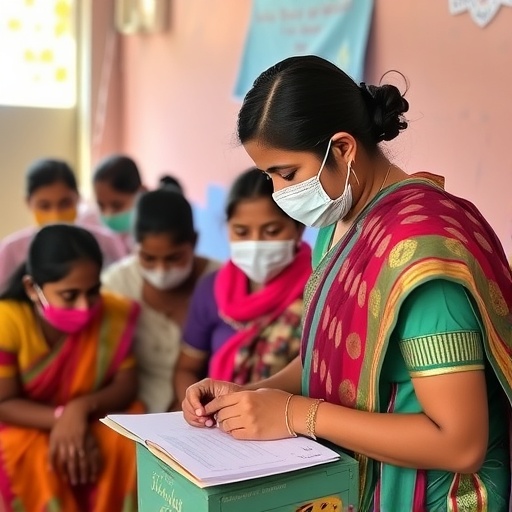
In a remarkable testament to the evolving landscape of global public health initiatives, the Frontline Field Epidemiology Training Program has witnessed an unprecedented expansion across 124 districts in India from 2021 to 2023. This program, which has garnered attention for its swift and strategic implementation, aims to enhance the capacities of local health professionals, enabling them to respond effectively to health emergencies while equipping them with essential skills for disease surveillance and outbreak investigation.
As the COVID-19 pandemic underscored the vital need for robust public health systems, the Frontline Field Epidemiology Training Program emerged as a beacon of hope and a pivotal response mechanism. The program has played a critical role in transforming the epidemiological landscape in India, where traditional approaches to public health have often faced challenges due to resource constraints and varying levels of expertise among health workers.
The program’s rapid rollout can be attributed to concerted efforts by both governmental and non-governmental organizations that recognized the urgency of fortifying the frontline health workforce. As outbreaks of infectious diseases can rapidly compromise health systems—especially in densely populated areas of India—the program focuses on building a cadre of well-trained epidemiologists who can manage public health crises efficiently.
Training sessions have been tailored to meet the specific needs of various districts, recognizing the diverse epidemiological profiles and health infrastructure in different regions. From urban centers to rural locales, the program adapts its training methodologies to ensure they resonate with local realities, which is central to its success. Trainers utilize a range of modern pedagogical techniques, including digital learning platforms, hands-on field training, and real-time case studies that enhance comprehension and retention amongst participants.
Moreover, the initiative places a strong emphasis on collaborative learning, encouraging participants to engage in knowledge exchange and mutual support. This network effect cultivates a community of practice, where emerging epidemiologists can continuously learn from one another, share insights, and develop innovative solutions to common challenges faced on the ground. Such collaboration not only enriches the training experience but also strengthens the public health ecosystem across India.
As part of the program’s curriculum, participants gain proficiency in analytical techniques essential for outbreak investigation—skills that have proven invaluable during recent public health challenges. From mastering data collection methodologies to interpreting epidemiological data, the training prepares health workers to analyze patterns of disease transmission and recommend appropriate interventions.
The program has also integrated modules that address the social determinants of health, recognizing that a comprehensive understanding of public health must encompass the broader societal contexts in which health services operate. By fostering this holistic perspective, trainees are better equipped to devise culturally sensitive strategies that driving engagement and compliance among local communities.
A key feature of the program’s curriculum is its focus on the use of technology and data analytics in epidemiology. Participants are trained to leverage innovative tools and software that facilitate real-time surveillance and data reporting. The ability to harness data effectively is crucial in today’s digital age, as it allows for swift decision-making in health responses and resource allocation.
The impact of the program extends beyond training alone. By establishing a robust network of frontline epidemiologists, the initiative has contributed to the creation of a sustainable workforce adept at addressing current and emerging health threats. This network acts as a rapid response team that can mobilize quickly and efficiently in the event of an outbreak, ensuring that communities receive timely interventions tailored to their specific health needs.
Another significant outcome of the program is the raised awareness among policymakers regarding the pivotal role of field epidemiologists in public health. By demonstrating tangible improvements in outbreak detection, response times, and community engagement, the program has garnered governmental support for further investment in public health infrastructure, exemplifying a model that other countries might follow.
As the program continues to expand, it faces the challenge of sustaining the momentum achieved in its initial rollout. Continuous evaluation and adaptation of training methodologies will be critical to addressing the evolving public health landscape, particularly as new infectious diseases emerge and global health challenges shift. Stakeholders are acutely aware that the global pandemic has irrevocably altered health priorities, making it all the more essential to remain agile and responsive in training the next generation of public health leaders.
Moreover, the exchange of knowledge and experiences garnered through this program transcends geographic boundaries. As India’s experience is closely monitored by global health authorities, the insights gained can inform similar initiatives worldwide, illustrating the global interconnectedness of health challenges and solutions. The ripple effects of the Frontline Field Epidemiology Training Program serve as a compelling example of how targeted education and training can produce remarkable public health dividends.
Looking ahead, the future of the Frontline Field Epidemiology Training Program appears promising. With a foundation built on learning and collaboration, there is a palpable collective energy fueling the program’s mission of enhancing public health competencies. As the initiative continues to grow, its direct impact on health outcomes in India—and potentially beyond—will be closely observed and celebrated.
Ultimately, the rapid expansion of the Frontline Field Epidemiology Training Program in India underscores a significant shift in public health strategy, where prioritizing training and capacity-building at the local level can yield dividents in resilience against health emergencies. As the globe grapples with increasingly complex health challenges, initiatives like this one underscore the importance of investing in human capital to safeguard health for present and future generations.
By focusing on both immediate training needs and long-term sustainability, the program exemplifies a forward-thinking approach to public health that could inspire similar models around the world. As a vital component of the larger public health landscape in India, it embodies a commitment to empowering local health workers and communities, ultimately leading towards a healthier future for all.
In conclusion, the Frontline Field Epidemiology Training Program stands out as a crucial player in enhancing epidemic response capabilities in India. By swiftly expanding its reach and adapting to the sociocultural context of each district, the program not only increases the technical skills of health workers but also fosters a broader understanding and appreciation of public health’s complexities. The lessons learned from this initiative reaffirm the essential role of continuous training and capacity-building in public health and are a vital step in ensuring global health security in the years to come.
Subject of Research: Frontline Field Epidemiology Training Program
Article Title: Rapid expansion of the Frontline Field Epidemiology Training Program across 124 districts in India, 2021–2023
Article References:
Dhuria, M., VanderEnde, K., Tanwar, S. et al. Rapid expansion of the Frontline Field Epidemiology Training Program across 124 districts in India, 2021–2023.
Health Res Policy Sys (2026). https://doi.org/10.1186/s12961-025-01431-8
Image Credits: AI Generated
DOI:
Keywords: Public Health, Epidemiology, India, Training Program, Pandemic Response, Health Workforce.


