

Wednesday, July 8, 2026
Science
No Result
View All Result
  • Login
  • HOME
  • SCIENCE NEWS
  • CONTACT US
  • HOME
  • SCIENCE NEWS
  • CONTACT US
No Result
View All Result
Scienmag
No Result
View All Result
Home Science News Technology and Engineering

From shrimp to steel: Introducing nature-inspired metalworking

August 15, 2024
in Technology and Engineering
Reading Time: 3 mins read
0
From shrimp to steel: Introducing nature-inspired metalworking
68
SHARES
617
VIEWS
Share on FacebookShare on Twitter
ADVERTISEMENT

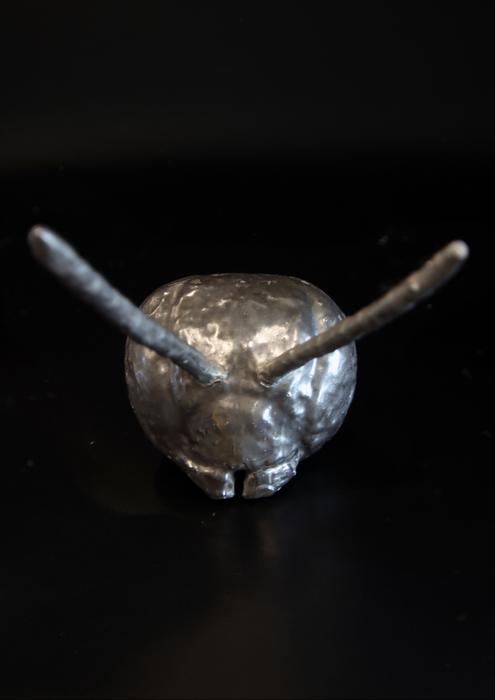
Humans have long turned to nature for solutions, from deciphering the mysteries of flight to creating stronger materials. For Javier Fernandez, Associate Professor at the Singapore University of Technology and Design (SUTD), nature is a blueprint for sustainability. “Unlike our society’s energy-intensive engineering, nature operates under a paradigm of scarcity and finds solutions without access to intense energy sources or transport of materials,” he observed.

Image 1

Credit: SUTD

Humans have long turned to nature for solutions, from deciphering the mysteries of flight to creating stronger materials. For Javier Fernandez, Associate Professor at the Singapore University of Technology and Design (SUTD), nature is a blueprint for sustainability. “Unlike our society’s energy-intensive engineering, nature operates under a paradigm of scarcity and finds solutions without access to intense energy sources or transport of materials,” he observed.

Chitin, found everywhere in nature ranging from shrimp to seashells and mushrooms, is an organic material that deserves a closer look. In addition to being the second most abundant organic material on Earth, it is strong and lightweight, making it an ideal material for many engineering applications.

“Chitin also has a strong affinity for metals,” said Assoc Prof Fernandez. “We decided to evaluate whether this affinity, combined with the processes that shape the cuticle, could be used to produce functional metallic structures in a ‘biological’ way.”

In the natural world, metals, while rarely used, can be found in some chitinous structures, such as the cuticles and exoskeletons of insects and crustaceans. By digging deeper into the affinity that chitins and their derivatives have for metals, Fernandez and his team designed a new approach to metalworking, which they published in their paper, “A biological approach to metalworking based on chitinous colloids and composites”, in the journal Advanced Functional Materials.

Through the use of design and technology inspired by these chitinous compounds, the research team demonstrated a novel way of producing functional metallic structures without the usual energy costs.

In traditional metalworking, high temperatures and pressures are essential to melt and shape metals. This stands in stark contrast to how metals are incorporated into chitinous materials in nature, which happens under ambient conditions. Take the metallic compounds found in arthropod cuticles like crab shells for example. Typically, the metals only make their way into the crab shell at the later stages of chitin development—the chitin would first stiffen into a shell through tanning and dehydration before any metal from the environment gets added to it.

This is similar to how metal compounds might also be introduced to chitosan, a derivative of chitin, as the researchers discovered in their experiments. They were able to form solid metallic composites under standard temperature and pressure just by introducing very small amounts of chitosan and water between particles of different metals. When the water evaporates, the chitosan molecules replicate the consolidation process in the cuticles, pulling the particles together with such strength that they become a continuous solid of 99.5% metal. Fernandez likens the fabrication process to concrete formation, explaining, “By pouring metal particles into dissolved chitosan and letting them ‘dry’, we can form massive metallic parts without the constraints of melting.”

While these chitometallic composites were not physically strong, the researchers found that the material acquired good electrical conductivity and could be 3D-printed. At the same time, the material continued to show compatibility with other biomaterials despite only containing a small amount of chitosan. This opens up the possibility of introducing these chitometallic properties into other biomaterials, such as wood and cellulose.

Fernandez believes this technology creates a new paradigm of metalworking. Despite the lack of mechanical strength, the fabricated biomaterial is suitable for non-load-bearing metallic components, such as electrical components or battery electrodes. Metalwork for some components can now be performed without being resource-intensive. “This technology does not replace traditional methods but enables new complementary production methods,” he emphasised.

Since then, Fernandez’s team has successfully filed a patent for the innovative fabrication method and is now looking into designing a new technology to develop biodegradable 3D electronic components, which can pave the way for more efficient and sustainable methods of production.


Journal

Advanced Functional Materials

DOI

10.1002/adfm.202406800

Article Title

A biological approach to metalworking based on chitinous colloids and composites

Article Publication Date

24-Jul-2024

Share27Tweet17
Previous Post

Why do plants wiggle? New study provides answers

Next Post

Physicists unlock the secret of elusive quantum negative entanglement entropy using simple classical hardware

Related Posts

Return exactly one rewritten English science news headline for the original title below. Maximum 12 words. Output plain text only. Do not use HTML, Markdown, quotes, labels, explanations, bullets, numbering, or multiple options. Original title: KRICT solves internal cracking in sulfide all-solid-state batteries with elastic ion-conductive polymer
Technology and Engineering

Return exactly one rewritten English science news headline for the original title below. Maximum 12 words. Output plain text only. Do not use HTML, Markdown, quotes, labels, explanations, bullets, numbering, or multiple options. Original title: KRICT solves internal cracking in sulfide all-solid-state batteries with elastic ion-conductive polymer

July 8, 2026
Return exactly one rewritten English science news headline for the original title below. Maximum 12 words. Output plain text only. Do not use HTML, Markdown, quotes, labels, explanations, bullets, numbering, or multiple options. Original title: Beyond recognition: advancing early prediction of pediatric sepsis
Technology and Engineering

Return exactly one rewritten English science news headline for the original title below. Maximum 12 words. Output plain text only. Do not use HTML, Markdown, quotes, labels, explanations, bullets, numbering, or multiple options. Original title: Beyond recognition: advancing early prediction of pediatric sepsis

July 8, 2026
Return exactly one rewritten English science news headline for the original title below. Maximum 12 words. Output plain text only. Do not use HTML, Markdown, quotes, labels, explanations, bullets, numbering, or multiple options. Original title: KAIST develops core display technology that prevents image distortion even when stretched
Technology and Engineering

Return exactly one rewritten English science news headline for the original title below. Maximum 12 words. Output plain text only. Do not use HTML, Markdown, quotes, labels, explanations, bullets, numbering, or multiple options. Original title: KAIST develops core display technology that prevents image distortion even when stretched

July 8, 2026
Return exactly one rewritten English science news headline for the original title below. Maximum 12 words. Output plain text only. Do not use HTML, Markdown, quotes, labels, explanations, bullets, numbering, or multiple options. Original title: Cheaper catalytic system turns captured carbon into ethanol
Technology and Engineering

Return exactly one rewritten English science news headline for the original title below. Maximum 12 words. Output plain text only. Do not use HTML, Markdown, quotes, labels, explanations, bullets, numbering, or multiple options. Original title: Cheaper catalytic system turns captured carbon into ethanol

July 7, 2026
Return exactly one rewritten English science news headline for the original title below. Maximum 12 words. Output plain text only. Do not use HTML, Markdown, quotes, labels, explanations, bullets, numbering, or multiple options. Original title: Ferreira group kicking off a revolution in computer numerical control for manufacturing
Technology and Engineering

Return exactly one rewritten English science news headline for the original title below. Maximum 12 words. Output plain text only. Do not use HTML, Markdown, quotes, labels, explanations, bullets, numbering, or multiple options. Original title: Ferreira group kicking off a revolution in computer numerical control for manufacturing

July 7, 2026
Return exactly one rewritten English science news headline for the original title below. Maximum 12 words. Output plain text only. Do not use HTML, Markdown, quotes, labels, explanations, bullets, numbering, or multiple options. Original title: Biochar and smarter water management could help make rice safer in polluted soils
Technology and Engineering

Return exactly one rewritten English science news headline for the original title below. Maximum 12 words. Output plain text only. Do not use HTML, Markdown, quotes, labels, explanations, bullets, numbering, or multiple options. Original title: Biochar and smarter water management could help make rice safer in polluted soils

July 7, 2026
Next Post
Physicists unlock the secret of elusive quantum negative entanglement entropy

Physicists unlock the secret of elusive quantum negative entanglement entropy using simple classical hardware

  • Mothers who receive childcare support from maternal grandparents show more

    Mothers who receive childcare support from maternal grandparents show more parental warmth, finds NTU Singapore study

    27656 shares
    Share 11059 Tweet 6912
  • University of Seville Breaks 120-Year-Old Mystery, Revises a Key Einstein Concept

    1061 shares
    Share 424 Tweet 265
  • Bee body mass, pathogens and local climate influence heat tolerance

    682 shares
    Share 273 Tweet 171
  • Researchers record first-ever images and data of a shark experiencing a boat strike

    546 shares
    Share 218 Tweet 137
  • Groundbreaking Clinical Trial Reveals Lubiprostone Enhances Kidney Function

    531 shares
    Share 212 Tweet 133
Science

Embark on a thrilling journey of discovery with Scienmag.com—your ultimate source for cutting-edge breakthroughs. Immerse yourself in a world where curiosity knows no limits and tomorrow’s possibilities become today’s reality!

RECENT NEWS

  • Postpartum bonding problems tied to abnormal neural processing of infant emotions
  • Salmonella protein SopB curbs early inflammation to slow disease progression
  • Embodied cognition yields interpretable trajectory predictions for autonomous systems.
  • Multi-metal cooperation drives lung cancer chemoresistance, reversed by MiADMSA

Categories

  • Agriculture
  • Anthropology
  • Archaeology
  • Athmospheric
  • Biology
  • Biotechnology
  • Blog
  • Bussines
  • Cancer
  • Chemistry
  • Climate
  • Earth Science
  • Editorial Policy
  • Marine
  • Mathematics
  • Medicine
  • Pediatry
  • Policy
  • Psychology & Psychiatry
  • Science Education
  • Social Science
  • Space
  • Technology and Engineering

Subscribe to Blog via Email

Success! An email was just sent to confirm your subscription. Please find the email now and click 'Confirm Follow' to start subscribing.

Join 5,147 other subscribers

© 2025 Scienmag - Science Magazine

Welcome Back!

Login to your account below

Forgotten Password?

Retrieve your password

Please enter your username or email address to reset your password.

Log In
No Result
View All Result
  • HOME
  • SCIENCE NEWS
  • CONTACT US

© 2025 Scienmag - Science Magazine
