

Since the so-called “Golden Age” of comics in the 1940s, the medium has often been regarded as a universal visual language, characterized by the use of panels, speech bubbles, and sequential art. This perception, largely shaped by Western traditions, presumes a uniform understanding of comics irrespective of cultural contexts. However, recent scholarship is challenging this homogenized view by unveiling the rich and diverse histories of comics across the Global South. A groundbreaking new volume, Comics and the Global South, aims to dismantle long-standing Western-centric assumptions about comics by asserting that these works must be read and appreciated within their own cultural and political frameworks.
This anthology is a collaborative scholarly endeavor that foregrounds comics production from Latin America, Africa, Asia, and indigenous communities. It argues persuasively that comics in these regions perform complex socio-political functions beyond mere entertainment. Rather than simply documenting diversity, the volume illuminates how comics have historically served as vital tools of resistance, vehicles to resurrect “forgotten” histories, and mediums through which marginalized identities are boldly asserted. The book elucidates how visual storytelling operates uniquely across different cultural milieus, revealing a far more variegated artform than typically acknowledged in Western narratives.
Dr. Joe Sutliff Sanders of the University of Cambridge, a co-editor of this volume, highlights the limitations imposed by evaluating global comics through the lens of Anglo-European conventions. He contends that the dominant paradigms have constrained the expressive possibilities of the form, limiting what comics “should” be and whom they are presumed to serve. Sanders observes that Western comics, with their established commercial and aesthetic norms, do not encapsulate the multiplicity of comics traditions worldwide. This narrow framing risks stifling creativity and excludes other meaningful forms of visual narration emerging from diverse communities.
The genesis of Comics and the Global South traces back to a 2022 conference held at Cambridge, which convened researchers focused on comics as sites of countercultural expression and political engagement. Alongside Sanders, co-editors Dr. Dibyadyuti Roy of the University of Leeds and Dr. Andrea Aramburú of the University of Manchester shared a mutual commitment to examining comics within social and political contexts specific to their origins. This collective scholarship embraces an interdisciplinary approach that attends to the visual rhetoric and storytelling methods embedded in different sociocultural realities.
One of the remarkable aspects of the volume is its nuanced exploration of comics as an artform deeply rooted in communities often marginalized in mainstream cultural production. Because comics are relatively inexpensive to produce and widely accessible, they have served historically as potent instruments for the disenfranchised to articulate their experiences, challenge hegemonic power structures, and assert cultural identities. This grassroots dimension of comics contrasts sharply with the commercialized comic book industry and underscores their role as tools for social empowerment and cultural survival.
Individual chapters highlight distinct regional traditions alongside innovative interpretive methodologies. Leticia Simoes, a Brazilian scholar, employs the concept of malunga—originally referring to kinship bonds among enslaved peoples during the horrific transatlantic slave voyages—to frame the production of comics by women in South America. Simoes articulates how shared experiences of systemic racism, displacement, and trauma foster solidarity among marginalized women, who in turn express their collective identities through a unique comics vernacular. This methodology reveals how graphic narratives become acts of political testimony and cultural affirmation.
In Simoes’s section, she presents the work of Brazilian artist Marilia Marz, whose fragmented, collage-like compositions vividly capture the experience of Black women weaving fragmented moments of identity under oppressive social conditions. Similarly, Chilean cartoonist Amanda Baeza’s speculative comics envision alternative realities where female characters break free from cycles of abuse, practicing what Simoes terms escrevivência—a form of storytelling that simultaneously asserts and exists through women’s lived realities. These works exemplify how comics provide a narrative space for women’s voices historically sidelined within dominant cultures.
The volume further explores how indigenous and local traditions invigorate contemporary comics practice. In eastern India, creators have reimagined the ancient scroll-painting form Patachitra as a dynamic form of graphic storytelling. This revival not only preserves traditional aesthetics but also adapts them for contemporary readers, blending historical art practices with modern narratives. Similarly, Māori artists in New Zealand have transformed pūrākau—traditional creation myths—into hybrid formats that span comics and picture books, thus revitalizing indigenous storytelling modes for a new generation, embedding local epistemologies within visual literature.
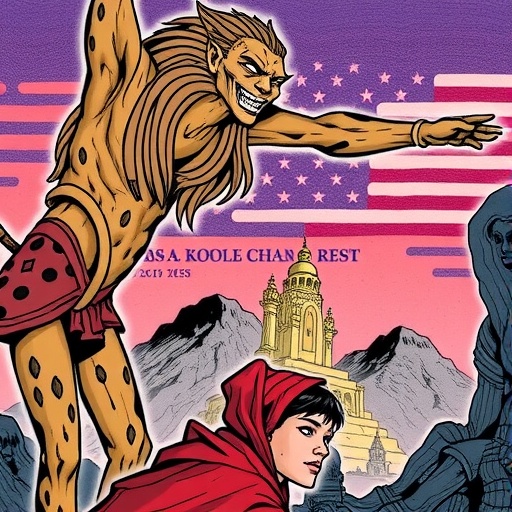
A particularly innovative development discussed in the book is the emergence of “Indo-manga,” a genre wherein Indian artists appropriate and modify the visual language and conventions of Japanese manga to articulate local cultural themes and youth-centric concerns. Titles like Yakshi by Parvaty Menon follow Gen Z demonesses who navigate contemporary realities with smartphones, while the Nirvana series reinterprets ancient Indian mythology within action-driven plots, peppered with subtle nods to everyday Indian urban life. These works demonstrate a syncretic cultural approach, blending global comic aesthetics with deeply local narratives.
Beyond artistic expression, Comics and the Global South illustrates the practical roles comics play in community empowerment and public health. In Kenya’s Dadaab refugee camp, home to thousands of Somali refugees since the 1990s, comics have emerged as critical tools for addressing urgent maternal and neonatal health challenges. The camp’s resident women collaborated with health researchers and artists to craft comics that document and honor the culturally significant roles of birthing attendants—figures whose practices were curtailed by official bans. These visual stories now serve as culturally-informed training materials for midwives and humanitarian workers, fostering a nuanced model of healthcare that respects indigenous knowledge systems.
The editors express hope that this volume will catalyze further scholarly engagement with comics from the Global South, encouraging broader recognition of these works within global comics studies discourses. Aramburú stresses that although passionate criticism and analysis of these comics have been ongoing within their respective regions, much of this scholarship has awaited integration into wider conversations. By amplifying these voices, the book aims to reorient the field towards inclusivity and cultural specificity.
Sanders envisions this collection as accessible not only to academics but also to comics enthusiasts worldwide, particularly readers in the Global South. He underscores the dual objective of deepening appreciation for the diverse forms comics can take, while simultaneously motivating local creators and fans to question and disrupt the prevailing, often restrictive Western-centric ideals governing comics. This invitation to reimagine the medium holds transformative potential for the future development of graphic narratives globally.
Published by Leuven University Press, Comics and the Global South is poised to become an essential resource within the interdisciplinary fields of comics studies, visual culture, and postcolonial scholarship. Its forthcoming free digital edition promises to democratize access and ensure that these critical perspectives reach audiences far beyond traditional academic boundaries. By embracing the variegated landscapes of comics production around the world, the book heralds a new era of global, culturally attuned comics critique.
Subject of Research:
Global and cultural diversity in comics; Visual storytelling traditions in the Global South; Socio-political roles of comics in marginalized communities.
Article Title:
Redefining Comics: How the Global South Challenges Western Dominance in Visual Storytelling
News Publication Date:
Not provided
Web References:
http://dx.doi.org/10.11116/9789461667182
Image Credits:
Parvaty Menon, from Yakshi, an Indo-manga comic featuring a Gen Z demoness navigating modern life.
Keywords:
Social sciences, Communications, Mass media, Education


