


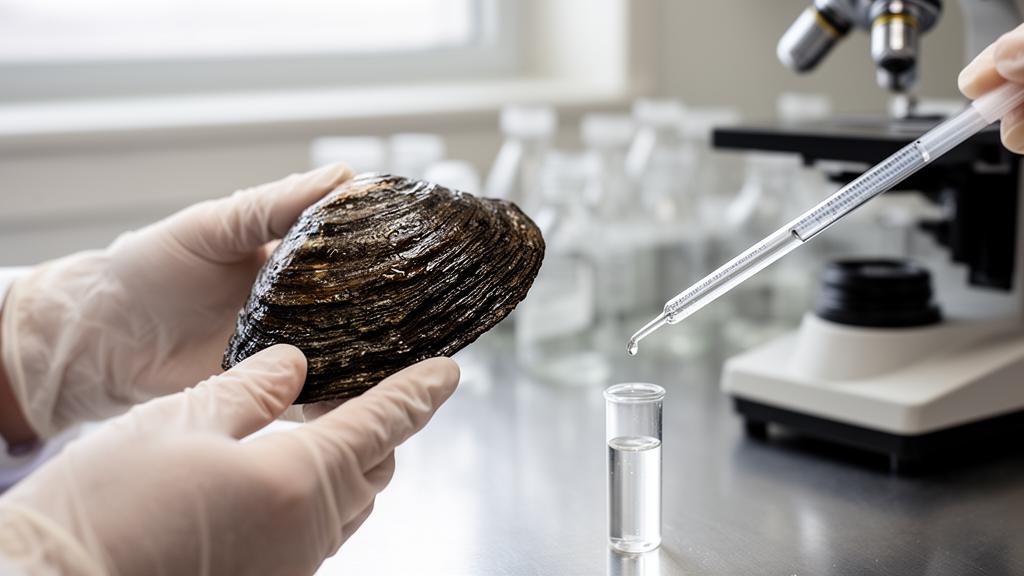
Deep in the rivers of Guizhou Province, China, two freshwater mussel species have been quietly living out a case of scientific mistaken identity so compelling that it has forced taxonomists to reconsider how they classify entire groups of animals. In a study published in Zoosystematics and Evolution, researchers have untangled a taxonomic knot that has confused scientists for decades, revealing that two mussels once thought to be the same species are not only distinct but belong to entirely different genera. The finding is a stark reminder that in the rush to catalog biodiversity, incomplete evidence can lead even experienced researchers astray.
The story begins with a mussel first described in 1994 as Unio ovatus, collected from Jiangkou County in Tongren City, Guizhou Province. Scientists soon realized that the name was already taken by an earlier species, Unio ovatus Say, 1817, and a replacement name, liuovatus, was proposed in 2013. What followed was a bewildering series of reclassifications. The species was shuffled between genera including Pseudobaphia, Lamellidens, Ptychorhynchus, and eventually Pseudocuneopsis, with each move based on limited comparisons of shell shape and surface features rather than a comprehensive analysis of anatomy or genetics.
The confusion deepened when a research team described a new species, Pseudocuneopsis heqing, from the Heiwan River, a tributary in the same drainage basin as the type locality of the older species. Shortly afterward, another group of researchers argued that the new species was merely a junior synonym of the older one, based on two lines of evidence: subjective similarity in shell morphology and the geographic proximity of their type localities. The two species were merged, and the combined taxon was placed in the genus Pseudocuneopsis. To many observers, the reasoning seemed plausible enough. But to the original research team, it represented exactly the kind of hasty taxonomic judgment that plagues conservation efforts for freshwater mussels, one of the most threatened animal groups on Earth.
Determined to resolve the dispute with hard data, the researchers mounted a field expedition in March 2026 to Jiangkou County, the type locality of the disputed species. There, they collected fresh specimens directly from the Taiping River and nearby waterways, ensuring that their material matched the original description as closely as possible. They also examined type specimens stored at the National Animal Collection Resource Center in Beijing, photographing holotypes and paratypes to establish a reliable morphological baseline. In total, they assembled fifteen specimens of the older species and eight of the newer one, providing a robust sample for quantitative analysis.
The team then turned to geometric morphometrics, a technique that converts biological shapes into numerical data that can be analyzed statistically. Using elliptic Fourier analysis, they extracted the shell outlines of each specimen and subjected them to principal component analysis. The results were striking. The first two principal components together accounted for nearly 73 percent of the variation in shell shape, and the two species clustered almost entirely on opposite sides of the primary axis. Specimens of one species displayed slender, elongated, elliptical shells, while those of the other showed rounder, more egg-shaped contours. A multivariate analysis of variance confirmed that the differences were statistically significant, with a p-value below 0.001, leaving virtually no doubt that the two forms represent distinct species.
But morphology alone was not enough to settle the question of where these species belonged on the tree of life. The researchers extracted DNA from foot tissue of their specimens and amplified three gene fragments: the mitochondrial cytochrome c oxidase subunit I gene, the mitochondrial 16S ribosomal RNA gene, and the nuclear 28S ribosomal RNA gene. After aligning and trimming the sequences, they assembled a concatenated dataset of 1,434 nucleotides spanning 18 taxonomic units from the family Unionidae, with two species from the family Margaritiferidae serving as outgroups to root the tree.
Phylogenetic analyses using both Bayesian inference and maximum likelihood methods produced consistent and revealing results. The specimens of the older species did not cluster with the newer species or with any other member of Pseudocuneopsis. Instead, they nested firmly within the genus Nodularia, supported by a posterior probability of 0.99 and a bootstrap value of 98 percent. Within Nodularia, the species formed a sister relationship with Nodularia hanensis. Meanwhile, the newer species clustered with the type species of Pseudocuneopsis, confirming its placement in that genus. The two species, in other words, occupy entirely different branches of the evolutionary tree, despite their superficial resemblance and overlapping geographic ranges.
Based on this combined evidence, the researchers formally restored the valid species status of Pseudocuneopsis heqing and reclassified the older species as Nodularia liuovatus, transferring it out of Pseudocuneopsis and into Nodularia. The decision was not made lightly. The researchers acknowledged that Nodularia liuovatus bears an extremely close resemblance to another species, Nodularia micheloti, originally described from Vietnam. However, without topotypic material or molecular data from the type locality of N. micheloti, they could not confirm whether the two are conspecific. They therefore provisionally retained N. liuovatus as a distinct species, pending further study of Vietnamese populations.
Perhaps the most striking aspect of the study is what it reveals about the challenges of fieldwork in species-rich freshwater systems. In Jiangkou County, the researchers found that three morphologically similar species coexist in the same watersheds: Pseudocuneopsis heqing, Nodularia liuovatus, and Nodularia douglasiae. This sympatric distribution means that researchers working in the region cannot rely on shell appearance alone to identify specimens. When multiple species with convergent morphologies share the same habitat, the risk of misidentification rises dramatically, and the consequences ripple outward through conservation assessments, biodiversity surveys, and evolutionary studies.
The broader lesson of this research extends far beyond a single genus of Chinese freshwater mussels. Around the world, taxonomists face similar dilemmas when working with groups whose species boundaries are obscured by morphological convergence, incomplete type material, or historical descriptions based on limited evidence. The authors argue that shell similarity and overlapping type localities can serve as useful starting hypotheses, but they should never constitute sufficient grounds for formal taxonomic action. Instead, revisions must meet a clear evidentiary threshold that incorporates quantitative morphometrics, molecular phylogenetics, and, where possible, examination of type specimens from their original localities. As freshwater ecosystems continue to face unprecedented pressures from pollution, habitat destruction, and climate change, the stakes for getting taxonomy right have never been higher. Every misidentified species represents a potential gap in our understanding of biodiversity, and every corrected classification brings conservation efforts one step closer to reality.
Subject of Research: Taxonomic revision of freshwater mussels Nodularia liuovatus and Pseudocuneopsis heqing using morphometrics and molecular phylogenetics
Article Title: A cautionary tale of incomplete evidence: taxonomic confusion in the freshwater mussel Nodularia liuovatus comb. nov. and Pseudocuneopsis heqing stat. rev. ( Bivalvia , Unionidae ) from China
Article References: Wu, R., Nan, F., Wang, X., Wu, M., Liu, X., Shu, F., & An, J. (2026). A cautionary tale of incomplete evidence: taxonomic confusion in the freshwater mussel Nodularia liuovatus comb. nov. and Pseudocuneopsis heqing stat. rev. (Bivalvia, Unionidae) from China. Zoosystematics and Evolution, 102(4), 1023-1031. https://doi.org/10.3897/zse.102.200796
Image Credits: AI Generated
Keywords: freshwater mussels, taxonomy, geometric morphometrics, molecular phylogenetics, Unionidae, China, species delimitation, biodiversity conservation, Nodularia, Pseudocuneopsis, shell morphology, DNA barcoding
Cite Scienmag News
Margaret Porter. (October 16, 2026). Freshwater Mussels Rewrite Their Own Family Tree as DNA Exposes a Case of Mistaken Identity. Scienmag. https://scienmag.com/freshwater-mussels-rewrite-their-own-family-tree-as-dna-exposes-a-case-of-mistaken-identity/
Margaret Porter. "Freshwater Mussels Rewrite Their Own Family Tree as DNA Exposes a Case of Mistaken Identity." Scienmag, 16 October 2026, https://scienmag.com/freshwater-mussels-rewrite-their-own-family-tree-as-dna-exposes-a-case-of-mistaken-identity/. Accessed 16 October 2026.
Margaret Porter. "Freshwater Mussels Rewrite Their Own Family Tree as DNA Exposes a Case of Mistaken Identity." Scienmag. October 16, 2026. https://scienmag.com/freshwater-mussels-rewrite-their-own-family-tree-as-dna-exposes-a-case-of-mistaken-identity/


