A nationwide French study of more than 2,200 intensive care professionals has confirmed that the Perceived Stressors in Intensive Care Units (PS-ICU) scale is a valid and reliable way to measure workplace stress in ICUs, and has trimmed it from 50 items to a 26-item version that works across nurses, physicians, residents and nursing auxiliaries. The findings, published in Annals of Intensive Care, come from a cross-sectional multicentre survey conducted in 42 intensive care units across mainland France between February and June 2024.
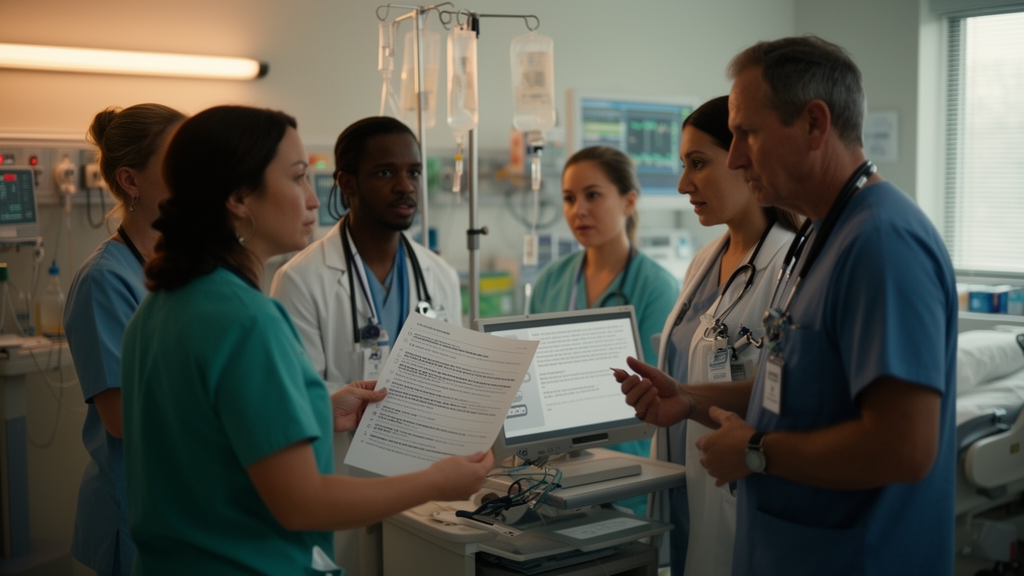
Job stress in intensive care is not an abstract concern. ICU staff care for patients with serious pathologies requiring complex diagnostic and therapeutic procedures, carry heavy workloads and responsibilities, and regularly confront end-of-life issues, interpersonal conflicts and perceptions of futility. Burnout among ICU physicians and nurses is considered very high, and quality of work life is low. Identifying the specific sources of that stress is a critical step toward preventing burnout, voluntary turnover and declines in the quality and safety of care, which is why a validated, ICU-specific measurement tool matters.
The PS-ICU scale was developed to fill a gap. A previous review of 59 tools used across 102 studies found that none met both the criteria of metrological validity and relevance to the specific conditions of ICU work. The original 50-item scale measures both ICU-specific stressors and generic workplace stressors, assessing six major factors: lack of fit with families and organisational functioning; patient and family-related emotional load; complex or at-risk situations and skill-related issues; workload and human resource management issues; difficulties related to team working; and suboptimal care situations. It was developed in French, Spanish and Italian following 165 semi-structured interviews with ICU physicians, residents and nurses in France, Spain, Italy and French-speaking Canada, and an initial survey of 497 professionals in 16 ICUs. It has since been adapted for Chinese contexts and used to examine associations between chronic job stress and burnout, post-traumatic stress disorders and impaired mental health during the Covid-19 crisis.
In the new study, 2,241 ICU professionals voluntarily completed an online questionnaire: 1,135 nurses, 308 physicians, 179 residents and 619 nursing auxiliaries, with an overall participation rate of 58.10 percent. After excluding 42 participants with excessive missing data or statistical outliers, 2,199 remained for analysis. Participation varied by occupation: physicians participated most (74.21 percent), nursing auxiliaries least (45.60 percent), with nurses (61.16 percent) and residents (62.50 percent) in between.
The researchers pursued three main objectives: to confirm the scale’s metrological properties on a large sample, to test whether it measures stressors equivalently across occupational groups, and to determine whether it also suits nursing auxiliaries, a group the original scale had never been validated for. They used exploratory structural equation modelling (ESEM), a technique suited to factors sharing a common conceptual meaning because it allows items to load on several factors, together with item response theory (IRT) analyses and McDonald’s Omega internal consistency coefficients.
The analyses largely confirmed the first five factors of the original scale, with the same items clustering into the same factors. The sixth original factor, however, was not replicated. Instead, a revised factor emerged, named “lack of support and resources from the organisation”, measured by four items covering shortage of beds in the unit, absence of administrative support, lack of staff, and unsuitable or under-equipped treatment areas or defective equipment. Keeping this revised sixth factor in a 31-item version slightly improved model fit compared with a five-factor, 30-item version. Internal consistency was satisfactory throughout, with Omega values at or above 0.70, and IRT analyses showed all empirical marginal reliability indices above 0.70, item RMSEA values below 0.05, and discrimination parameters above or very close to 1.
Measurement invariance testing, which establishes whether a scale measures a construct the same way in different groups, confirmed that the PS-ICU can validly compare nurses with physicians and residents at the configural, metric and scalar levels, the three levels required for meaningful group comparisons of latent means. A limitation here was that the samples of physicians (302) and residents (171) were too small to distinguish between them, so residents were merged with senior physicians, and strict invariance could not be estimated. The authors note this is suboptimal but point out that about 46 percent of included residents had more than one year of experience, and that there is no consensus that strict invariance is necessary.
For nursing auxiliaries, the six-factor, 31-item model produced satisfactory fit indices (scaled CFI of 0.977, RMSEA of 0.041, SRMR of 0.028), though internal consistency for factor 4 was slightly below threshold at 0.685. Five items showed loadings inconsistent with the initial population and were removed, yielding the final 26-item version that is invariant across all four occupational groups. The authors note that factor 4, covering working hours, schedules, on-call duties and private life, has only three items and remains a minor weakness, with item 23 loading moderately and also associated with factor 6, a possible target for future refinement.
A key practical question was whether the shortened version could still measure overall stress exposure, since the PS-ICU allows a general stress score to be computed as the average of all items. On the full sample, the 26-item version produced descriptive statistics and distributions very close to the 50-item version and correlated with it at r = 0.975. Adding five items that best measured general stress did not improve the correlation (r = 0.963) or the similarity of the distributions, so the 26-item version offers the best efficiency-to-length ratio. Because the scale was developed internationally, it is available in French, Italian, Spanish, English and Chinese.
The authors conclude that the PS-ICU is now simpler and faster to use for both research and routine monitoring in units, and that systematically identifying stress and its sources within teams could enable more effective interventions to prevent burnout. The 26-item version also makes it possible to include nursing auxiliaries, a population largely absent from stress and burnout research, in future studies. The study was conducted only in France using the French-language version, so the authors caution that results need replication in other organisational, cultural, economic, societal and linguistic contexts, and that future work should examine whether physicians and residents differ in how the scale measures their stress.
Subject of Research: Psychometric validation and shortening of the PS-ICU scale measuring perceived job stressors among French intensive care professionals
Article Title: Further analysis and refinements of the perceived stressors in intensive care units (PS-ICU) scale: a French nation-wide cross-sectional multicentre study
Article References: Lheureux, F., Jollivet, M., Chiron, J., Poulet, S., Fournier, A., Capellier, G., Bodet-Contentin, L., Herault, A., Hamam, J., Beuret, P., Lamizet, P.-A., Schoeffler, M., Vivet, B., Guitton, C., Piton, G., Perrot, J., Kuteifan, K., Guichon, C., Yonis, H., … Jourdain, M. (2025). Further analysis and refinements of the perceived stressors in intensive care units (PS-ICU) scale: a French nation-wide cross-sectional multicentre study. Annals of Intensive Care, 15(1), Article 186. https://doi.org/10.1186/s13613-025-01572-7
Image Credits: AI Generated
DOI: 10.1186/s13613-025-01572-7
Keywords: intensive care, PS-ICU scale, occupational stress, burnout, psychometrics, measurement invariance, nursing auxiliaries, France, multicentre study, item response theory, ESEM, healthcare workers
Cite Scienmag News
Ophelia Keating. (October 29, 2026). French study trims ICU stress scale to 26 items validated for all staff groups. Scienmag. https://scienmag.com/french-study-trims-icu-stress-scale-to-26-items-validated-for-all-staff-groups/
Ophelia Keating. "French study trims ICU stress scale to 26 items validated for all staff groups." Scienmag, 29 October 2026, https://scienmag.com/french-study-trims-icu-stress-scale-to-26-items-validated-for-all-staff-groups/. Accessed 29 October 2026.
Ophelia Keating. "French study trims ICU stress scale to 26 items validated for all staff groups." Scienmag. October 29, 2026. https://scienmag.com/french-study-trims-icu-stress-scale-to-26-items-validated-for-all-staff-groups/