Forensic DNA practitioners overwhelmingly point to workload, fatigue, and time pressure as the leading human factors behind DNA contamination risk, according to a new cross-sectional survey of 100 forensic professionals published in the Bulletin of the National Research Centre. The study, led by Salem K. Alketbi of Dubai Police General Headquarters together with forensic-science researcher Fatima S. Ahmed, also found that 62 of the 100 respondents reported personally witnessing or being involved in a DNA contamination incident during their careers, while 81 reported observing a near-miss, defined as an event that could have caused contamination but was caught before it affected evidence.
The survey, administered anonymously online through Google Forms between 2 February 2026 and 13 March 2026, recruited practitioners through professional forensic networks, LinkedIn, forensic science discussion groups, and direct professional contacts. Eligible participants included DNA analysts, forensic biologists, crime scene investigators, quality officers, laboratory supervisors, and laboratory managers involved in the collection, examination, analysis, interpretation, management, or quality oversight of forensic biological evidence. Ethical approval was granted by the Research Ethics Committee of the General Department of Forensic Science and Criminology at Dubai Police General Headquarters, and participation was voluntary with no financial incentives. The questionnaire took roughly five to seven minutes to complete.
Respondents rated twelve human-factor risks on a five-point Likert scale from 1, meaning very low risk, to 5, meaning very high risk. The retained aggregate mean ratings were numerically largest for workload at 4.58, followed by fatigue at 4.51, time pressure at 4.46, improper glove changes at 4.42, and personal protective equipment non-compliance at 4.39. Interruptions and distractions scored 4.31, communication failures 4.25, and staffing shortages 4.20. Standard operating procedure deviations received a mean of 4.18, training deficiencies or inexperience 4.03, laboratory layout 3.94, and stress 3.91. The authors emphasise that these descriptive means were not tested for statistical significance and should not be read as statistically distinct from one another.
Among the 62 respondents who reported contamination-event experience, workload was the most frequently identified primary contributor, selected by 18 participants or 29.0 percent. PPE non-compliance followed at 13 responses or 21.0 percent, communication failures at 10 or 16.1 percent, improper glove changes at 8 or 12.9 percent, time pressure at 7 or 11.3 percent, laboratory layout or workspace constraints at 4 or 6.5 percent, and other factors at 2 or 3.2 percent. Each of these respondents selected a single primary contributor, so the percentages reflect one choice per person rather than multiple attributions.
An open-ended question asked every respondent to name the single most effective strategy for reducing contamination risk. Both authors reviewed all 100 responses and grouped them into four broad descriptive themes by dominant recommendation. Workload management dominated with 44 percent of responses, followed by training and competency at 27 percent, communication and team coordination at 16 percent, and quality culture and reporting at 13 percent. No inter-rater reliability statistic was calculated because the exercise was descriptive categorisation rather than a formal qualitative analysis.
The authors argue that these converging signals point to DNA contamination as a socio-technical quality problem rather than the product of any single technical failure. Workload appeared across all three measures: the perceived-risk ratings, the incident-attribution item, and the open-ended prevention priorities. Yet the study is careful to note that this pattern does not demonstrate that workload independently caused the reported incidents. The three measures used different response formats and option sets, so they are best interpreted as complementary descriptive patterns rather than directly comparable rankings.
The survey sits within a well-documented forensic context. Modern DNA methods can recover low-level, trace, and mixed profiles, which raises the stakes of contamination control and secondary-transfer-aware interpretation. Empirical studies show that non-self DNA can persist on hands and be transferred subsequently, that shedder status and background DNA affect direct and secondary transfer, and that secondary transfer can produce reportable profiles under realistic conditions. A DNA profile alone cannot distinguish primary from secondary transfer, which is why contamination is treated as one plausible alternative explanation in evaluative reporting at sub-source, source, and activity levels.
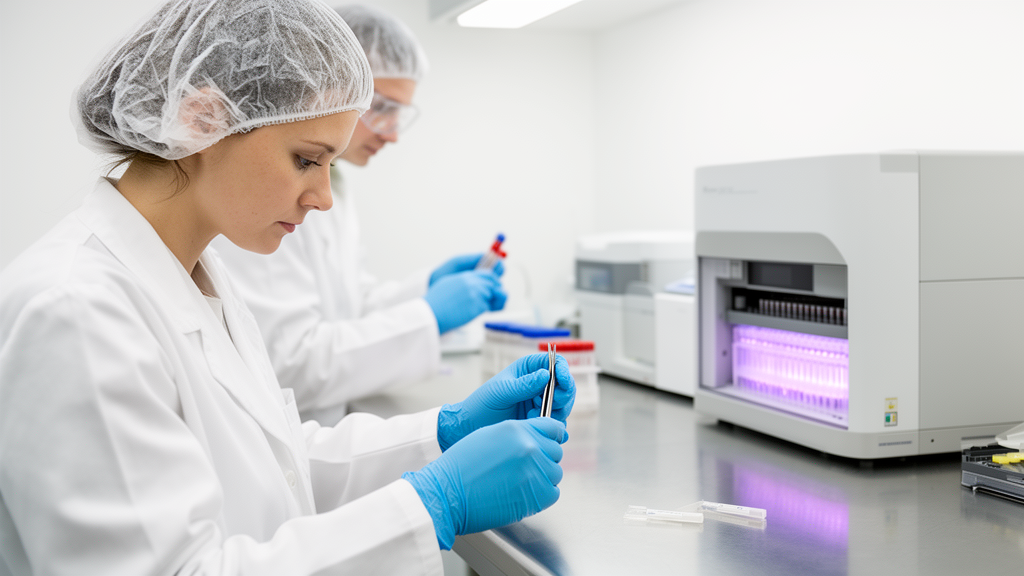
Laboratories and crime scene units already deploy a substantial arsenal of safeguards: personal protective equipment, workflow separation, zoning, cleaning and decontamination, environmental monitoring, negative controls, staff elimination databases, access restrictions, case separation, and chain-of-custody documentation, all supported by ISO/IEC 17025, ISO 18385, and the Forensic Science Regulator’s Code of Practice. The survey’s central message is that these measures depend on reliable human implementation under real working conditions. A missed glove change or shortened cleaning step may look like an individual lapse, but its likelihood can be shaped by workload, interruption, fatigue, workspace constraints, training, supervision, or routine drift.
The study also introduces an author-developed Human-Factor DNA Contamination Framework, which organises the directly assessed variables into four interacting domains: individual, organisational, environmental, and behavioural factors, with communication treated as a cross-cutting influence. The authors are explicit that the framework is conceptual, non-scored, non-predictive, and unvalidated. It assigns no weights, thresholds, or probabilities and is intended as a structured prompt for discussion, hypothesis generation, and future empirical assessment, complementing established tools such as failure mode and effects analysis, process mapping, and fishbone root-cause analysis rather than replacing them.
The limitations are considerable and the authors state them plainly. Recruitment through professional networks produced a convenience sample susceptible to self-selection that was not designed to represent the global forensic community, and professional and regional groups were unevenly distributed. Eligibility and contamination-event experience were self-declared and not independently verified, so reported incidents and near-misses should not be read as verified prevalence estimates. The incident and near-miss questions referred to experience across respondents’ entire careers rather than a defined observation period, meaning practitioners with longer careers had greater opportunity to encounter such events. The original respondent-level data were not retained, so item-level distributions and uncertainty estimates could not be reconstructed, and the cross-sectional design cannot establish causality. The authors call for multi-centre studies with independently verified contamination outcomes before any domain weighting, scoring system, or predictive application of the framework could be justified.
Subject of Research: Forensic practitioners' perceptions of human factors contributing to DNA contamination risk in forensic practice
Article Title: Practitioner perceptions of human factors contributing to DNA contamination risk in forensic practice: a cross-sectional survey
Article References: Alketbi, S. K., & Ahmed, F. S. (2026). Practitioner perceptions of human factors contributing to DNA contamination risk in forensic practice: a cross-sectional survey. Bulletin of the National Research Centre, 50(1), Article 123. https://doi.org/10.1186/s42269-026-01510-y
Image Credits: AI Generated
DOI: 10.1186/s42269-026-01510-y
Keywords: forensic DNA, contamination, cross-sectional survey, workload, human factors, PPE, glove changes, near-miss, quality management, crime scene, laboratory, secondary transfer
Cite Scienmag News
Scienmag. (October 28, 2026). Forensic practitioners name workload as top DNA contamination risk in survey. https://scienmag.com/forensic-practitioners-name-workload-as-top-dna-contamination-risk-in-survey/
Scienmag. "Forensic practitioners name workload as top DNA contamination risk in survey." Scienmag, 28 October 2026, https://scienmag.com/forensic-practitioners-name-workload-as-top-dna-contamination-risk-in-survey/. Accessed 29 October 2026.
Scienmag. "Forensic practitioners name workload as top DNA contamination risk in survey." Scienmag. October 28, 2026. https://scienmag.com/forensic-practitioners-name-workload-as-top-dna-contamination-risk-in-survey/