

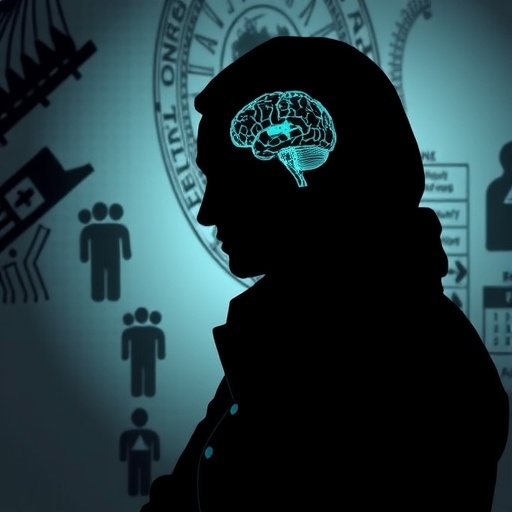
In a groundbreaking exploration, the intersection of forensic mental health and criminology has gained fresh perspective through recent research by DeLisi, Stickle, and Dooley, published in the American Journal of Criminal Justice. Their work shines a spotlight on how overlooked principles of forensic mental health can critically inform the study and application of criminology. As crime rates fluctuate, understanding the psychological underpinnings of criminal behavior becomes crucial. This emphasis on mental health not only amplifies academic discourse but also has the potential to shape public policies and promote effective criminal justice practices.
The authors argue that Aristotle’s philosophical insights provide a framework for understanding the human psyche in the context of criminal behavior. By invoking Aristotle, the researchers suggest that the pursuit of knowledge should not solely focus on actions but rather on the moral and mental faculties that drive those actions. This Aristotelian perspective leads to the conclusion that mental health considerations in forensic assessments are not just beneficial but entirely necessary for a holistic approach to understanding crime. The philosophical foundations laid by Aristotle, entwined with modern psychological understandings, offer new avenues for researching and addressing criminality.
As the researchers delve into the psychology of offenders, the paper addresses a crucial point: many criminal acts result from mental health disorders that often go unrecognized in typical criminological analysis. By failing to consider the mental health dimensions of criminal behavior, the field risks adopting a narrow perspective that overlooks essential factors contributing to a person’s criminality. This oversight could lead to ineffective interventions and sentencing, highlighting the vulnerability of the justice system to shortcomings in understanding offender psychology.
The implications of this research extend well beyond academic theory; they demand a practical overhaul in how criminal justice systems handle offenders exhibiting mental health issues. There is a clear call-to-action for policymakers and criminal justice professionals to embrace a model that integrates mental health assessments into standard practice. As detailed in the study, offenders who experience untreated mental disorders often re-offend, resulting in a never-ending cycle of crime and punishment that does little to rehabilitate individuals.
The statistical data presented in the research adds weight to its arguments: rates of re-offending decrease significantly when mental health issues are adequately addressed. This insight poses a critical challenge to the prevailing punitive systems that ignore the therapeutic needs of offenders. Instead, a rehabilitative approach focusing on mental well-being could not only reduce recidivism but also contribute to overall public safety, adding a compelling layer of evidence to the argument that mental health should be a core concern in criminological studies.
Moreover, the study emphasizes the importance of training for law enforcement and judicial personnel on the nuances of forensic mental health. Understanding these complexities allows professionals to differentiate between mentally ill individuals and those who are engaging in criminal behavior devoid of psychological impairment. Such distinctions can lead to more informed decisions during arrests, charges, and sentencing, fostering a more comprehensive understanding of the criminal landscape.
In a significant societal context, the authors elucidate how public perception regarding crime and mental health is often steeped in stigma and misinformation. They argue for educational initiatives aimed at dispelling myths about the relationship between mental illness and criminality. The research posits that enhancing societal understanding can pave the way for more empathetic and effective approaches to dealing with offenders who suffer from mental health disorders, ultimately benefitting the community at large.
The authors further propose that the integration of mental health strategies into criminology may provide answers to some of the legal system’s most perplexing challenges. For instance, what constitutes criminal intent can often be obscured by mental health issues. By applying insights from forensic psychology, the authors suggest renewed clarity can emerge in legal determinations of culpability. This alignment could align justice more closely with ethical principles, reducing missteps that occur when courts fail to account for mental health dynamics within criminal behavior.
As the authors conclude their research, they express optimism about the future of criminology that embraces a more holistic approach. By recognizing the significant role that forensic mental health plays, they predict a shift in how crimes are analyzed and addressed. This paradigm shift could revolutionize not only academic discourse but also practical applications in law enforcement, rehabilitation, and policy-making. The potential for a more compassionate justice system that recognizes the complexity of human behavior is, indeed, a worthier pursuit.
As scholars and practitioners navigate these evolving ideas, the call for cross-disciplinary collaboration becomes increasingly vital. Integrating insights from psychology, sociology, and criminology will allow for broader perspectives on crime and justice issues. Engaging various stakeholders, including mental health professionals, educators, and community advocates, this multidisciplinary approach holds promise for developing innovative rehabilitation programs tailored to the needs of individualized offenders.
As research trends progress, it will be exciting to see how these philosophies challenge existing paradigms within criminal justice. Will the emergent focus on mental health reshape the courtroom, the community perception of offenders, or the policies that govern treatment and rehabilitation? The answer to this riddle is intertwined with collective commitment to re-evaluating and revitalizing the frameworks within which society views crime and mental health.
In essence, DeLisi, Stickle, and Dooley’s work signifies a pivotal moment in criminological research—a moment that urges all participants in the justice system to reflect critically upon their roles and methodologies. By adopting a forward-thinking approach that prioritizes mental health, the journey towards understanding crime could transform, fostering a justice system that is not only more effective but also more just.
The insights curated in this profound body of work will undoubtedly influence future inquiries and inspire a generation of researchers to embrace new inquiries into the intertwined dynamics of mental health and law. As the dialogue continues to expand, the hope remains that a more integrated approach will emerge, leading to lasting changes in how perpetrators of crime are understood, treated, and rehabilitated in society. The implications extend beyond academic interests; they touch the very foundations of justice and humanity itself, calling for a systemic change essential for a future where mental health is no longer an afterthought but a central tenet of criminological practice.
In summary, the paper by DeLisi, Stickle, and Dooley serves as a catalyst for rethinking the norms and practices that shape the fields of criminology and forensic mental health. It not only underlines an academic pursuit of knowledge but also demands societal commitment to a more comprehensive understanding of crime. The authors envision a future where forensic mental health stands as an integral pillar of criminology, fundamentally altering both disciplinary dialogues and practical implementations in the quest for justice.
Subject of Research: The intersection of forensic mental health and criminology.
Article Title: Aristotle’s Prophecy: The Overlooked Importance of Forensic Mental Health to Criminology.
Article References:
DeLisi, M., Stickle, B. & Dooley, B.D. Aristotle’s Prophecy: The Overlooked Importance of Forensic Mental Health to Criminology.
Am J Crim Just 50, 781–794 (2025). https://doi.org/10.1007/s12103-025-09837-4
Image Credits: AI Generated
DOI: https://doi.org/10.1007/s12103-025-09837-4
Keywords: Forensic mental health, criminology, criminal behavior, rehabilitation, recidivism, interdisciplinary collaboration, moral philosophy, psychological insights.


