


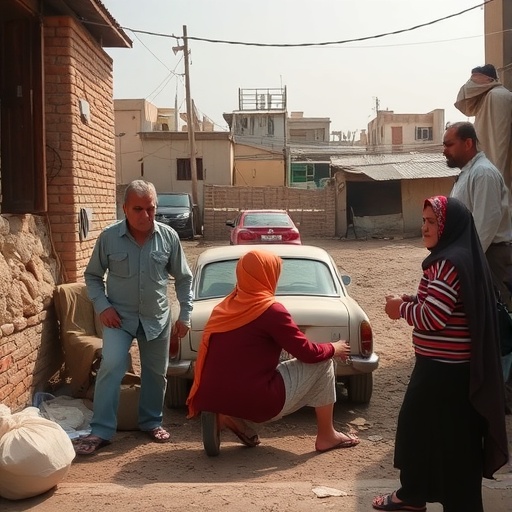
In the protracted and fraught environment of the Gaza Strip, a groundbreaking study sheds critical light on the complex nexus between basic resource insecurities and mental health outcomes among young adults. Researchers Fekih-Romdhane, Jebreen, Swaitti, and colleagues have conducted an in-depth examination revealing a compelling link between food and water insecurities and an increase in self-reported psychotic experiences, a finding that underscores the profound psychological toll exacted by chronic hardship and conflict. Their research, soon to be published in the International Journal for Equity in Health, delves into how social support mechanisms might mitigate or exacerbate these effects amid relentless warfare and extreme deprivation.
At the heart of this study is the recognition that mental health, often overshadowed in conflict zones by immediate physical survival needs, is inseparable from environmental and socioeconomic conditions. Gaza, long besieged and facing persistent instability, experiences endemic shortages in essential resources such as potable water and adequate food supplies. This sustained crisis environment engenders not only physical vulnerabilities but also instigates profound psychological distress and symptoms resembling psychosis among young adults, who are especially susceptible during their formative years.
The study leverages a robust quantitative methodology to scrutinize data gathered from young adults residing in Gaza, utilizing validated psychometric instruments to capture self-reported psychotic experiences. Such psychological phenomena can include hallucinations, delusional thinking, and cognitive disorganization, often associated with severe mental disorders but here considered on a spectrum of trauma-induced experiences. These indicators serve as vital markers of mental health degradation in populations subject to extreme external stressors such as food scarcity and dehydration.
Food insecurity, operationalized as uncertain or insufficient access to nutritionally adequate and safe foods, emerges as a pivotal factor correlating with increased psychotic symptoms. The chronic deprivation of dietary essentials disrupts not only physical health but also cognitive functioning, affecting neurotransmitter systems and brain metabolism. Malnutrition can impair neurochemical pathways that regulate mood and perception, creating a fertile ground for psychotic-like symptoms to manifest. Likewise, insufficient water intake exacerbates physical morbidity and may contribute to neurocognitive impairments relevant to mental health challenges.
Water insecurity compounds these effects, creating a layered crisis. Beyond the physiological impacts of dehydration and exposure to contaminated sources, water scarcity represents a continuous psychosocial stressor. This chronic stress can dysregulate the hypothalamic-pituitary-adrenal (HPA) axis, a crucial biological system in stress response. Sustained activation of the HPA axis is known to increase vulnerability to psychiatric disorders, including psychosis, by altering cortisol levels and neural plasticity, thereby affecting mood regulation and cognitive integrity.
A novel dimension in this research is the exploration of social support as a modifying force amid these adversities. Social support networks — encompassing family, friends, and community structures — are evaluated for their potential buffering effects against the psychological impacts of resource insecurity. The findings indicate variability in social support’s protective role; while some networks provide critical emotional and material assistance that can attenuate stress-related psychotic experiences, others may be insufficient or even strained under the pressures of shared hardship, highlighting the complexity of psychosocial dynamics in war zones.
Furthermore, the study situates its findings within broader geopolitical and economic contexts, emphasizing how systematic blockades, recurrent conflict, and infrastructural collapse perpetuate cycles of scarcity and mental health crises. These conditions not only hinder reconstruction and aid delivery but also erode resilience among youth populations who face a future overshadowed by uncertainty and trauma. The interaction between macro-level factors and individual psychological outcomes demonstrates the necessity of multidimensional intervention strategies.
The researchers employed sophisticated statistical analyses to disentangle the interrelations between food-water insecurities, social support, and psychotic symptoms. Structural equation modeling was used to map these associations, revealing both direct effects of scarcity on mental health and indirect pathways mediated by social support variables. This approach underscores the importance of addressing psychosocial environments alongside material resources when formulating public health responses in conflict-affected areas.
Importantly, the study reinforces that psychotic experiences in this context may reflect acute stress reactions rather than chronic psychotic disorders per se. This nuance is vital for designing mental health services that are trauma-informed and culturally sensitive, avoiding stigmatization of affected individuals and promoting accessible, community-based care models tailored to complex emergencies. Early identification and intervention could prevent progression to full-blown psychiatric diagnoses, improving long-term outcomes.
In practical terms, the research advocates for integrated policies combining humanitarian aid, water and food security programs, and mental health support systems. Efforts to improve infrastructure and supply chains must be coupled with strengthening social cohesion to enhance communal coping capacities. International cooperation and sustained funding emerge as imperative to implement these multidimensional strategies effectively in the Gaza Strip and similar conflict zones worldwide.
In conclusion, this seminal study by Fekih-Romdhane and colleagues forces a paradigm shift in understanding mental health under siege conditions. The intricate interplay of environmental scarcity, psychosocial support, and psychological symptoms calls for an urgent re-evaluation of public health frameworks in conflict settings. Their findings carry profound implications not only for Gaza but for global health equity initiatives targeting the invisible mental health collateral of protracted crises.
By illuminating these hidden consequences, the research amplifies the voices of young Gaza residents whose mental suffering is entwined with their daily struggle for sustenance and dignity. It compels the medical, humanitarian, and policy-making communities to recognize mental health as an indispensable component of survival and resilience. Only through comprehensive, context-sensitive interventions can these vulnerable populations be shielded from the compounded adversities of war, deprivation, and psychological distress.
As wars and humanitarian emergencies persist in various regions, this study stands as a clarion call to address the often-overlooked psychological dimensions of resource insecurity. It offers a framework for future research and action, advocating for holistic approaches that integrate mental health into the fabric of emergency response and development. The hope is that such evidence-based strategies will foster not only physical survival but also psychological well-being amid adversity, paving the way toward recovery and peace for generations to come.
Cite Scienmag News
Courtney Benton. (November 17, 2025). Food-Water Insecurity, Psychosis, and Support in Gaza. Scienmag. https://scienmag.com/food-water-insecurity-psychosis-and-support-in-gaza/
Courtney Benton. "Food-Water Insecurity, Psychosis, and Support in Gaza." Scienmag, 17 November 2025, https://scienmag.com/food-water-insecurity-psychosis-and-support-in-gaza/. Accessed 5 September 2026.
Courtney Benton. "Food-Water Insecurity, Psychosis, and Support in Gaza." Scienmag. November 17, 2025. https://scienmag.com/food-water-insecurity-psychosis-and-support-in-gaza/


