

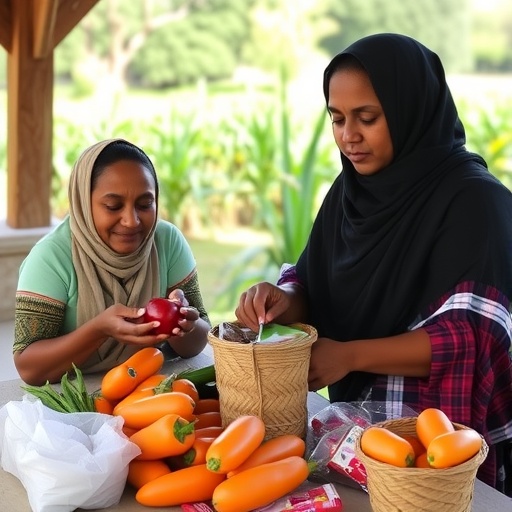
In a groundbreaking exploration published in the Journal of Nutrition Education and Behavior, researchers have uncovered compelling evidence underscoring the transformative potential of food literacy education programs tailored specifically for rural, uninsured adults grappling with type 2 diabetes. This study delves beyond superficial nutritional advice, emphasizing the critical integration of practical food skills into medical food prescription initiatives, a strategy often encapsulated within the “Food is Medicine” movement. Conducted through a rigorous data and statistical analysis methodology, the research sheds light on how equipping patients with comprehensive food-related knowledge and hands-on skills can significantly enhance their ability to manage chronic conditions like diabetes more effectively.
Central to the study was the Fresh Start Food is Medicine plus Food Literacy intervention, a meticulously designed program comprising nine group sessions. These sessions focused on cultivating essential competencies such as meal planning, budget-conscious shopping, food preparation techniques, and strategic navigation of the complex food environment. By marrying these educational elements with health coaching and innovative produce prescriptions that offer financial support through vouchers or direct delivery of fresh fruits and vegetables, the program took a holistic approach. This approach aimed not only to educate but also to directly modify food access and consumption patterns among participants.
The cohort consisted of 150 adults recruited from four safety net clinics within rural eastern North Carolina. These clinics, members of a statewide network focusing on uninsured and underinsured populations, provided a unique context elevating the study’s relevance. Rural settings often grapple with distinct barriers, including limited food retail options, scarce nutrition education resources, and socioeconomic constraints that compound the management of chronic diseases. By situating the intervention in community-accessible venues, researchers capitalized on culturally relevant, pragmatic outreach strategies aimed at overcoming these systemic hurdles.
Quantitative findings revealed a statistically significant enhancement in participants’ food literacy scores post-intervention, measured through a validated assessment tool evaluating various domains. Participants exhibited improved proficiency not only in identifying nutritious foods but importantly, in the application of skills such as planning balanced meals, economically shopping for healthy ingredients, and preparing food safely and effectively. These capacities are pivotal in navigating environments where unhealthy food options are pervasive, and time or budget constraints frequently limit dietary choices.
Despite the encouraging overall improvements, the research illuminated critical disparities along racial and ethnic lines. Hispanic participants consistently scored lower than their White counterparts in food literacy metrics before and after the educational intervention, particularly in dimensions implicated in economic decision-making such as meal planning and budgeting. This nuanced finding suggests that while the program has broad efficacy, it may inadequately address culturally specific barriers and knowledge gaps influencing food-related behaviors within diverse populations.
Brandon J. Stroud, MPH, RDN, CHES, the study’s corresponding author and co-director of the Farm2Clinic Initiative at East Carolina University, emphasized the intricate nature of food literacy. He pointed out that it transcends mere nutritional awareness, encompassing a multifaceted skill set essential for managing one’s diet responsibly under real-world constraints. Stroud advocates for coupling nutrition education with tangible skill-building elements, a synergy that empowers patients to exert agency over their health outcomes by actively engaging with food preparation and selection processes.
The research underscores an urgent need for culturally tailored educational frameworks that resonate with the lived experiences of diverse rural populations. These frameworks should integrate language considerations, cultural food preferences, and socioeconomic realities to bridge persistent disparities in food-related skills and knowledge. Tailored interventions could harness community assets and foster trust, thereby enhancing engagement and efficacy.
Moreover, the study’s application of produce prescription mechanisms represents an innovative medical nutrition therapy model, wherein fresh fruits and vegetables serve as therapeutic agents administered directly to patients. This approach operationalizes the Food is Medicine concept, translating dietary recommendations into accessible, affordable resources. Such strategies are vital in tackling food insecurity and augmenting the impact of educational programs.
While food literacy education proved beneficial, the findings advocate for a comprehensive, systemic perspective addressing the broader social determinants of health. Factors such as transportation access, food availability, and socioeconomic status intricately weave into the effectiveness of nutrition-related interventions. Addressing these dimensions holistically could magnify the benefits of educational efforts and produce sustained improvements in chronic disease management.
Ultimately, the study establishes an evidentiary foundation for integrating advanced food literacy education into existing Food is Medicine programs, especially within underserved rural communities. By doing so, healthcare providers and policymakers can foster resilience among patients, enhancing their capacity to make informed, health-promoting food choices that mitigate the clinical and psychosocial burdens of diabetes.
This pioneering work, therefore, calls for a paradigm shift—not only recognizing the critical role of food literacy but operationalizing it through culturally informed, pragmatic interventions intertwined with healthcare delivery. Such integration holds promise for reducing health disparities and advancing equitable outcomes in chronic disease management across diverse populations.
Subject of Research: People
Article Title: Impact of Food Literacy Education on Rural, Uninsured Patients With Diabetes
News Publication Date: April 8, 2026
Web References: https://doi.org/10.1016/j.jneb.2026.01.007
References: Journal of Nutrition Education and Behavior, Elsevier
Image Credits: Journal of Nutrition Education and Behavior
Keywords: Food literacy, Food is Medicine, diabetes management, rural health, uninsured populations, produce prescription, nutrition education, health disparities, chronic disease, culturally tailored interventions


