

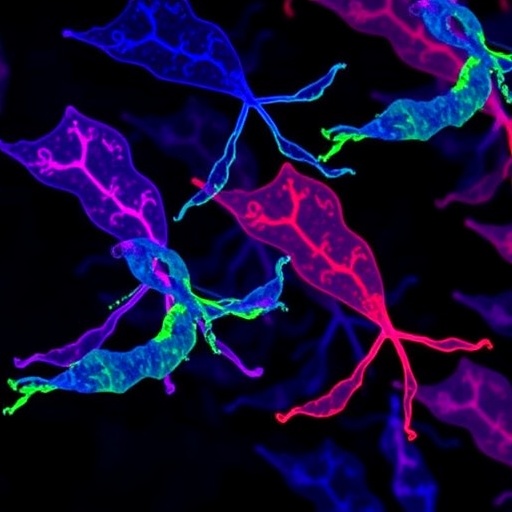
In a groundbreaking advance that promises to revolutionize how we understand probiotic dynamics within living organisms, researchers Wei, Liu, and Zhou have unveiled a novel method for tracking Lactobacillus strains in vivo using fluorescent D-amino acids. Published in the prestigious journal Food Science and Biotechnology, this study pushes the frontier of microbial imaging and survival analysis to new heights. By leveraging the unique biochemical properties of D-amino acids conjugated with fluorescent markers, these scientists have devised a non-invasive yet highly precise technique for monitoring the fate of probiotic bacteria as they navigate the complex environment of the gastrointestinal tract.
The crux of this innovation lies in the selective incorporation of fluorescently labeled D-amino acids into the cell walls of Lactobacillus strains. Unlike the more commonly studied L-amino acids, D-amino acids are relatively rare in biological systems and are employed strategically here to avoid interference with host proteins and metabolic processes. Once integrated into the bacterial peptidoglycan layer, these fluorescent tags emit distinct signals that can be detected using advanced imaging technologies, allowing real-time visualization of bacterial distribution, colonization patterns, and survival rates inside the host organism.
Historically, in vivo tracking of probiotic bacteria has presented major challenges. Conventional methods like genetic modification to express fluorescent proteins often face limitations related to stability, host immune responses, or regulatory concerns, particularly when translating findings to human applications. The use of fluorescent D-amino acids circumvents many such obstacles, offering a biocompatible, metabolically inert labeling approach that minimizes perturbations to both bacterial physiology and host health. This finesse enables longitudinal studies where the dynamics of probiotic persistence and activity can be charted in unprecedented spatial and temporal resolution.
To accomplish this, Wei and colleagues optimized the synthesis of various fluorescent D-amino acid derivatives tailored for incorporation by distinct Lactobacillus species. They rigorously validated the specificity and efficiency of labeling under controlled laboratory conditions before progressing to in vivo experiments involving mouse models. The ensuing fluorescence imaging revealed intricate colonization patterns within different segments of the gastrointestinal tract, unveiling heterogeneity in bacterial survival and interaction with host tissues that were previously obscured by bulk measurement techniques.
Meticulous survival analysis further elucidated how environmental factors such as pH gradients, nutrient availability, and mucosal immunity modulate the resilience of probiotic strains. The ability to directly observe bacterial fate in vivo paves the way for optimizing probiotic formulations with enhanced efficacy and stability. Moreover, this work highlights the critical influence of microbiota spatial organization on host health outcomes, which could inform novel therapeutic interventions harnessing beneficial microbes.
Crucially, the researchers demonstrated that the fluorescent labeling did not impair vital bacterial functions including cell division, metabolic activity, or adhesion properties. This aspect ensures that the commensal role of Lactobacillus strains remains intact, preserving their probiotic benefits while enabling their scientific study. The authors envision that their methodology could be expanded to other beneficial bacteria, providing a versatile toolkit to unravel microbial behavior within the multifaceted ecosystems of living hosts.
By delivering a robust platform for visualizing probiotic survival and spatial dynamics, this research holds significant promise for accelerating advancements in microbiome science, precision nutrition, and therapeutic microbiology. Understanding how beneficial bacteria establish residence and exert effects in vivo will help tailor interventions for gut disorders, infectious diseases, and even systemic conditions linked to microbial dysbiosis. The integration of chemical biology with live imaging thus opens exhilarating avenues for next-generation probiotic development.
The reported technique also carries compelling implications for food science and biotechnology industries, where ensuring probiotic viability throughout processing, storage, and digestion remains a persistent challenge. By enabling real-time monitoring of probiotic fate inside consumers, manufacturers can derive critical feedback to optimize delivery systems, dosage forms, and strain selection. This technological leap fosters evidence-based design of functional foods, dietary supplements, and potentially live biotherapeutic products regulated by stringent safety criteria.
Another fascinating dimension of this platform is its suitability for combination with emerging imaging modalities such as multiphoton microscopy, super-resolution techniques, or even whole-body imaging in larger animal models. These synergistic integrations could map probiotic-host interfaces at molecular precision, deepening mechanistic insight into microbial colonization, persistence, and beneficial host modulation. Such high-definition visualization aligns with the broader scientific quest to decode the microbiome’s enigmatic interface with human physiology.
Ethical and translational implications also emerge from this approach. The non-genetic modification strategy alleviates concerns around releasing recombinant microbes into the environment or patients, facilitating smoother regulatory pathways for clinical trials and consumer acceptance. Moreover, the strategy’s modularity means it can be adapted rapidly to track emerging probiotic candidates or monitor microbial therapeutics in personalized medicine contexts, heralding a dynamic future for microbiome research and application.
Future research inspired by these findings will likely explore the metabolic fates of fluorescent D-amino acids, detailed host immune responses triggered by labeled bacteria, and cross-talk mechanisms within complex microbial communities. Expanding the chemical diversity of fluorescent tags could enable multiplexed imaging of multiple strains simultaneously, advancing our grasp of interspecies cooperation or competition in natural microbiomes. These studies promise to chart a richer ecosystem-level portrait of microbial life contributing to human health.
In sum, Wei, Liu, and Zhou’s pioneering work reshapes the microbial tracking landscape by marrying innovative chemical labeling with sophisticated in vivo imaging techniques, delivering a leap in our capacity to monitor beneficial bacteria in living hosts. This breakthrough stands to transform the scientific, clinical, and commercial facets of probiotic research and development, ultimately fostering improved health outcomes through informed microbial interventions. As the field evolves rapidly, this strategy is poised to become an indispensable tool for deciphering the intricate microbial tapestries woven within us.
Subject of Research: Probiotic bacterial tracking and survival analysis using fluorescent biochemical probes.
Article Title: In vivo tracking and survival analysis of lactobacillus strains using fluorescent D-amino acids.
Article References: Wei, TT., Liu, Y. & Zhou, Y. In vivo tracking and survival analysis of lactobacillus strains using fluorescent D-amino acids. Food Sci Biotechnol (2026). https://doi.org/10.1007/s10068-025-02028-1
Image Credits: AI Generated
DOI: 10.1007/s10068-025-02028-1 (02 January 2026)


