

Monday, October 26, 2026
Science
No Result
View All Result
  • Login
  • HOME
  • SCIENCE NEWS
  • CONTACT US
  • HOME
  • SCIENCE NEWS
  • CONTACT US
No Result
View All Result
Scienmag
No Result
View All Result
Home Science News Science Education

Flipped Classroom With SNAPPS Lifts Emergency Interns’ Knowledge and Skills in Trial

October 26, 2026
in Science Education
Courtney Benton
By Courtney Benton Scienmag Editorial Profile - Science and Technology Policy
Reading Time: 2 mins read
0
Flipped Classroom With SNAPPS Lifts Emergency Interns’ Knowledge and Skills in Trial

Flipped Classroom With SNAPPS Lifts Emergency Interns' Knowledge and Skills in Trial

65
SHARES
587
VIEWS
Share on FacebookShare on Twitter
ADVERTISEMENT

A randomized controlled trial of 104 fifth-year undergraduate medical interns has found that combining a flipped classroom approach with the SNAPPS teaching framework produced higher theoretical knowledge scores, higher clinical competence ratings, and greater teaching satisfaction than conventional lecture-based teaching during emergency department rotations. The study, authored by Ying Lan and Wang Li, was published open access in BMC Medical Education on 28 August 2026.

Between 2023 and 2025, interns undertaking their clinical rotation in the Emergency Department were randomly assigned to one of two groups. Fifty-one interns received the combined flipped classroom and SNAPPS teaching model, while 53 received lecture-based teaching. All participants had completed identical preclinical coursework before entering the department, which established a comparable baseline across the two arms of the trial.

The researchers compared three sets of outcomes: theoretical knowledge scores measured on admission to and discharge from the rotation, clinical competence assessed with the Mini-CEX evaluation tool, and teaching satisfaction. At admission, there was no significant difference in theoretical scores between the two groups, with a P value greater than 0.05, indicating that the cohorts started on an equal footing before the teaching interventions began.

By discharge, the picture had changed. The theoretical score of the reform group was significantly higher than that of the control group, and both groups showed significant improvement compared with their own admission scores, with P values below 0.05. The Mini-CEX results also favored the combined model: interns taught with flipped classroom plus SNAPPS scored significantly higher in medical history taking, physical examination, condition assessment, and clinical judgment, all with P values below 0.05.

Teaching satisfaction told a similar but not uniform story. The reform group rated four dimensions significantly higher than the control group: teaching content, learning resources, classroom atmosphere, and teaching methods. However, the advantage did not extend to every measure. No significant differences emerged between the two groups in doctor-patient communication or professional literacy, and the groups were also statistically indistinguishable in their satisfaction with instructor competence and in perceived learning burden, with all of these comparisons yielding P values greater than 0.05.

The authors conclude that the flipped classroom combined with the SNAPPS teaching model can significantly improve theoretical knowledge and core clinical thinking among emergency medicine interns while also enhancing teaching satisfaction, and they describe the approach as worthy of clinical promotion. The trial’s randomized design, its use of identical preclinical preparation across both groups, and its measurement of outcomes at two time points support the internal comparison reported in the study, while the findings are specific to fifth-year undergraduate interns rotating through emergency medicine during the 2023 to 2025 study period.

Subject of Research: Application effect of flipped classroom combined with SNAPPS teaching model in emergency medicine interns

Article Title: Application effect of flipped classroom combined with SNAPPS teaching model in emergency medicine interns

Article References: Lan, Y., & Li, W. (2026). Application effect of flipped classroom combined with SNAPPS teaching model in emergency medicine interns. BMC Medical Education. https://doi.org/10.1186/s12909-026-10282-y

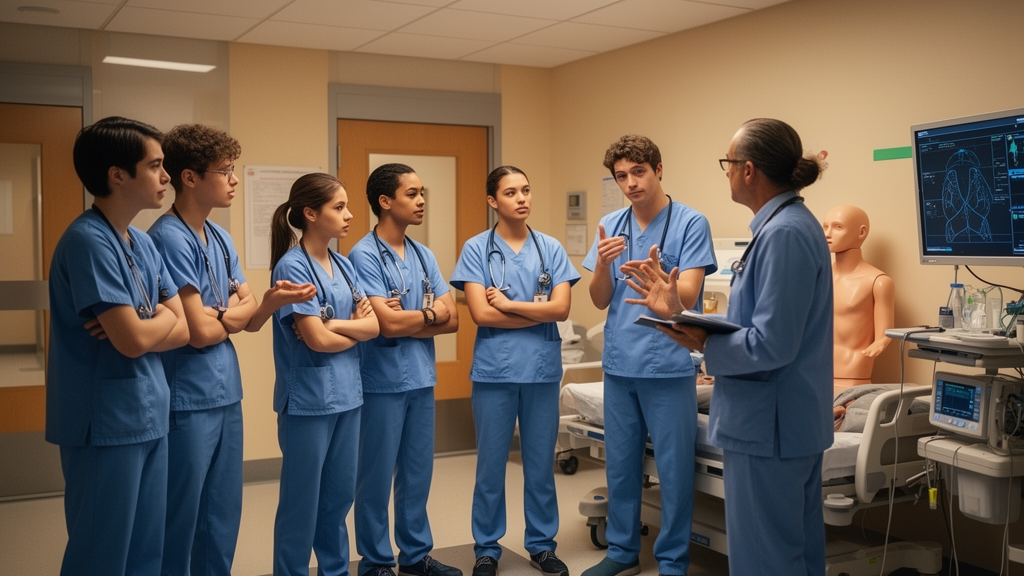
Image Credits: AI Generated

DOI: 10.1186/s12909-026-10282-y

Keywords: flipped classroom, SNAPPS, emergency medicine, medical interns, randomized controlled trial, Mini-CEX, clinical competence, teaching satisfaction, medical education, lecture-based teaching, BMC Medical Education, Application

Cite Scienmag News

Courtney Benton. (October 26, 2026). Flipped Classroom With SNAPPS Lifts Emergency Interns’ Knowledge and Skills in Trial. Scienmag. https://scienmag.com/flipped-classroom-with-snapps-lifts-emergency-interns-knowledge-and-skills-in-trial/


Courtney Benton. "Flipped Classroom With SNAPPS Lifts Emergency Interns’ Knowledge and Skills in Trial." Scienmag, 26 October 2026, https://scienmag.com/flipped-classroom-with-snapps-lifts-emergency-interns-knowledge-and-skills-in-trial/. Accessed 26 October 2026.

Courtney Benton. "Flipped Classroom With SNAPPS Lifts Emergency Interns’ Knowledge and Skills in Trial." Scienmag. October 26, 2026. https://scienmag.com/flipped-classroom-with-snapps-lifts-emergency-interns-knowledge-and-skills-in-trial/

Tags: applicationBMC Medical Educationclinical competenceclinical skills assessment in medical trainingcomparative study of lecture-based versus active learningemergency department clinical trainingEmergency Medicineenhancing emergency medicine training outcomesflipped classroomflipped classroom medical educationimpact of flipped classrooms on clinical competenceinnovative teaching methods in medical educationlecture-based teachingMedical Educationmedical intern satisfaction with teaching strategiesMedical internsMini-CEXopen access medical education researchRandomized Controlled Trialrandomized controlled trial medical internsSNAPPSSNAPPS teaching framework in emergency medicineteaching satisfactiontheoretical knowledge improvement in medical interns
Share26Tweet16
Previous Post

Smart molecular probe aims to make hidden breast cancer cells glow during surgery

Next Post

How RNA-seq quantification choices reshape eQTL, colocalization and TWAS results

Related Posts

Neurology rotations linked to stronger epilepsy diagnostic confidence among UAE medical students
Science Education

Neurology rotations linked to stronger epilepsy diagnostic confidence among UAE medical students

October 26, 2026
Smartphone addiction, attention and learning are tightly linked in nursing students, network analysis finds
Science Education

Smartphone addiction, attention and learning are tightly linked in nursing students, network analysis finds

October 26, 2026
Malaysia’s Blended Learning Research Boom Revealed in Decade-Long Bibliometric Map
Science Education

Malaysia’s Blended Learning Research Boom Revealed in Decade-Long Bibliometric Map

October 26, 2026
Retakes Affect One in Eight Health Professions Students in Five African Universities
Science Education

Retakes Affect One in Eight Health Professions Students in Five African Universities

October 26, 2026
Nursing Students in Palestine Show Moderate BLS Knowledge and Modest ACLS Confidence
Science Education

Nursing Students in Palestine Show Moderate BLS Knowledge and Modest ACLS Confidence

October 26, 2026
3D-Printed Aneurysm Model Lets Medical Students Try Neurointervention Hands-On
Science Education

3D-Printed Aneurysm Model Lets Medical Students Try Neurointervention Hands-On

October 26, 2026
Next Post
How RNA-seq quantification choices reshape eQTL, colocalization and TWAS results

How RNA-seq quantification choices reshape eQTL, colocalization and TWAS results

  • Mothers who receive childcare support from maternal grandparents show more optimized

    Mothers who receive childcare support from maternal grandparents show more parental warmth, finds NTU Singapore study

    27656 shares
    Share 11059 Tweet 6912
  • University of Seville Breaks 120-Year-Old Mystery, Revises a Key Einstein Concept

    1061 shares
    Share 424 Tweet 265
  • Bee body mass, pathogens and local climate influence heat tolerance

    682 shares
    Share 273 Tweet 171
  • Researchers record first-ever images and data of a shark experiencing a boat strike

    546 shares
    Share 218 Tweet 137
  • Groundbreaking Clinical Trial Reveals Lubiprostone Enhances Kidney Function

    531 shares
    Share 212 Tweet 133
Science

Embark on a thrilling journey of discovery with Scienmag.com—your ultimate source for cutting-edge breakthroughs. Immerse yourself in a world where curiosity knows no limits and tomorrow’s possibilities become today’s reality!

RECENT NEWS

  • Research report: Perceived regional economic benefits of smart agriculture: a dynamic capability and leadership perspective on AI adoption
  • Neurology rotations linked to stronger epilepsy diagnostic confidence among UAE medical students
  • Douyin’s Double Edge: Chinese Undergraduates Report Both Learning Gains and Lost Self-Control
  • Single-Cell Map of Androgen Receptor States in Resistant Prostate Cancer

Categories

  • Agriculture
  • Anthropology
  • Archaeology
  • Athmospheric
  • Biology
  • Biotechnology
  • Blog
  • Bussines
  • Cancer
  • Chemistry
  • Climate
  • Earth Science
  • Editorial Policy
  • Marine
  • Mathematics
  • Medicine
  • Pediatry
  • Policy
  • Psychology & Psychiatry
  • Science Education
  • Science News
  • Social Science
  • Space
  • Technology and Engineering

Subscribe to Blog via Email

Enter your email address to subscribe to this blog and receive notifications of new posts by email.

Join 5,151 other subscribers

© 2025 Scienmag - Science Magazine

Welcome Back!

Login to your account below

Forgotten Password?

Retrieve your password

Please enter your username or email address to reset your password.

Log In
No Result
View All Result
  • HOME
  • SCIENCE NEWS
  • CONTACT US

© 2025 Scienmag - Science Magazine

Discover more from Science

Subscribe now to keep reading and get access to the full archive.

Continue reading