


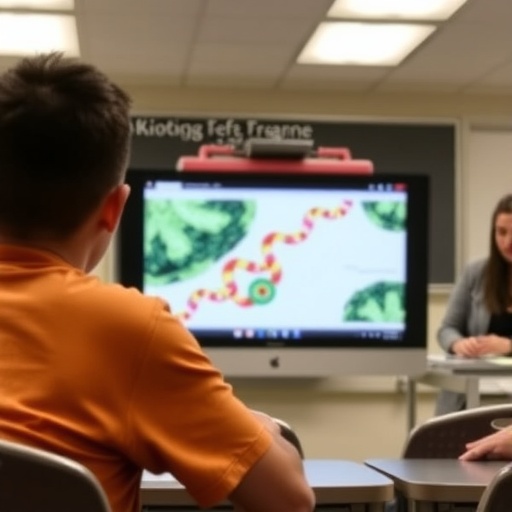
The growing interest in innovative teaching methods within educational settings is rapidly reshaping how subjects like biology are being delivered to students. One intriguing approach that has been gaining traction in recent years is the flipped classroom model, which rearranges traditional learning paradigms by introducing concepts outside the classroom and dedicating in-class time for active learning experiences. A recent mixed-method study conducted at Nekemte Secondary School shines a spotlight on this approach, specifically exploring its impact on the motivation of biology students.
In the flipped classroom model, students first engage with new content via online lectures, readings, or other multimedia resources at their own pace, effectively taking control of their learning journey. During classroom time, educators then facilitate discussions, hands-on activities, and collaborative projects, allowing students to apply their knowledge in a real-world context. As classrooms evolve, the effectiveness of this methodology has become a focal point for researchers, educators, and policymakers alike.
The study by Olana, Bacha, and Lemma (2025) statistically analyzes the motivation levels of biology students before and after the implementation of a flipped classroom. Motivation, a critical component of student engagement and success, plays a significant role in determining the quality of learning experiences. The researchers involved in the study employed both qualitative and quantitative methods to gather data on motivation levels, thus providing a comprehensive understanding of the impact of the flipped classroom approach.
One of the noteworthy findings from this research is how the flipped classroom has the potential to foster a deeper connection between students and their learning. By allowing students to explore educational content on their own, they can engage with materials that resonate with their interests and learning styles. This personalized approach has demonstrated to enhance students’ intrinsic motivation, encouraging them to take responsibility for their educational outcomes.
Furthermore, the study identified that the interactive nature of classroom activities facilitated more significant peer-to-peer engagement. Students often found themselves in collaborative roles, becoming facilitators of their own learning while also supporting their classmates. This dynamic interaction not only improved academic performance but also nurtured vital soft skills such as communication and teamwork, which are increasingly important in today’s interconnected world.
The qualitative data collected during the study revealed intriguing insights about students’ perceptions of the flipped classroom. Many students reported feeling more engaged and excited about biology as they took ownership of their learning. This shift in mindset is substantial; students who are energetic about their education are more likely to excel in their academic pursuits and develop a lasting interest in the subject matter.
An essential aspect of the research involved feedback from educators who implemented the flipped classroom model. Teachers shared their experiences about the transformations observed in student attitudes and classroom dynamics. Educators noted that students became more active participants in their learning processes. Many teachers felt invigorated by the model as it allowed for diverse teaching strategies and a more interactive environment.
However, there were challenges associated with this educational innovation. The study also highlights the need for appropriate training for teachers to effectively deliver content and facilitate engaging classroom activities. Furthermore, equity issues arose, as some students struggled with access to necessary digital resources at home. Addressing these challenges is crucial in ensuring the flipped classroom model is effective for all students, regardless of their background.
The longer-term implications of the flipped classroom model raise important questions about the future of educational practices in biology and other disciplines. The model suggests a shift towards a more student-centered learning ethos, emphasizing engagement over rote memorization. Schools considering this approach must not only evaluate its fit within their unique contexts but also consider how to best support teachers and students in transitioning to a new paradigm.
As educational institutions continue to adapt to the fast-evolving demands of the 21st century, research like that conducted at Nekemte Secondary School serves as a compelling case for rethinking traditional educational methodologies. By fostering motivation through interactive and engaging practices, the flipped classroom encourages a more profound understanding of complex subjects like biology, preparing students to navigate their academic journeys more effectively.
In conclusion, the study conducted by Olana, Bacha, and Lemma illustrates that the flipped classroom model can significantly enhance biology students’ motivation. This innovative educational strategy not only empowers students to take charge of their learning but also cultivates a collaborative atmosphere conducive to critical thinking and problem-solving. As educators and institutions strive to improve the quality of education, embracing approaches like the flipped classroom will be integral to fostering a more engaged and empowered generation of learners.
Olana, T., Bacha, K. & Lemma, A. Exploring the flipped classroom’s impact on biology students’ motivation: a mixed-method study at Nekemte secondary school. Discov Educ 4, 333 (2025). https://doi.org/10.1007/s44217-025-00764-4
Cite Scienmag News
Courtney Benton. (August 29, 2025). Flipped Classroom Boosts Biology Students’ Motivation: Study Insights. Scienmag. https://scienmag.com/flipped-classroom-boosts-biology-students-motivation-study-insights/
Courtney Benton. "Flipped Classroom Boosts Biology Students’ Motivation: Study Insights." Scienmag, 29 August 2025, https://scienmag.com/flipped-classroom-boosts-biology-students-motivation-study-insights/. Accessed 4 September 2026.
Courtney Benton. "Flipped Classroom Boosts Biology Students’ Motivation: Study Insights." Scienmag. August 29, 2025. https://scienmag.com/flipped-classroom-boosts-biology-students-motivation-study-insights/


