


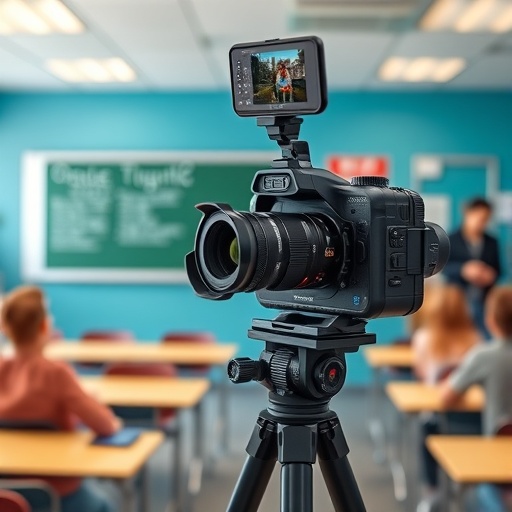
In the rapidly evolving field of medical education, innovative teaching methodologies are critical for the effective training of future healthcare professionals. A recent study published in BMC Medical Education explores a fascinating intersection between pedagogical techniques and technological enhancements. This research specifically investigates the integration of the flipped classroom model with a multi-functional camera system, focusing on its impact on practical skills and overall student satisfaction in the context of musculoskeletal rehabilitation education.
The flipped classroom model represents a paradigm shift in teaching, where traditional lecture-based instruction is reversed. Instead of being introduced to new topics during class time, students are expected to consume instructional materials independently, allowing classroom time to be dedicated to engaging in discussions and practical applications. This model encourages active learning, fosters a more student-centered approach, and has drawn attention as a solution to the limitations of conventional teaching methods.
The researchers, led by Zhang et al., set out to investigate how this innovative model could enhance the learning experiences of health professional students, particularly those specializing in musculoskeletal rehabilitation. They posited that integrating technology—specifically a multi-functional camera system—could further enrich this educational experience, providing students with new tools for observing and analyzing complex anatomical and functional movements.
The study involved a comprehensive methodology wherein participants were divided into two distinct groups. One group utilized the flipped classroom model augmented by the camera system, while the control group received traditional lectures paired with standard practical demonstrations. This design enabled the researchers to gather comparative data on student engagement, skill acquisition, and satisfaction levels across both pedagogical approaches.
Data collection methods were robust, incorporating pre- and post-intervention assessments to gauge the improvement in practical skills. Additionally, satisfaction surveys were administered to highlight the subjective experiences of the students involved. By employing a mixed-methods approach, the researchers aimed to capture both quantitative and qualitative dimensions of the educational experiences, fostering a more holistic understanding of the outcomes.
Results revealed that students engaging with the integrated flipped classroom model exhibited marked improvements in their practical skills related to musculoskeletal rehabilitation. The multi-functional camera system proved to be a pivotal asset, allowing students to visualize their techniques and receive immediate feedback. This on-the-spot analysis facilitated quicker adjustments, helping learners to refine their approaches in real time—a critical competency in any rehabilitation setting where precision and technique are paramount.
Moreover, student satisfaction ratings indicated that those participating in the integrated learning model reported a higher level of engagement and enjoyment in their educational experience. The camera system enhanced their ability to review complex movements from multiple perspectives, aligning perfectly with the demands of musculoskeletal rehabilitation training. This innovative approach allowed students to feel more empowered in their learning journey, endorsing the idea that technology can play a transformative role in education.
The findings underscore the importance of adapting educational practices to meet the needs of modern learners. As the healthcare landscape continues to evolve, with advancements in technology influencing patient care, medical education must also progress to ensure future professionals are adequately prepared. By fostering an environment that encourages exploration and hands-on practice, educators can better equip students to meet the challenges they will face in their careers.
One of the notable implications of this research is its potential application beyond musculoskeletal rehabilitation. Other fields within healthcare education could certainly benefit from adopting similar models that intertwine flipped classrooms with advanced technological tools. Such integrations could revolutionize teaching practices and lead to better outcomes across various disciplines.
The study by Zhang et al. not only contributes valuable insights to the education community but also opens up avenues for future research. Investigating different technological tools and teaching methodologies could yield further enhancements in curriculum design, promoting a culture of continuous improvement in education.
In conclusion, the integration of the flipped classroom model with multi-functional camera systems presents a promising pathway for advancing education in healthcare fields. The importance of practical skills in patient care cannot be overstated, and fostering an environment where students can experiment and learn actively is essential. The study’s findings advocate for more widespread adoption of innovative teaching methods and highlight the need for educators to remain agile in an ever-changing landscape.
Through groundbreaking research like that conducted by Zhang et al., we see a glimpse of the future of medical education—a future where technology and pedagogy go hand in hand to prepare the next generation of healthcare professionals for success.
Cite Scienmag News
Courtney Benton. (October 1, 2025). Flipped Classroom and Camera Tech Boost Rehab Education. Scienmag. https://scienmag.com/flipped-classroom-and-camera-tech-boost-rehab-education/
Courtney Benton. "Flipped Classroom and Camera Tech Boost Rehab Education." Scienmag, 1 October 2025, https://scienmag.com/flipped-classroom-and-camera-tech-boost-rehab-education/. Accessed 3 September 2026.
Courtney Benton. "Flipped Classroom and Camera Tech Boost Rehab Education." Scienmag. October 1, 2025. https://scienmag.com/flipped-classroom-and-camera-tech-boost-rehab-education/


