


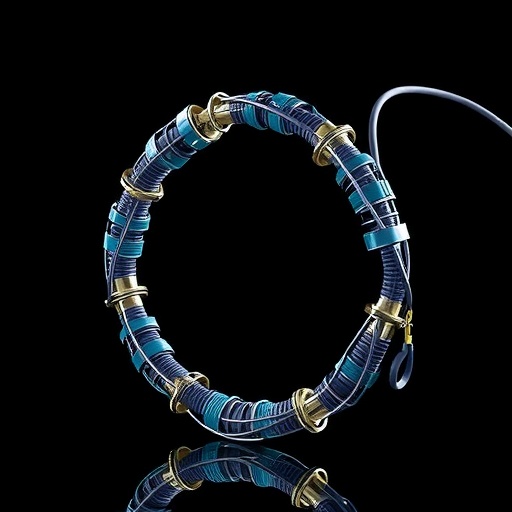
Untethered magnetic actuators have emerged as pivotal tools for minimally invasive medical applications, promising breakthroughs in targeted drug delivery, remote surgery, and in vivo diagnostics. These miniature robotic systems face the formidable challenge of combining diverse locomotive and manipulation capabilities with simple, reliable, and predictable control mechanisms suitable for navigating complex biological environments. Traditional rigid magnetic actuators, though mechanically robust and responsive to simple magnetic fields, are inherently constrained by their fixed geometries and magnetization schemes, limiting their functional diversity and adaptability. Conversely, soft magnetic actuators offer enhanced deformation and reconfigurability due to their continuous body shape shifts but often falter when load capacity, control complexity, and operational reliability are critical.
Recent attempts to integrate hybrid materials and stimuli-responsive composites seek to bridge the capabilities of rigid and soft actuators, yet these solutions frequently encounter obstacles such as slow responsiveness, intricate fabrication methods, challenges in miniaturization, and restricted control accuracy. Addressing this technological impasse, researchers from Tsinghua University have proposed an innovative framework that combines the mechanical reliability of rigid systems with the adaptive functionality characteristic of soft robotics. This is achieved through a modular design architecture centered on revolute joints that link discrete rigid magnetic modules with nonmagnetic structural components, thereby introducing additional degrees of freedom for on-demand reconfiguration without sacrificing robustness or control predictability.
The construction of these modular magnetic actuators involves fabricating magnetic composites from neodymium-iron-boron (NdFeB) microparticles embedded within a polydimethylsiloxane (PDMS) matrix. These composites are meticulously processed into modules of varying sizes, magnetized along either radial or normal axes based on specific design requirements. Nonmagnetic functional components are fabricated using high-resolution 3D printing technologies and integrated with the magnetic modules via precise interference fitting techniques. This strategy fosters scalable and versatile assembly, enabling the rapid creation of actuators tailored for multifunctional operations.
Based on this modular framework, the research team developed four distinct articulated actuator prototypes known as the Magnetic Tweezer, Magnetic Mantis, Magnetic Pelican, and Magnetic Clip. These devices exemplify the versatility of the design, demonstrating complex operations such as rolling, crawling, grasping, release, storage, and stirring—all orchestrated by a single uniform rotating magnetic field. The use of a unified magnetic actuation paradigm drastically simplifies the control requirements typically associated with multimodal robotic systems, enabling highly predictable and stable mechanical responses.
To substantiate the operational stability and scalability of the articulated actuators, the researchers conducted extensive joint dynamic characterizations and developed Euler–Lagrange mathematical models that accurately describe the system’s kinetics under magnetic stimuli. Additionally, dimensionless scaling analyses were performed to evaluate the system’s controllability across different size regimes, affirming its potential for both micro- and macro-scale applications. These rigorous assessments validate the fundamental premise that the revolute-joint-based modular architectures can overcome the traditional trade-offs between multifunctionality and control simplicity endemic to magnetic actuators.
Functionality testing across various experimental setups demonstrates impressive adaptability: the Magnetic Tweezer seamlessly transitions between rolling and crawling within soft tubular environments of varying diameters while executing precise grasping and releasing sequences. The Magnetic Mantis effectively transports solid cargos and employs magnetic field switching to facilitate rapid payload release. The Magnetic Pelican showcases liquid storage capabilities, controlled release at designated targets, and on-demand flow enhancement through localized rotational motion. Meanwhile, the Magnetic Clip executes more sophisticated operations, including dual-payload sequential release, maze navigation, stepwise delivery of solid and liquid cargos, and active stirring functionalities. Notably, mechanical fatigue tests confirm the Magnetic Clip’s durability by withstanding over 15,000 operational cycles without functional degradation.
A particularly compelling demonstration of the technology’s translational promise is the successful deployment of the Magnetic Clip within ex vivo porcine stomach models. In these complex and physiologically relevant environments characterized by mucus-laden, highly folded surfaces and numerous physical obstacles, the actuator navigates precisely and completes targeted delivery tasks, illustrating its potential efficacy for in vivo medical applications. Such performance underscores the robustness of the revolute-joint design paradigm under realistic biological constraints, a critical milestone for clinical translation.
This paradigm shift in magnetic actuator design bridges significant technological divides, enabling a new class of untethered robots that seamlessly integrate the predictable control and mechanical integrity of rigid systems with the multimodal adaptability and morphological reconfigurability typically associated with soft robotics. By leveraging robotic joint articulation and modular assembly, the system achieves on-demand deformation and multitasking abilities driven by minimally complex magnetic control inputs. This balance markedly enhances the feasibility of practical medical interventions requiring precise navigation, multifunctional manipulation, and reliable actuation within challenging biological milieus.
The modular and scalable nature of the articulated actuator framework promotes rapid prototyping of task-specific devices assembled from standardized components, facilitating broad adaptability and customization. Future research directives, as articulated by Zhixian Chen and colleagues, include rigorous assessment of biocompatibility, long-term operational stability, and safety within living organisms. Integration with real-time imaging and closed-loop feedback systems is anticipated to further elevate positioning precision and dynamic control, expediting the trajectory from experimental validation to clinical usage.
By laying the foundational architecture for multifunctional, untethered magnetic actuators that harmonize the benefits of rigidity and softness, this study marks a significant advance toward the realization of autonomous, intelligent medical robots. These technologies hold promise not only for enhancing targeted drug delivery and minimally invasive surgeries but also for expanding the frontier of in vivo diagnostic tools, ultimately contributing to improved patient outcomes and the next generation of biomedical devices.
The authors of this groundbreaking study include Zhixian Chen, Xiaoyu Zhao, Ying Liu, and Shengli Mi. Their collaborative efforts underscore a multidisciplinary approach integrating materials science, robotics, and medical technology to overcome persistent challenges in microscale actuator design. The work was published on May 19, 2026, in the journal Cyborg and Bionic Systems and represents a noteworthy milestone in the ongoing evolution of medical microrobotics.
Cite Scienmag News
Reid Dalton. (June 17, 2026). Flexible Untethered Magnetic Actuators Enable Multimodal and Cross-Scale Functionality. Scienmag. https://scienmag.com/flexible-untethered-magnetic-actuators-enable-multimodal-and-cross-scale-functionality/
Reid Dalton. "Flexible Untethered Magnetic Actuators Enable Multimodal and Cross-Scale Functionality." Scienmag, 17 June 2026, https://scienmag.com/flexible-untethered-magnetic-actuators-enable-multimodal-and-cross-scale-functionality/. Accessed 5 September 2026.
Reid Dalton. "Flexible Untethered Magnetic Actuators Enable Multimodal and Cross-Scale Functionality." Scienmag. June 17, 2026. https://scienmag.com/flexible-untethered-magnetic-actuators-enable-multimodal-and-cross-scale-functionality/


