

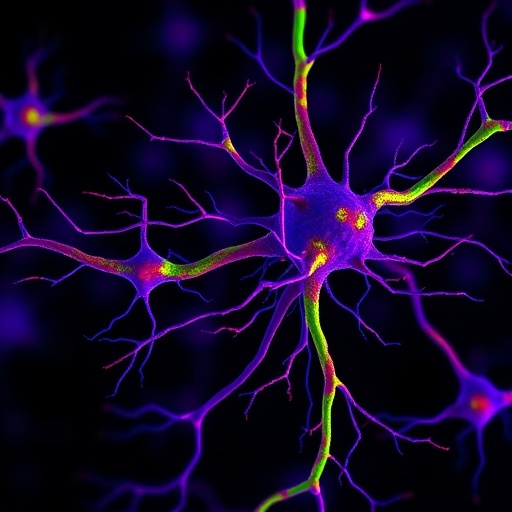
In a groundbreaking study recently published in Nature Communications, researchers have unveiled a promising strategy to combat Spinal and Bulbar Muscular Atrophy (SBMA), a debilitating neurodegenerative disorder that predominantly affects motor neurons. The work, led by Hirunagi, T., Sahashi, K., Iida, M., and colleagues, takes a novel approach by targeting early postnatal synaptic dysfunction to prevent the progression of motor neuron degeneration, offering a beacon of hope for a condition that currently lacks effective treatments.
SBMA, also known as Kennedy’s disease, is characterized by the progressive loss of lower motor neurons, leading to muscle weakness, atrophy, and eventually severe motor impairment. This disorder results from a mutation in the androgen receptor gene, and despite extensive research, the pathogenic mechanisms remain incompletely understood. The current study addresses this gap by focusing on the synaptic abnormalities that manifest early in postnatal development, long before overt neuronal death occurs.
The research team utilized a sophisticated SBMA mouse model, which replicates the key pathological features of the human condition. By monitoring synaptic function and motor neuron health from early postnatal stages, they discovered that synaptic dysregulation precedes and likely drives the subsequent neurodegenerative cascade. This insight challenges the traditional view that motor neuron loss is the primary initiating event, shifting attention to synaptic malfunction as an early therapeutic target.
Crucially, the investigators employed genetic and pharmacological interventions to restore synaptic integrity during this critical developmental window. Their interventions successfully normalized synaptic transmission and prevented the later loss of motor neurons. This dual strategy not only halted disease progression but also restored motor function in affected animals, marking the first demonstration that early synaptic repair can effectively counteract SBMA pathology.
Mechanistically, the study elucidates how the mutant androgen receptor impairs synaptic vesicle cycling and neurotransmitter release at neuromuscular junctions. The researchers detail disruptions in calcium homeostasis and synaptic protein expression that culminate in impaired synaptic signaling. By rectifying these molecular derangements, they achieved a rescue of synaptic efficacy, underscoring the therapeutic potential of targeting these early synaptic defects.
The implications of these findings extend beyond SBMA. Given that synaptic dysfunction is increasingly recognized as a common early feature in various neurodegenerative diseases, this study contributes to a growing paradigm that emphasizes early intervention at the synaptic level as a universal therapeutic strategy. The ability to prevent or delay neurodegeneration by restoring synaptic health could revolutionize treatment approaches across multiple disorders.
Importantly, the researchers highlight the necessity of timely intervention. The data indicate a narrow postnatal window during which synaptic correction yields maximal benefits, emphasizing the need for early diagnosis and treatment initiation. This temporal aspect presents both challenges and opportunities, motivating the development of biomarkers and diagnostics that can detect synaptic abnormalities before irreversible neuronal loss occurs.
In addition to the experimental findings, the study integrates advanced imaging techniques to visualize synaptic changes in vivo, offering unprecedented real-time insights into disease progression and therapeutic response. These technologies enable precise monitoring of synaptic restoration and motor neuron survival, providing valuable tools for future research and clinical translation.
The team also explored the downstream effects of synaptic rescue on motor function, employing behavioral assays to quantify improvements. Treated mice exhibited significantly enhanced motor coordination and strength compared to untreated controls, corroborating the histological and electrophysiological data. These functional outcomes demonstrate the tangible benefits of synaptic intervention in a preclinical setting.
One of the study’s remarkable aspects lies in its translational potential. The combination of genetic and pharmacological approaches to modulate synaptic activity suggests multiple avenues for therapy development. Small molecules, gene therapy vectors, and potentially even neuromodulation devices could be harnessed to achieve similar therapeutic effects in human patients.
Moreover, the research provides a foundational framework for the design of clinical trials targeting early synaptic dysfunction in SBMA. By defining the molecular players involved and establishing proof-of-concept in an animal model, the study paves the way for testing synapse-centric therapies in human populations, ultimately aiming to alter the natural history of this devastating disease.
Beyond the immediate clinical impact, the findings stimulate broader scientific inquiry into the relationship between synaptic health and neuronal survival. The delineation of precise molecular pathways disrupted by mutant proteins offers new research directions, facilitating the identification of novel drug targets and biomarkers that could accelerate drug discovery and development.
The study also encourages a re-examination of other polyglutamine expansion diseases, a group of disorders that share genetic and pathogenic similarities with SBMA. Understanding whether synaptic dysregulation is a convergent mechanism across these diseases could foster shared therapeutic strategies and collaborative research efforts.
Finally, the collaborative nature of this research, encompassing expertise in molecular biology, neuroscience, pharmacology, and bioinformatics, exemplifies the multidisciplinary approach required to tackle complex neurodegenerative diseases. The integration of diverse methodologies and perspectives was critical for unraveling the intricate interactions between synaptic function and motor neuron viability.
In conclusion, the work by Hirunagi et al. represents a paradigm shift in our understanding of SBMA pathogenesis and treatment. By demonstrating that early postnatal synaptic dysregulation is a causative factor in motor neuron degeneration and that its restoration can rescue neuronal function, the study offers a pioneering therapeutic concept. This advance not only revitalizes hope for SBMA patients but could also transform strategies for combating a wide array of neurodegenerative diseases marked by synaptic failure.
Subject of Research: Spinal and Bulbar Muscular Atrophy (SBMA) and early synaptic dysfunction in motor neuron degeneration.
Article Title: Restoring early postnatal synaptic dysregulation rescues motor neuron degeneration in a mouse model of Spinal and Bulbar Muscular Atrophy.
Article References: Hirunagi, T., Sahashi, K., Iida, M. et al. Nat Commun 17, 2412 (2026). https://doi.org/10.1038/s41467-026-70244-2
Image Credits: AI Generated
DOI: https://doi.org/10.1038/s41467-026-70244-2


